Acute Bacterial Meningitis and Encephalitis in the Emergency Department
EMORBIT-CP-47 · Chapter 4 · Neurological Emergencies
Open in the appFree, works on your phone and offline, with every tool alongside.
Evidence base: NICE NG240 2024; ESCMID 2016; UK Joint Guideline 2016
1Purpose
1.1 Give the antibiotic immediately in suspected bacterial meningitis. Never delay it for computed tomography, lumbar puncture, senior review, a microbiology discussion or the arrival of the admitting team. Delay is the commonest avoidable harm, and almost all of it is generated inside the hospital.
1.2 Standardize recognition, investigation and immediate treatment of acute bacterial meningitis, meningococcal disease and encephalitis, in adults and children, in Emergency Departments (ED), and correct the two recognition errors that cause missed diagnoses: that the classic triad must be present, and that a normal temperature excludes the diagnosis.
1.3 Name ceftriaxone 2 g intravenously as the first-line first dose in the adult (Table 4), and define when computed tomography is required before lumbar puncture — it is not required in most patients.
1.4 Set out which steps belong to the ED and which to the admitting medical team, so that no time-critical drug waits for the team that will continue it.
1.5 Preserve the diagnosis where antibiotics precede the lumbar puncture, by mandating blood polymerase chain reaction; and define the ED duties that follow — isolation, notification as a legal duty, and identification of contacts and exposed staff.
1.6 Maintain consistency with EMORBIT-CP-11 (sepsis), EMORBIT-CP-25 (the febrile child), EMORBIT-CP-46 (altered mental status) and EMORBIT-CP-57 (antimicrobial stewardship), and with NICE NG240, ESCMID, the UK joint specialist societies guideline, ABN/BIA, IDSA, RCEM and ACEP.
2Who this protocol applies to
2.1 Patients of any age presenting to, or deteriorating within, the Emergency Department with suspected or confirmed acute bacterial meningitis, meningococcal disease (with or without meningitis), or encephalitis of any cause.
2.2 Fever, a history of fever, or hypothermia with any of: headache with neck stiffness or photophobia; new confusion, drowsiness or altered behaviour; a new seizure; new focal neurological signs; a non-blanching rash.
2.3 Work to two of the four — fever, headache, neck stiffness, altered mental state — not to three of three. The classic triad is complete in fewer than half of proven adult cases; almost all have at least two of the four. Kernig and Brudzinski signs are about 5 per cent sensitive and shall not be used to rule out meningitis.
2.4 The above is meningitis or encephalitis until proven otherwise (4.3.5; seizures EMORBIT-CP-02; altered mental state EMORBIT-CP-46). In the elderly, the immunosuppressed, neonates and infants fever and meningism are often absent: hypothermia, confusion, drowsiness, a fall, poor feeding, lethargy, paradoxical irritability, a high-pitched cry, apnoea, a bulging fontanelle or seizures may be the whole presentation, and neck stiffness is late and unreliable (Table 10; children EMORBIT-CP-25).
2.5 Rapidly progressive shock with limb pain, cold hands and feet, abnormal colour and a non-blanching rash, often with no headache or neck stiffness — meningococcal sepsis without meningitis, the most rapidly lethal presentation: EMORBIT-CP-11, antibiotic within 30 minutes.
2.6 The threshold to treat is lower than the threshold to prove. Recent antibiotics make the presentation look less alarming; they do not exclude it.
2.7 Any unwell neonate or infant, and any child with fever and a red feature from EMORBIT-CP-25, in whom meningitis is part of the differential.
2.8 Fever, headache, vomiting or altered consciousness in a patient with a shunt, external ventricular drain, recent neurosurgery, penetrating head injury, basal skull fracture with cerebrospinal fluid leak, or cochlear implant.
2.9 Patients referred or transferred with suspected meningitis, including those already given a first antibiotic dose.
3Not covered by this protocol
3.1 Chronic and subacute meningitis over weeks in a stable patient, and the definitive treatment of tuberculous, fungal and neoplastic meningitis. The ED role is recognition, stabilization, the blood samples and urgent referral.
3.2 Thunderclap headache without fever (acute headache pathway). Where both are possible, both pathways run in parallel and the antimicrobials are given.
3.3 Inpatient management: the lumbar puncture itself, antimicrobial de-escalation and duration, repeat lumbar puncture, magnetic resonance imaging, the autoimmune encephalitis work-up, audiological follow-up and neurorehabilitation.
3.4 Brain abscess, subdural empyema and infected intracranial collections — neurosurgical referral, not managed by lumbar puncture, and an indication for computed tomography first (Table 5).
3.5 Undifferentiated sepsis with no central nervous system feature (EMORBIT-CP-11); fever in a child with no feature suggesting meningitis (EMORBIT-CP-25); and post-exposure management of community contacts, which belongs to public health (4.3.10).
4Protocol
4.1History and Assessment:
4.1.1Triage and Recognition:
4.1.1.1 Triage any patient meeting section 2 to the highest acuity the physiology warrants, with droplet precautions from that moment (4.3.9). Rash, shock or reduced consciousness is Category 1. Never downgrade the category for a normal or low temperature.
4.1.1.2 Observations, temperature, capillary glucose, Glasgow Coma Scale or AVPU, skin exposed. Blood cultures and the blood panel on the nursing standing order without waiting for the physician, and tell the physician the first dose is due. Every clock in Table 3 starts at arrival, or at recognition of in-department deterioration.
4.1.2History — taken in parallel with treatment, never before it:
4.1.2.1 Antibiotics in the preceding 72 hours, from any source: they alter the cerebrospinal fluid and make polymerase chain reaction decisive. Onset — hours in bacterial meningitis and meningococcal sepsis, weeks in tuberculous, fungal and autoimmune disease.
4.1.2.2 Immunosuppression: corticosteroids, biologics, chemotherapy within 6 weeks, transplantation, HIV, asplenia or sickle cell disease, cirrhosis, diabetes, pregnancy. Devices: shunt, external ventricular drain, recent craniotomy, cochlear implant, head injury, cerebrospinal fluid leak, recurrent meningitis. Contiguous source: otitis media, mastoiditis, sinusitis, dental infection, endocarditis, pneumonia.
4.1.2.3 Exposure: a known case, household or shared accommodation, Hajj, Umrah and other mass gatherings, travel, animal, insect and freshwater exposure, unpasteurised dairy. Vaccination — incomplete lowers the threshold, complete never excludes. Allergy, recording the nature of any beta-lactam reaction (Table 4).
4.1.3Examination:
4.1.3.1 ABCDE with full observations, temperature, capillary glucose and an early warning score at least every 15 minutes until stable. Expose the whole skin under good light, and mark and time the edge of any rash (Table 2).
4.1.3.2 Glasgow Coma Scale by component; pupils; cranial nerves III, IV, VI, VII and VIII; fundoscopy where it does not delay treatment; tone, power, reflexes, plantars, focal deficit; resistance to passive neck flexion. Raised intracranial pressure: 4.3.7. Seek the source: ears and mastoids, sinuses, throat and dentition, chest, murmurs, abdomen, joints, spine, wounds, shunt track and device sites.
4.1.3.3
Table 2: The non-blanching rash — what it means and what it obliges Finding Meaning and action A non-blanching (petechial or purpuric) rash in an unwell patient of any age Meningococcal disease until proven otherwise. Give the antibiotic immediately — before the rash is photographed, before bloods are completed, before imaging and before any lumbar puncture. Target within 30 minutes of arrival. Resuscitate for shock in parallel (EMORBIT-CP-11; children EMORBIT-CP-25). How to test a rash Press a clear glass firmly over the lesions; a rash that does not fade is non-blanching. Examine the whole skin under good light — scalp, behind the ears, axillae, nappy area, palms, soles, conjunctivae. Mark the edge and write the time on the skin. Spreading purpura, lesions larger than 2 mm, or purpura fulminans Fulminant meningococcal sepsis: resuscitation area, senior at the bedside, antibiotic within minutes, aggressive fluid, early vasopressor, immediate intensive care referral. Lumbar puncture is contraindicated. A blanching rash, or no rash at all Neither excludes meningococcal disease: about one third have no rash at presentation, early rash may be blanching or maculopapular, and pneumococcal meningitis causes none. The absence of a rash is not reassurance. Re-examine at least hourly and document it. Petechiae confined to the superior vena cava distribution after coughing or vomiting, in a well patient Mechanical petechiae: senior review, observation with repeated skin examination, documented safety-netting; children per EMORBIT-CP-25.
4.1.4Severity and Risk Stratification:
4.1.4.1 Immediately life-threatening — 30-minute antibiotic target, resuscitate as in EMORBIT-CP-11, and refer to intensive care on any criterion in 4.3.8. Adverse prognostic features: age over 60, reduced consciousness on arrival, tachycardia, hypotension, cranial nerve palsy, thrombocytopenia, a positive blood culture.
4.1.4.2 The determinant the ED controls is the arrival-to-antibiotic interval. A patient who looks well at triage and unwell an hour later has meningococcal disease until proven otherwise.
4.1.5Differential Diagnosis:
4.1.5.1 Sepsis with delirium (EMORBIT-CP-11) — where the source is unclear and consciousness altered, cover the central nervous system. Undifferentiated altered mental state: EMORBIT-CP-46. Subarachnoid haemorrhage, cerebral venous sinus thrombosis, brain abscess and subdural empyema — the last two need imaging and neurosurgery, and lumbar puncture may be harmful.
4.1.5.2 Cerebral malaria, typhoid, tuberculous meningitis, neurosyphilis, rickettsial disease, brucellosis; drug-induced and aseptic meningitis (non-steroidal anti-inflammatory drugs, co-trimoxazole, intravenous immunoglobulin); Behçet disease; sarcoidosis. Heat stroke (EMORBIT-CP-23), serotonin syndrome, neuroleptic malignant syndrome, sympathomimetic or anticholinergic toxicity (EMORBIT-CP-21), non-convulsive status epilepticus and the post-ictal state (EMORBIT-CP-02), hypoglycaemia, hyponatraemia, other metabolic encephalopathies, thyroid storm. Do not diagnose acute psychiatric illness in a febrile patient until an organic cause is excluded. In children: febrile convulsion, not to be diagnosed confidently where any red feature is present (EMORBIT-CP-25); a lethargic infant; non-accidental injury.
4.1.6Special Populations:
4.1.6.1
Table 10: Special populations Group What the ED does Pregnancy and up to 6 weeks postpartum Add amoxicillin or ampicillin; state the pregnancy on the request. Obstetrics at referral. Do not withhold indicated imaging; shield and document. Aciclovir and dexamethasone on the usual indications. The immunosuppressed Add Listeria cover. Scan before lumbar puncture (Table 5). Flag cryptococcal, mycobacterial and stored-aliquot testing at referral. Offer an HIV test. Withhold dexamethasone. Fever, meningism, pleocytosis and inflammatory markers may all be normal — not reassurance. Shunt, external ventricular drain, recent craniotomy, basal skull fracture with cerebrospinal fluid leak, or cochlear implant Broaden cover (Table 4). Do not tap the shunt or reservoir in the ED. Neurosurgery at the first antibiotic dose. Scan indicated. Withhold dexamethasone. The returning traveller and the pilgrim A malaria film is mandatory after any time in an endemic area in the preceding year, and one negative film does not exclude it. Cover meningococcal serogroups from Hajj, Umrah and the African meningitis belt; consider typhoid, dengue, West Nile and Japanese encephalitis, rabies and tuberculous meningitis. Where viral haemorrhagic fever is possible, follow the high-consequence infectious disease pathway and notify infection prevention and control before further sampling. The elderly Add Listeria cover. Treat hypothermia, confusion, drowsiness or a fall as the whole presentation. Do not blame a stiff neck on spondylosis, or confusion on dementia, without excluding infection. Children and neonates EMORBIT-CP-25 for the regimen by age band, the lumbar puncture decision in the febrile child and the non-blanching rash pathway. The time targets, the antibiotics-before-imaging rule and the notification duties here apply equally to children. Asplenia or hyposplenism, including sickle cell disease The 30-minute target applies. Check vaccination and prophylactic antibiotic history; haematology in sickle cell disease.
4.2Investigations:
4.2.1 No investigation shall delay the first antibiotic dose. Specimens, and who takes each: Table 7. The two most often omitted and most often decisive are the paired plasma glucose and the EDTA sample for meningococcal and pneumococcal polymerase chain reaction, which stays positive for days after antibiotics have sterilized the cultures — send it whenever an antibiotic preceded arrival or the lumbar puncture is deferred, even late. Capillary glucose immediately in altered consciousness, and correct hypoglycaemia before drawing any other conclusion. Chest radiograph where a pulmonary source or tuberculosis is possible.
4.2.2 Computed tomography of the head only on a Table 5 criterion, and only after the antibiotic. A normal computed tomogram does not exclude encephalitis. Magnetic resonance imaging (the modality of choice in encephalitis, within 24 to 48 hours) and electroencephalography (EMORBIT-CP-02 where non-convulsive status epilepticus is possible) are arranged by the admitting team; neither delays aciclovir.
4.2.3
Table 7: What is sent, and by whom Specimen Test Who takes it, and the point of it Blood — culture Two sets from separate venepuncture sites ED. Cultures shall not delay the antibiotic beyond target — if access is difficult, give the antibiotic and take cultures straight after. Blood — EDTA for meningococcal and pneumococcal polymerase chain reaction Neisseria meningitidis and Streptococcus pneumoniae nucleic acid detection ED. Preserves the diagnosis when the lumbar puncture is deferred or antibiotics came first — positive for days after cultures are sterilized. Send it with or without a lumbar puncture, and even if late. Blood — laboratory panel Full blood count, urea, electrolytes and creatinine, liver function, C-reactive protein, coagulation profile, glucose (a paired sample), blood gas with lactate ED. The paired glucose is the element most often forgotten. Low platelets or deranged coagulation may themselves contraindicate the puncture. Blood — serology and virology HIV test (with consent) in every patient; store serum for autoimmune antibodies and convalescent serology; malaria films after relevant travel ED. A malaria film takes priority over everything except resuscitation and the first antibiotic dose. Throat or nasopharyngeal swab Culture for Neisseria meningitidis; respiratory virus panel where relevant ED, before or as soon as possible after the first dose. Cerebrospinal fluid — numbered bottles, filled in order 1 microscopy, Gram stain, culture and sensitivity; 2 protein and glucose (read only against the paired plasma glucose); 3 meningococcal and pneumococcal polymerase chain reaction, herpes simplex 1 and 2, varicella zoster and enterovirus polymerase chain reaction (parechovirus in infants), which stays positive after antibiotics have started; 4 and extra volume for mycobacterial smear, culture and nucleic acid amplification, cryptococcal antigen and India ink, cytology and a stored aliquot Admitting medical team, at the lumbar puncture (4.3.4). Send immediately and telephone the laboratory; cell counts degrade with time. Tuberculous and fungal testing need a large volume — the ED flags the possibility at referral. The ED takes every blood and swab specimen here without waiting for the admitting team to order them. Meningococcal and pneumococcal polymerase chain reaction, cerebrospinal fluid viral polymerase chain reaction, cryptococcal antigen and mycobacterial nucleic acid amplification are used where available — the case for treating before the lumbar puncture depends on them.
4.3Plan of Care — the ED gives the drugs; the admitting medical team performs the lumbar puncture and all cerebrospinal fluid sampling:
4.3.1Immediate Actions — the first 15 minutes:
4.3.1.1 Division of responsibility. The ED: recognition, isolation, resuscitation, blood cultures and the panel, the first dose of antibiotic, dexamethasone and aciclovir, imaging where Table 5 requires it, notification, contacts and exposed staff, and referral. The admitting medical team (paediatrics for children, EMORBIT-CP-25): the lumbar puncture and every cerebrospinal fluid sample, magnetic resonance imaging, electroencephalography, the autoimmune encephalitis work-up, continuation or cessation of aciclovir and dexamethasone, and every admission and discharge decision. Nothing here delays a drug: where the admitting team is not yet at the bedside, the ED still gives the doses on time.
4.3.1.2 Single room in or beside resuscitation with droplet precautions (4.3.9); senior help; a timed record. Airway, breathing, circulation; oxygen if saturations are low or the patient is shocked; continuous monitoring. Two large-bore cannulae; blood cultures, the EDTA polymerase chain reaction sample, the panel, a paired glucose and a blood gas with lactate (Table 7). Capillary glucose immediately; correct hypoglycaemia. Order the antibiotic now, before anything else is arranged.
4.3.1.3 Resuscitate shock with balanced crystalloid and start a vasopressor early where the mean arterial pressure stays below 65 mmHg (EMORBIT-CP-11; children EMORBIT-CP-25). Treat seizures with a benzodiazepine and escalate as in EMORBIT-CP-02.
4.3.2The Antibiotic — an ED responsibility, within 60 minutes of arrival, and within 30 minutes with a non-blanching rash, shock or reduced consciousness:
4.3.2.1 Give the first intravenous dose as soon as bacterial meningitis is suspected — ceftriaxone 2 g intravenously in the adult. Do not delay it for computed tomography, lumbar puncture, culture results, a microbiology or stewardship discussion, senior review, the admitting team, or movement between areas of the department. What is added, and for whom: Table 4. Children: EMORBIT-CP-25.
4.3.2.2 Severe penicillin or cephalosporin allergy: no locally approved second-line regimen exists in this guideline. Telephone the on-call microbiologist at the moment of the decision and do not omit cover. Vancomycin alone is not a substitute — it does not cover Neisseria meningitidis, Haemophilus influenzae or Listeria (Table 4; EMORBIT-CP-57).
4.3.2.3 Where intravenous access is not obtained promptly in suspected meningococcal disease, use intraosseous access; intramuscular only where neither is achievable. Where an antibiotic was given before arrival, give the full empirical regimen anyway unless microbiology advises otherwise. Record the exact time; where the target is missed, record why.
4.3.2.4
Table 4: Empirical cover — the first-line first dose and what is added to it. Continuation dosing, interval and duration come from EMORBIT-CP-57 and the local antibiogram Patient group Cover that must be included Every patient with suspected bacterial meningitis First line: ceftriaxone 2 g intravenously as the first dose in the adult, at meningitis dosing — the ordinary ward dose is a treatment failure. Children by weight and age band: EMORBIT-CP-25. Age over 60; pregnancy; immunosuppression of any kind, including corticosteroids, biologics, chemotherapy, transplantation and HIV; alcohol dependence; malnutrition; diabetes; cirrhosis ADD amoxicillin or ampicillin — Listeria is resistant to all cephalosporins. Risk of non-susceptible pneumococcus: residence in or travel from a high-prevalence country, a beta-lactam course within 3 months, or where the antibiogram indicates it ADD vancomycin (or rifampicin) until susceptibilities are known. Practice varies: whether this is routinely required locally is an antibiogram decision made with microbiology. Patient meeting the encephalitis criteria in 4.3.5 ADD intravenous aciclovir — first dose given in the ED (Table 9). Recent neurosurgery, shunt or external ventricular drain, penetrating head injury, basal skull fracture with cerebrospinal fluid leak, or cochlear implant Cover staphylococci including meticillin-resistant Staphylococcus aureus, and Gram-negatives including Pseudomonas aeruginosa. Neurosurgery and microbiology at the first dose. Suspected tuberculous meningitis (onset over weeks, basal meningism, cranial nerve palsies, hyponatraemia, endemic exposure, HIV) Quadruple anti-tuberculous therapy with adjunctive corticosteroid, started by infectious diseases — not in the ED. Raise it at referral so the correct cerebrospinal fluid volume is sent (Table 7). Documented severe allergy (anaphylaxis) to penicillins or cephalosporins No locally approved second-line regimen exists. It shall be issued by Antimicrobial Stewardship and Microbiology under EMORBIT-CP-57 and inserted here before use. Until then telephone the on-call microbiologist at the moment of the decision and do not omit cover. Vancomycin is an addition, never a substitute: alone it does not cover Neisseria meningitidis, Haemophilus influenzae or Listeria. A history of rash alone is not severe allergy and is not a reason to withhold a cephalosporin here. No patient shall wait for a stewardship discussion, a microbiology call, a pharmacy review, a weight, a culture, an imaging study or a lumbar puncture before the first dose.
4.3.3Dexamethasone — started by the ED:
4.3.3.1 With, or immediately before, the first antibiotic dose, and never more than 4 hours after it. It shall never delay the antibiotic — if it is not to hand, give the antibiotic and follow as soon as it arrives. Doses, the criteria in children and the withholding list: Table 8 (children also EMORBIT-CP-25).
4.3.3.2
Table 8: Dexamethasone in suspected bacterial meningitis Give dexamethasone Withhold dexamethasone Adults with suspected or confirmed community-acquired bacterial meningitis: 10 mg intravenously every 6 hours for 4 days. Meningococcal septicaemia without meningitis, and septic shock — no benefit, and the resuscitation is the priority. Children over 3 months where the cerebrospinal fluid is frankly purulent, the white cell count exceeds 1000 × 10⁶/L, the white cell count is raised with a protein above 1 g/L, or bacteria are seen on Gram stain: 0.15 mg/kg (maximum 10 mg) every 6 hours for 4 days (EMORBIT-CP-25). Infants under 3 months of age. Timing: with, or immediately before, the first antibiotic dose. Never started more than 4 hours after it. Post-surgical or device-associated meningitis, including shunt and external ventricular drain infection. It shall never delay the antibiotic. If it is not to hand, give the antibiotic and give dexamethasone as soon as it arrives. Severe immunocompromise, including transplantation and advanced HIV — the evidence of benefit does not apply and the organism range differs. Benefit is greatest in pneumococcal meningitis. Known hypersensitivity, and any patient in whom bacterial meningitis is not actually suspected. Starting it is an ED responsibility; continuing or stopping it is not. The admitting team continues it for the full 4 days where Streptococcus pneumoniae is confirmed, and reviews it otherwise.
4.3.4Lumbar Puncture — performed by the admitting medical team, not by the ED:
4.3.4.1 The lumbar puncture is a diagnostic test and it never comes first. The ED gives antibiotics, dexamethasone and aciclovir before it, in every patient in whom treatment is due, whoever performs the puncture and however soon it will happen. With no contraindication and no indication for prior imaging it should follow early — within 1 hour of referral in the stable patient.
4.3.4.2 ED duties before referral: give the drugs; take the paired plasma glucose; identify the contraindications and any Table 5 indication for imaging first, and state them at referral; flag suspected tuberculosis, a fungal cause or autoimmune encephalitis so the correct volume and a stored aliquot are requested (Table 7); refer early so the puncture is not delayed.
4.3.4.3Contraindications, identified in the ED and stated at referral:
- Any clinical sign of raised intracranial pressure, or imaging showing mass effect, midline shift or effacement of the basal cisterns.
- Shock or cardiorespiratory instability; defer until resuscitated.
- Extensive or rapidly spreading purpura, or purpura fulminans.
- Coagulopathy: platelets below 50 × 10⁹/L, international normalised ratio above 1.5, therapeutic anticoagulation, or a known bleeding diathesis.
- Local infection over the puncture site; uncontrolled seizures; in small children, respiratory compromise the positioning would worsen.
4.3.4.4 Opening pressure is valid only in the lateral decubitus position (normal 10 to 20 cm H₂O, above 25 abnormal, above 40 requires immediate senior and critical care discussion, 4.3.7). Cerebrospinal fluid goes to the laboratory immediately and the laboratory is telephoned — cell counts degrade with time (Table 7). Interpretation of the fluid sits with the admitting medical team, not the ED: treatment is given before the puncture and on clinical grounds, partially treated meningitis may look misleadingly benign, and a traumatic tap shall never be corrected arithmetically to exclude meningitis. Local cerebrospinal fluid reference values shall be agreed with the laboratory. Where the puncture is deferred, the reason, the reassessment plan and the fact that the antibiotic was given first are documented and handed over.
4.3.5Encephalitis and Aciclovir — meningitis and encephalitis overlap as meningoencephalitis, and both are treated without separating them (definition, section 8):
4.3.5.1Encephalitis criteria — the ED gives intravenous aciclovir where both are met:
- Fever, or a documented history of fever within the preceding 72 hours; and
- An alteration of mental state — behaviour, personality, cognition or consciousness — or a new seizure, or new focal neurology, that persists or progresses and is not explained by a corrected or evident alternative cause (hypoglycaemia already corrected; a brief, fully resolving post-ictal state; intoxication or withdrawal; or a clear non-central-nervous-system source of sepsis in a patient who improves with resuscitation). Where the alternative is uncertain, treat.
4.3.5.2 Give the first dose alongside antibacterial cover, without waiting for imaging, the lumbar puncture or polymerase chain reaction. The admitting medical team then reviews the indication and continues or stops it; it is not stopped in the ED. Dose and renal adjustment: Table 9. Herpes simplex virus type 1 is the commonest sporadic cause in adults and outcome depends on the interval from presentation to the first dose. Consider also varicella zoster, enterovirus, influenza and measles, and — with travel — West Nile, dengue, Japanese encephalitis, rabies and tuberculosis. Exclude cerebral malaria by blood film after relevant travel.
4.3.5.3 Autoimmune encephalitis is recognised in the ED but worked up by the admitting team and neurology. Suspect it, and say so at referral, where onset is subacute over days to weeks, psychiatric or behavioural change is out of proportion to the fever, there is a movement disorder (particularly orofacial dyskinesia) or autonomic instability, seizures come with prominent memory impairment, or the patient is young — classically a young woman with an ovarian teratoma in anti-N-methyl-D-aspartate receptor encephalitis. The ED stores a serum aliquot and refers; the autoantibody panel, tumour screening and immunotherapy are not ED decisions.
4.3.5.4
Table 9: Aciclovir for suspected encephalitis — dose and renal adjustment Group Dose Notes Adult, normal renal function 10 mg/kg intravenously every 8 hours, each dose over at least 1 hour Ideal body weight in obesity. Hydrate generously; aciclovir is nephrotoxic when the patient is dry or the infusion is rushed. Adult, creatinine clearance 25–50 mL/min 10 mg/kg every 12 hours Adjust by interval first, then dose. Do not withhold the first dose for the calculation. Adult, creatinine clearance 10–25 mL/min 10 mg/kg every 24 hours As above. Adult, creatinine clearance below 10 mL/min, or on dialysis 5 mg/kg every 24 hours, timed around dialysis Nephrology and pharmacy; aciclovir is dialysable. Child 3 months to 12 years 500 mg/m² every 8 hours Verify against the paediatric formulary (EMORBIT-CP-25). Child 12 years and over 10 mg/kg every 8 hours As for adults. Neonate and infant under 3 months 20 mg/kg every 8 hours Neonatal herpes simplex disease needs the higher dose; involve the neonatal team. Target within 6 hours of arrival, sooner if unwell. A negative cerebrospinal fluid herpes simplex polymerase chain reaction in the first 72 hours does not exclude the diagnosis: the admitting team continues aciclovir and repeats the puncture at 24 to 48 hours. Duration in confirmed disease is 14 to 21 days.
4.3.6Monitoring and Reassessment in the ED:
4.3.6.1 Observations at least every 15 minutes until stable, then at least every 30 minutes. Glasgow Coma Scale, pupils and focal signs at least every 30 minutes and on any change; a falling Glasgow Coma Scale is a medical emergency requiring senior and critical care attendance. Re-examine the skin at least hourly, marking and timing any new or progressing rash.
4.3.6.2 Fluid balance and urine output; capillary glucose; repeat lactate if the initial value exceeded 2 mmol/L (EMORBIT-CP-11). Treat subtle and non-convulsive seizures, hyponatraemia, hypoglycaemia, hypotension, and disseminated intravascular coagulation in meningococcal sepsis.
4.3.7Raised Intracranial Pressure:
4.3.7.1 Suspect it on the signs listed in Table 5, or a bulging fontanelle in an infant. Do not perform a lumbar puncture, and state the finding at referral. Image once treated and stable enough to travel; call critical care, and neurosurgery immediately for hydrocephalus or an intracranial collection.
4.3.7.2 Head of the bed to 30 degrees, head midline, neck veins unconstricted; normoxia and normocapnia; avoid hypotonic fluids; treat fever, pain, agitation and seizures; maintain an adequate mean arterial pressure. Secure the airway by controlled rapid sequence induction where the Glasgow Coma Scale is 8 or below, airway reflexes are lost, or oxygenation or ventilation is inadequate.
4.3.7.3 Osmotherapy under senior direction for impending herniation: mannitol 0.25 to 1 g/kg intravenously, or hypertonic saline (for example 3 per cent sodium chloride 2 to 5 mL/kg, or 150 mL over 15 to 20 minutes in an adult), monitoring serum sodium and osmolality. Hyperventilation is a short-term rescue only, to an arterial carbon dioxide at the low end of normal. Dexamethasone dosing is not altered for raised pressure.
4.3.8Disposition — every patient in this pathway is referred:
4.3.8.1 No patient in this pathway is discharged from the Emergency Department. Every patient treated or investigated for suspected bacterial meningitis, meningococcal disease or encephalitis is referred to the admitting medical, infectious diseases or paediatric team, which decides on admission, on the lumbar puncture, and on any later discharge after review. None is discharged because the lumbar puncture could not be performed, and none on a cerebrospinal fluid result alone. Admission is to an isolation room, jointly with neurosurgery where there is a shunt or recent neurosurgery.
4.3.8.2Refer to intensive care at the moment the criterion is met, in parallel with the medical team referral:
- Glasgow Coma Scale of 12 or below, a fall of 3 or more points, or fluctuating consciousness.
- Shock, vasopressor requirement, or a rising lactate.
- Rapidly progressive or extensive purpura, or purpura fulminans.
- Prolonged, recurrent or refractory seizures, or any suspicion of non-convulsive status epilepticus.
- Any clinical or radiological sign of raised intracranial pressure.
- Respiratory failure, loss of airway reflexes, or a need for airway protection.
- Any child with suspected meningococcal disease and abnormal perfusion — paediatric intensive care at the point of recognition.
4.3.8.3 A well, asymptomatic person attending only because they are a contact of a case is not a patient in this pathway: assess for symptoms, give written return advice, and refer to public health for prophylaxis (4.3.10).
4.3.9Infection Control and Isolation at the Front Door:
4.3.9.1 A single room with droplet precautions is required from the moment of triage — not after the diagnosis, and not after the lumbar puncture — until 24 hours of effective antibiotic therapy are complete, with that end point handed to the receiving ward. Each department shall confirm with infection prevention and control what single-room and negative-pressure capacity it actually has, and record it locally.
4.3.9.2 Where no single room is available: place the patient where separation is greatest, at least one metre from other patients with curtains drawn; a surgical mask on the patient if tolerated; staff wear a fluid-resistant surgical mask within one metre, with eye protection for airway procedures; escalate to the shift coordinator and bed manager for the next single room and move as soon as one exists; record the lack of a room, the mitigations and the escalation in the notes and through the incident reporting system. Lack of a single room never delays the antibiotic, and is never a reason to move the patient out of a resuscitation area.
4.3.9.3 Keep entries to the room to the minimum and record by name, at the time, every staff member with unprotected exposure to respiratory secretions. Inform infection prevention and control on the day of presentation, not the day of confirmation. Masks, airborne precautions and the viral haemorrhagic fever route: Attachment 3.
4.3.10Notification, Public Health and Chemoprophylaxis:
4.3.10.1 Notification of suspected bacterial meningitis and meningococcal disease is a legal duty, made on clinical suspicion by the treating ED clinician before the patient leaves the department, not deferred until the organism is identified and not delegated to the laboratory. Record that it was made, to whom, and at what time.
4.3.10.2 The ED does not perform contact tracing and does not routinely prescribe chemoprophylaxis for community contacts — public health does. ED duties: notify promptly, record close contacts present in the department, refer exposed staff to occupational health. Who qualifies, the agents, the 24-hour target and carriage clearance for the index patient: Attachment 3. Chemoprophylaxis is not indicated for contacts of pneumococcal meningitis.
4.3.10.3 Note: the notification route, form, recipient and statutory timeframe, and the prophylaxis agents and doses by age band including the choice in pregnancy follow the national health authority and the hospital's infection prevention and control team.
4.3.11Documentation and Reporting:
4.3.11.1 Document, as a minimum: the time of arrival and of recognition; why meningitis or encephalitis was suspected; Glasgow Coma Scale at arrival and each reassessment; the time and dose of antibiotic, dexamethasone and aciclovir; whether the antibiotic preceded any scan; what was stated at referral and to whom; the notification with time and recipient; and the isolation applied, or the alternative used. The full ED checklist is Attachment 3.
4.3.11.2 Where the first dose exceeded its target, record the reason. Where computed tomography preceded the first antibiotic dose, record it as an incident. Review at mortality and morbidity: deaths, diagnoses missed at a first attendance, and any delay to antibiotics exceeding two hours.
4.3.11.3
Table 3: Time targets, measured from arrival (or from recognition of deterioration in the department) Action Target Owned by Triage recognition and correct acuity category ≤ 15 minutes Triage nurse Physician at the bedside ≤ 15 minutes ED Access, blood cultures and blood panel drawn ≤ 30 minutes ED nurse First intravenous antibiotic — ceftriaxone 2 g in the adult (4.3.2) ≤ 60 minutes ED First dose with a non-blanching rash, shock or reduced consciousness ≤ 30 minutes ED Dexamethasone where indicated — with, or immediately before, the antibiotic Same minute as the antibiotic ED First dose of aciclovir where the encephalitis criteria are met (4.3.5) ≤ 6 hours (sooner if unwell) ED Senior ED physician review ≤ 60 minutes ED Referral to the admitting medical or paediatric team — every patient ≤ 2 hours ED Intensive care referral on any criterion in 4.3.8 At the moment it is met ED Computed tomography indicated by Table 5 — after the antibiotic ≤ 1 hour of the decision ED and radiology Lumbar puncture where there is no contraindication — after the antibiotic ≤ 1 hour of referral Admitting medical team Droplet precautions — single room, or the documented alternative (4.3.9) At triage Triage nurse Notification to public health and infection prevention and control Same day, within 24 hours ED The clock starts at arrival — not at physician review, not at the first result, not at confirmation. Where a target is missed, record the reason and refer the case to the ED quality team.
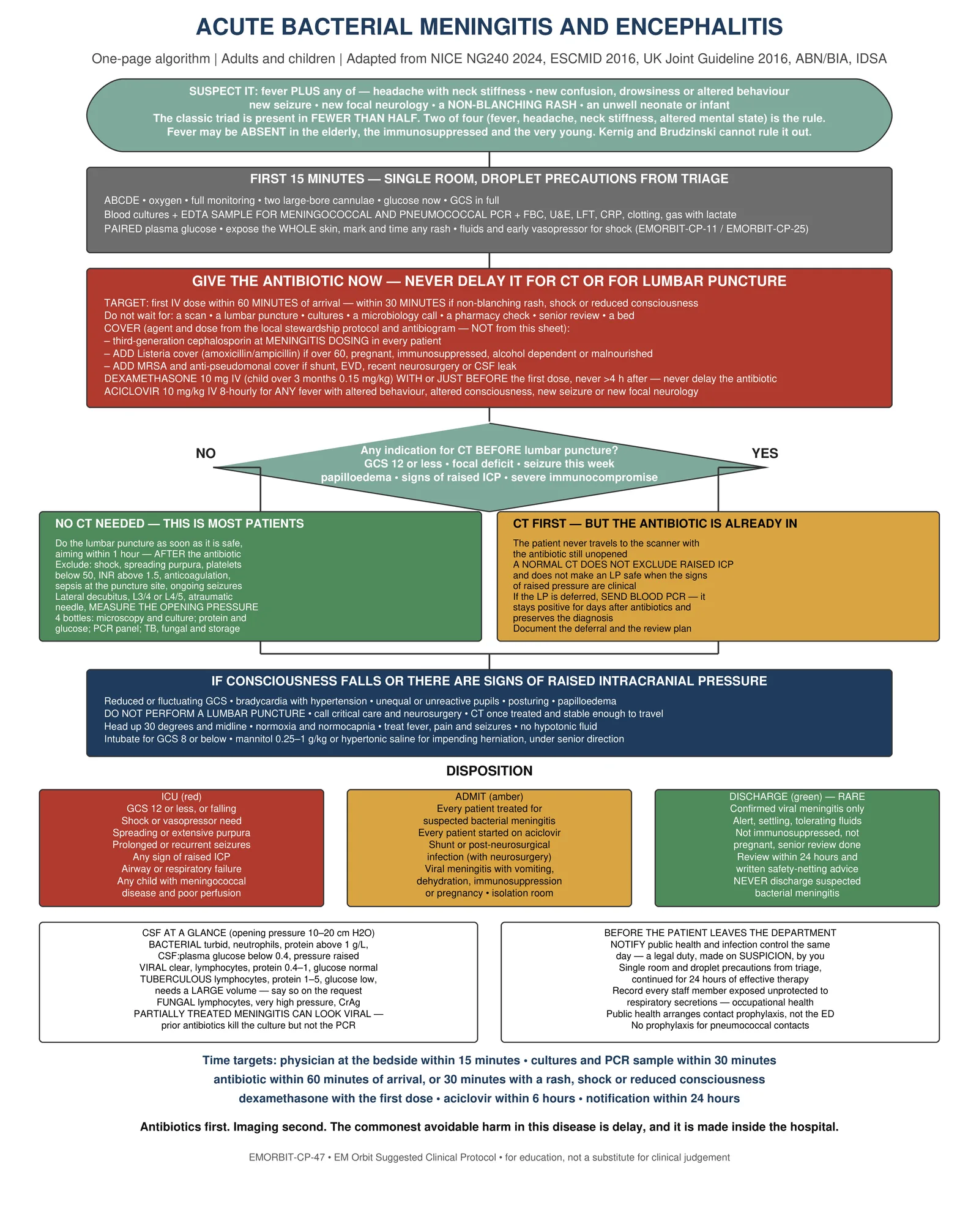
5Algorithm
The one-page algorithm is shown at the top of this page.
6Team roles
6.1Triage Nurse: Recognise and categorise (a normal temperature shall not downgrade it); droplet precautions in a single room, or the 4.3.9 alternative; observations, capillary glucose, Glasgow Coma Scale, whole-skin examination; draw cultures, the EDTA sample and the panel under the standing order; tell the physician the first dose is due.
6.2ED Nurses: Give the antibiotic, dexamethasone and aciclovir without delay and record the exact time of each; reassess at the intervals in 4.3.6 and re-mark the rash hourly; maintain isolation; record by name every staff member with unprotected exposure.
6.3ED Pharmacist: Stock ceftriaxone, dexamethasone and aciclovir in resuscitation with a first-dose card giving meningitis dosing for adults and by weight for children, plus the stewardship-issued alternative for severe beta-lactam allergy once it exists; verify dose and aciclovir renal adjustment without delaying the first dose; audit the times.
6.4Admitting Medical, Infectious Diseases or Paediatric Team: Accept the referral of every patient in this pathway; perform the lumbar puncture and send all cerebrospinal fluid samples (Table 7); arrange magnetic resonance imaging and electroencephalography; review and continue or stop aciclovir and dexamethasone; pursue the autoimmune encephalitis work-up with neurology; make every admission and discharge decision.
6.5Antimicrobial Stewardship and Microbiology: Issue and keep current the second-line regimen for severe penicillin or cephalosporin allergy in meningitis (EMORBIT-CP-57), and be reachable by telephone at the moment of the decision; process cerebrospinal fluid on arrival, not in a queue; report Gram stain and cell count verbally and immediately; run the polymerase chain reaction panels urgently; advise on carriage clearance and cover in the immunosuppressed, the neurosurgical patient and the returning traveller; publish the local antibiogram.
6.6Neurology: Advise on suspected encephalitis, imaging, electroencephalography, non-convulsive status epilepticus, and autoimmune encephalitis including the autoantibody panel, tumour screening and immunotherapy.
6.7Critical Care and Neurosurgery: Critical care attends on any criterion in 4.3.8 and accepts to intensive care. Neurosurgery manages shunt, external ventricular drain and post-craniotomy patients and advises on hydrocephalus and intracranial collections; shunt and reservoir sampling is a neurosurgical procedure and is not performed in the ED.
6.8Radiology: Prioritise and immediately report computed tomography on a Table 5 criterion; arrange urgent magnetic resonance imaging for suspected encephalitis.
6.9Infection Prevention and Control, and Occupational Health: Confirm and publish what single-room and negative-pressure capacity each department has; advise on front-door isolation; receive same-day notification; liaise with public health on tracing and chemoprophylaxis; provide prophylaxis for exposed staff.
6.10Ambulance and Pre-hospital Providers: Pre-alert any non-blanching rash or fever with altered consciousness so the room, team and first dose are ready; hand over time of onset, observations and any antibiotic given with its time and dose.
7The patient's role
7.1 Tell the team about any antibiotic taken in the last few days, all current medication, anything that weakens the immune system, any shunt or previous brain or spinal surgery, pregnancy, recent travel, attendance at a mass gathering, and contact with anyone who has had meningitis.
7.2 Treatment starts before the tests are complete, and the antibiotic is given before any scan or lumbar puncture; this is deliberate and it is what changes the outcome. Expect admission under a medical or paediatric team, who decide about the lumbar puncture and the rest of the treatment.
7.3 Family and close contacts: remain contactable, expect to be approached by the public health team, and take any prophylaxis offered promptly — it works best within 24 hours.
7.4 Attend the arranged follow-up, including hearing assessment where offered: hearing loss is the commonest lasting consequence and is treatable when identified early.
8Definitions
8.1Acute Bacterial Meningitis: bacterial inflammation of the meninges over hours to a few days.
8.2Meningococcal Disease: invasive Neisseria meningitidis infection as meningitis, septicaemia, or both; septicaemia without meningitis carries the highest short-term mortality.
8.3Encephalitis / Meningoencephalitis: inflammation of the brain parenchyma with neurological dysfunction, as distinct from meningeal inflammation; the two frequently coexist, so antibacterial and antiviral cover are given together. Aciclovir criteria: 4.3.5.
8.4Autoimmune Encephalitis: immune-mediated encephalitis, frequently antibody-associated (for example anti-N-methyl-D-aspartate receptor), and treatable with immunotherapy.
8.5Non-blanching Rash and Purpura Fulminans: a petechial or purpuric rash that does not fade under pressure through a clear glass. Purpura fulminans is rapidly progressive extensive purpura with microvascular thrombosis — an absolute contraindication to lumbar puncture and an indication for immediate intensive care.
8.6Opening Pressure: cerebrospinal fluid pressure measured by manometer at the start of a lumbar puncture, valid only in the lateral decubitus position; normal in an adult 10 to 20 cm H₂O.
8.7Partially Treated Meningitis: bacterial meningitis in a patient already given antimicrobial therapy, in whom Gram stain and culture yield fall and the fluid may look lymphocytic and less alarming; polymerase chain reaction stays positive and preserves the diagnosis.
9Attachments
- Attachment 1: One-page algorithm (top of this page)
- Attachment 2: Computed Tomography Before Lumbar Puncture
- Attachment 3: Notification, Chemoprophylaxis and Infection Control Checklist
11Suggested quality indicators
11.1Door-to-antibiotic: (Patients given the first intravenous antibiotic within 60 minutes of arrival / all treated for suspected bacterial meningitis) × 100. Target ≥ 90%. Report the median time, and separately the subgroup with a non-blanching rash, shock or reduced consciousness, where the target is 30 minutes.
11.2Computed tomography did not delay antibiotics: (Patients scanned before the first antibiotic dose / all patients treated for suspected bacterial meningitis) × 100. Target 0%; every case reviewed individually by the ED quality team.
11.3Blood cultures before antibiotics: (Patients with cultures drawn before the first dose / all such patients) × 100. Target ≥ 95%, provided the antibiotic target was not breached; a breach to obtain cultures fails the first indicator.
11.4Dexamethasone given where indicated: (Patients meeting the Table 8 criteria given dexamethasone with, or within 4 hours of, the first antibiotic dose / all meeting those criteria) × 100. Target ≥ 90%.
11.5Aciclovir in suspected encephalitis: (Patients meeting the encephalitis criteria in 4.3.5 given intravenous aciclovir in the ED within 6 hours of arrival / all such patients) × 100. Target ≥ 90%.
11.6Referral and isolation: (Patients in this pathway referred to an admitting team / all such patients) × 100. Target 100%; any ED discharge is reviewed as an incident. Report with the proportion isolated in a single room from triage, and the number of occasions on which no single room was available.
11.7Outcome indicators (monitored, no fixed target): in-hospital mortality; survivors with a documented neurological sequela at discharge including hearing loss, and the proportion referred for audiological assessment; unplanned intensive care admission after leaving the ED; re-attendance within 72 hours with the diagnosis made at the second visit; cases notified within 24 hours.
13References
- National Institute for Health and Care Excellence. Meningitis (bacterial) and meningococcal disease: recognition, diagnosis and management. NICE guideline NG240; 2024.
- van de Beek D, Cabellos C, Dzupova O, et al. ESCMID guideline: diagnosis and treatment of acute bacterial meningitis. Clin Microbiol Infect. 2016;22(Suppl 3):S37–S62.
- McGill F, Heyderman RS, Michael BD, et al. The UK joint specialist societies guideline on the diagnosis and management of acute meningitis and meningococcal sepsis in immunocompetent adults. J Infect. 2016;72(4):405–438.
- Solomon T, Michael BD, Smith PE, et al. Management of suspected viral encephalitis in adults — Association of British Neurologists and British Infection Association National Guidelines. J Infect. 2012;64(4):347–373.
- Kneen R, Michael BD, Menson E, et al. Management of suspected viral encephalitis in children — Association of British Neurologists and British Paediatric Allergy, Immunology and Infection Group National Guidelines. J Infect. 2012;64(5):449–477.
- Tunkel AR, Hartman BJ, Kaplan SL, et al. Practice guidelines for the management of bacterial meningitis. Infectious Diseases Society of America. Clin Infect Dis. 2004;39(9):1267–1284.
- Tunkel AR, Hasbun R, Bhimraj A, et al. 2017 Infectious Diseases Society of America's clinical practice guidelines for healthcare-associated ventriculitis and meningitis. Clin Infect Dis. 2017;64(6):e34–e65.
- van de Beek D, de Gans J, Spanjaard L, et al. Clinical features and prognostic factors in adults with bacterial meningitis. N Engl J Med. 2004;351(18):1849–1859.
- Brouwer MC, McIntyre P, Prasad K, van de Beek D. Corticosteroids for acute bacterial meningitis. Cochrane Database Syst Rev. 2015;(9):CD004405.
- Hasbun R, Abrahams J, Jekel J, Quagliarello VJ. Computed tomography of the head before lumbar puncture in adults with suspected meningitis. N Engl J Med. 2001;345(24):1727–1733.
- Glimåker M, Johansson B, Grindborg Ö, et al. Adult bacterial meningitis: earlier treatment and improved outcome following guideline revision promoting prompt lumbar puncture. Clin Infect Dis. 2015;60(8):1162–1169.
- Venkatesan A, Tunkel AR, Bloch KC, et al. Case definitions, diagnostic algorithms, and priorities in encephalitis: consensus statement of the International Encephalitis Consortium. Clin Infect Dis. 2013;57(8):1114–1128.
- Graus F, Titulaer MJ, Balu R, et al. A clinical approach to diagnosis of autoimmune encephalitis. Lancet Neurol. 2016;15(4):391–404.
- UK Health Security Agency. Guidance for public health management of meningococcal disease in the UK. London: UKHSA (current edition).
- World Health Organization. Defeating meningitis by 2030: a global road map. Geneva: WHO; 2021.
- Royal College of Emergency Medicine. Clinical standards and best practice guidance relevant to the management of the acutely unwell patient with suspected central nervous system infection. London: RCEM.
- Ministry of Health and Prevention, United Arab Emirates. National communicable disease surveillance and notification requirements (Federal Law No. 14 of 2014 concerning the control of communicable diseases)
A2Attachment 2: Computed Tomography Before Lumbar Puncture
| Scan BEFORE lumbar puncture | Scan NOT required before lumbar puncture |
|---|---|
| Focal neurological deficit (excluding an isolated cranial nerve VI or VII palsy). | Fever, headache, neck stiffness and photophobia in an alert patient with a normal neurological examination — the majority of patients. |
| New seizure within the preceding week, or any seizure that has not fully resolved. | Confusion alone in a patient otherwise rousable and neurologically normal, with a Glasgow Coma Scale above 12. |
| Papilloedema. | Age alone, however old the patient. |
| Glasgow Coma Scale of 12 or below, a fall of 3 or more points, or fluctuating consciousness. | A non-blanching rash — a contraindication to the lumbar puncture itself, not an indication for imaging. |
| Any clinical sign of raised intracranial pressure: relative bradycardia with hypertension, unequal, dilated or poorly reactive pupils, abnormal posturing, abnormal doll's eye movements, abnormal breathing. | Anticoagulation or thrombocytopenia — again a contraindication to the puncture, not an indication for a scan. |
| Severe immunocompromise (HIV with a low CD4 count, transplantation, active chemotherapy, high-dose corticosteroids), where a mass lesion, abscess or toxoplasmosis is realistic. | A wish to "be safe", to satisfy a referring team, or to document a normal scan before a routine lumbar puncture. |
| Central nervous system disease with mass effect: known space-occupying lesion, previous stroke with a residual deficit, or abscess. | Suspected subarachnoid haemorrhage, which follows its own pathway for a different reason. |
Computed tomography is not required in most patients, and requesting it unnecessarily is one of the commonest causes of delayed treatment. A normal scan does not exclude raised intracranial pressure and does not make a lumbar puncture safe where there are clinical signs of raised pressure — that decision is clinical, not radiological. Whenever a scan is performed, the antibiotic, dexamethasone and aciclovir shall already have been given.
A3Attachment 3: Notification, Chemoprophylaxis and Infection Control Checklist
Note: the notification form, route, recipient and statutory timeframe, and the chemoprophylaxis agents and doses by age band including the choice in pregnancy follow the national health authority and the hospital's infection prevention and control team.
| Item | Requirement |
|---|---|
| Notification | Suspected bacterial meningitis and meningococcal disease are notifiable, and notification is a legal duty, made on clinical suspicion — not deferred until the organism is confirmed, and not the laboratory's job. Notify local infection prevention and control and the public health authority the same day and within 24 hours. |
| Who notifies | The treating ED physician, before the patient leaves the department, recording to whom and at what time. Where the patient is transferred, the notifying department still notifies. |
| Who arranges chemoprophylaxis | Public health — the ED does not undertake contact tracing. ED duties: notify promptly, record close contacts present in the department, refer exposed staff to occupational health. |
| Which contacts qualify (meningococcal disease) | Prolonged close contact in a household or household-like setting, including student accommodation, in the 7 days before onset; intimate kissing contacts; transient contacts directly exposed to large-particle respiratory droplets or secretions. |
| Which staff qualify | Only those whose mouth or nose was directly exposed to respiratory droplets or secretions — unprotected mouth-to-mouth resuscitation, airway management, intubation or suctioning without mask and eye protection. Routine care, blood-taking, cannulation and performing a lumbar puncture do not qualify. Record every exposed staff member by name at the time. |
| Which contacts do not qualify | Casual contacts at school or work, brief room-sharing, staff who used appropriate protection, and contacts of pneumococcal meningitis, for whom no chemoprophylaxis is indicated. |
| Agents and timing | Most effective within 24 hours of diagnosis of the index case. Single-dose ciprofloxacin is the usual first line for adults and children including in pregnancy; rifampicin over 2 days and single-dose intramuscular ceftriaxone are the usual alternatives. Doses by age band and the pregnancy choice follow national guidance — see the attachment preamble. Vaccination of contacts is arranged by public health. |
| The index patient | Where the treating agent does not reliably clear nasopharyngeal carriage, carriage-clearing prophylaxis is required before discharge from hospital; a third-generation cephalosporin clears carriage. Confirm with microbiology and hand over. |
| Isolation at the front door | A single room with droplet precautions from the moment of triage, until 24 hours of effective antibiotic therapy. Fluid-resistant surgical mask within one metre, with eye protection for airway procedures and the lumbar puncture. Where no single room is available, apply the alternative in 4.3.9 and record it — isolation capacity never delays the antibiotic. |
| Airborne and enhanced precautions | Suspected tuberculous meningitis with possible pulmonary tuberculosis: airborne precautions, filtering facepiece respirator, negative-pressure room where available. Possible viral haemorrhagic fever: stop, isolate, and follow the high-consequence infectious disease pathway before further samples. |
| ✓ | Item |
|---|---|
| ☐ | First antibiotic dose given and its exact time recorded; if the target was missed, the reason recorded. |
| ☐ | The antibiotic preceded any computed tomography and any lumbar puncture. |
| ☐ | Dexamethasone given where indicated, or the reason for withholding it recorded (Table 8). |
| ☐ | Aciclovir started where the encephalitis criteria in 4.3.5 are met, or the reason it was not recorded. |
| ☐ | Blood cultures and the EDTA polymerase chain reaction sample sent, whether or not a lumbar puncture is planned. |
| ☐ | A paired plasma glucose taken, for the cerebrospinal fluid glucose ratio. |
| ☐ | Referral made to the admitting medical or paediatric team — every patient in this pathway is referred and none is discharged from the ED. |
| ☐ | Lumbar puncture contraindications, and any Table 5 indication for imaging first, stated at referral. |
| ☐ | Tuberculosis, a fungal cause or autoimmune encephalitis flagged at referral, so the extra volume and stored aliquot are requested. |
| ☐ | Droplet precautions from triage in a single room, or the alternative applied and recorded; the end point (24 hours of effective therapy) handed over. |
| ☐ | Every staff member with unprotected exposure recorded by name and referred to occupational health. |
| ☐ | Close contacts present in the department recorded for the public health team. |
| ☐ | Notification made to infection prevention and control and to public health, with time and recipient recorded. |
| ☐ | Carriage clearance discussed with microbiology and handed over where the treating agent does not reliably eradicate carriage. |
| ☐ | SBAR handover given: times, drugs, deferred investigations, outstanding results, notification status, precautions. Family informed in their own language. |