Heat Stroke and Heat Exhaustion
EMORBIT-CP-23 · Chapter 10 · Toxicological and Environmental Emergencies
Open in the appFree, works on your phone and offline, with every tool alongside.
Evidence base: WMS 2024; RCEM; ACEM
1Purpose
1.1 Provide a standardized, evidence-based framework for the recognition and immediate treatment of heat stroke and heat exhaustion in adults and children presenting to the Emergency Department (ED).
1.2 Establish that heat stroke is a time-critical emergency in which cooling is the only treatment that alters outcome, that cooling takes precedence over investigation, imaging and transfer, and that the target is a core temperature below 39 °C within 30 minutes of recognition.
1.3 Eliminate the two commonest errors in the management of heat stroke: measuring the temperature at an unreliable site and therefore missing the diagnosis, and giving antipyretics, which do not work and cause harm.
1.4 Define the recognition and management of the complications that cause death after the temperature has been corrected, in particular rhabdomyolysis, acute kidney injury, disseminated intravascular coagulation and acute liver failure.
1.5 Ensure consistency of practice among all healthcare providers (HCP) and alignment with the Wilderness Medical Society clinical practice guidelines, the Royal College of Emergency Medicine (RCEM), the American College of Emergency Physicians (ACEP), and the Australasian College for Emergency Medicine (ACEM), adapted to local climate and working population.
2Who this protocol applies to
2.1 Patients of any age presenting to the ED with a raised core temperature attributable to environmental heat exposure or exertion, including heat cramps, heat syncope, heat exhaustion and heat stroke.
2.2 Any patient who collapses, becomes confused, or is found unwell in hot conditions, including outdoor workers, athletes, military and police recruits, pilgrims and travellers, and people found in an overheated dwelling or vehicle.
2.3 Any child found in a parked vehicle, regardless of how long they are said to have been there.
2.4 Patients transferred from another facility or brought by ambulance with suspected heat illness, including those in whom cooling has already been started.
3Not covered by this protocol
3.1 Fever due to infection, which is a regulated rise in the hypothalamic set point and is managed under the relevant infection or sepsis guideline. Note that sepsis is the commonest alternative diagnosis and the two may coexist; a septic screen is taken but never delays cooling.
3.2 Malignant hyperthermia following anaesthesia, which is managed under the anaesthetic emergency protocol and is the one hyperthermic syndrome in which dantrolene is indicated.
3.3 Neuroleptic malignant syndrome, serotonin syndrome, thyroid storm, and sympathomimetic or anticholinergic toxicity, which have specific treatments and are managed under the ED guideline on the poisoned patient (EMORBIT-CP-21). Active cooling is still required in all of them.
3.4 Burns, including sunburn without systemic features, which are managed under the burns pathway.
4Protocol
4.1History and Assessment:
4.1.1Triage and Recognition:
4.1.1.1 Any patient who has collapsed, is confused, or is unwell after heat exposure or exertion shall be triaged as Category 1 and taken directly to the resuscitation area.
4.1.1.2 A core temperature shall be measured within 5 minutes of arrival, using a rectal or oesophageal probe. Tympanic, temporal, axillary and oral measurements are unreliable in heat illness and will underestimate the true core temperature; a normal reading from any of these sites does not exclude heat stroke.
4.1.1.3 Heat stroke is diagnosed clinically: a raised core temperature, usually above 40 °C, together with any central nervous system dysfunction — confusion, agitation, irritability, ataxia, slurred speech, bizarre behaviour, seizure or coma.
4.1.1.4 Where the patient has been cooled before arrival, or where only an unreliable site was measured, the diagnosis is made on the history and the neurological state, and cooling is continued.
4.1.1.5 Capillary glucose shall be measured immediately in every patient, because hypoglycaemia is common in exertional heat stroke and in hepatic involvement, and is itself a cause of confusion.
4.1.1.6
Table 1: The spectrum of heat illness — the dividing line is central nervous system dysfunction, not the temperature alone Condition Core temperature Clinical features ED action Heat cramps Normal Painful cramps of the exercising muscles, usually calves, thighs or abdomen; sweating; normal mentation Rest in the cool, oral rehydration with salt-containing fluid, gentle stretching; discharge with advice Heat syncope Normal or mildly raised Transient loss of consciousness on standing after heat exposure, with rapid and complete recovery Lie flat, cool, rehydrate; exclude other causes of syncope before attributing it to heat Heat exhaustion Usually 38–40 °C Headache, nausea, vomiting, dizziness, weakness, myalgia, heavy sweating, tachycardia; mentation is normal Cool actively, rehydrate orally or intravenously, check glucose, sodium and creatine kinase, reassess at 30 minutes HEAT STROKE Usually above 40 °C Any central nervous system dysfunction: confusion, agitation, irritability, ataxia, slurred speech, bizarre behaviour, seizure, coma IMMEDIATE AGGRESSIVE COOLING; resuscitation; intensive care A patient who is confused, ataxic or drowsy after heat exposure has heat stroke until proven otherwise, even if the recorded temperature is below 40 °C — the temperature may already have fallen with pre-hospital cooling, or may have been measured at an unreliable site. Treat on the clinical picture.
4.1.2History (obtained from the patient, bystanders, colleagues, family and the ambulance crew, in parallel with cooling):
4.1.2.1 The environment and the exposure: ambient temperature and humidity, duration, direct sun, time since the patient was last seen well, and whether the patient was working, exercising, walking, or found collapsed.
4.1.2.2 Occupation and activity: outdoor labour, construction, agriculture, delivery work, security, sport, military or police training, religious pilgrimage.
4.1.2.3 Acclimatisation: how long the patient has been in the country or in the hot environment, and whether they have recently returned from a cooler climate.
4.1.2.4 Fluid and salt intake, and access to shade, rest and water.
4.1.2.5 Clothing and equipment: heavy, occlusive or protective clothing, body armour, sports equipment.
4.1.2.6 Medication, in particular anticholinergics, antipsychotics, antihistamines, diuretics, beta-blockers, and drugs causing serotonin excess; alcohol, stimulants and recreational drugs.
4.1.2.7 Comorbidity: cardiovascular disease, diabetes, renal or hepatic disease, obesity, skin disease limiting sweating, previous heat illness, sickle cell trait, and recent febrile or gastrointestinal illness.
4.1.2.8 For a child: how long in the vehicle or the hot environment, and by whom they were found — this is also a safeguarding question.
4.1.3Examination:
4.1.3.1 Continuous core temperature monitoring with an indwelling probe throughout cooling; a single reading is not sufficient.
4.1.3.2 Airway, breathing and circulation; level of consciousness with the Glasgow Coma Scale; pupils; focal neurological signs; seizure activity, including subtle signs.
4.1.3.3 Skin: sweating or anhidrosis, flushing, mottling, and petechiae or bleeding suggesting coagulopathy.
4.1.3.4 Signs of hypovolaemia, and signs of the differential diagnoses in section 4.1.5, in particular meningism and a rash.
4.1.3.5 A full secondary survey once cooling is under way, including for injury sustained during collapse.
4.1.3.6
Table 2: Classic and exertional heat stroke differ in who gets them, how fast they develop, and how they are cooled Feature Classic (non-exertional) Exertional Typical patient Older person, infant, chronic illness, immobility, psychiatric illness, no air conditioning; a child left in a parked vehicle Young and fit: outdoor labourer, athlete, military or police recruit, pilgrim walking in the heat Onset Over hours to days, during a heatwave Over minutes to hours, during exertion Skin Classically hot and dry (anhidrosis) Often still sweating profusely — sweating does not exclude heat stroke Contributing factors Anticholinergics, antipsychotics, diuretics, beta-blockers, antihistamines; dehydration; recent febrile illness; social isolation High humidity, heavy clothing or protective equipment, poor acclimatisation, dehydration, sleep deprivation, stimulant use, intercurrent illness Preferred cooling Evaporative and convective cooling (spray and fan) plus ice packs; immersion is often impractical and poorly tolerated Cold-water immersion, which is the treatment of choice and has the fastest cooling rate Complications Cardiovascular collapse, acute kidney injury, and the complications of the precipitating illness Rhabdomyolysis, acute kidney injury, disseminated intravascular coagulation and hepatic injury are more prominent
4.1.4Severity and Risk Stratification:
4.1.4.1 Markers of severe illness and a worse outcome: a core temperature above 41 °C, a long interval between collapse and the start of cooling, persisting coma, seizures, hypotension, a lactate above 4 mmol/L, and early evidence of coagulopathy or hepatic injury.
4.1.4.2 The determinant of organ damage is the product of temperature and time, which is why the interval to effective cooling is the single most important variable the ED controls.
4.1.4.3 Older patients, infants, and those with chronic disease have a substantially higher mortality from classic heat stroke.
4.1.5Differential Diagnosis (all require active cooling in their own right, but each has a specific treatment):
4.1.5.1 Sepsis, meningitis and encephalitis — the commonest and most important alternative; take cultures and give antimicrobials where suspected, without delaying cooling.
4.1.5.2 Serotonin syndrome (clonus, hyperreflexia, agitation) and neuroleptic malignant syndrome (rigidity, bradyreflexia, evolving over days) — see EMORBIT-CP-21.
4.1.5.3 Sympathomimetic and anticholinergic toxicity, including amphetamines, cocaine and synthetic cathinones.
4.1.5.4 Thyroid storm, adrenal crisis and phaeochromocytoma.
4.1.5.5 Malignant hyperthermia, where dantrolene is indicated.
4.1.5.6 Salicylate poisoning, which causes hyperthermia with a mixed acid-base disturbance.
4.1.5.7 Status epilepticus and the post-ictal state (EMORBIT-CP-02); intracranial haemorrhage and traumatic brain injury following collapse.
4.1.6Special Populations:
4.1.6.1 Outdoor workers: the largest group presenting in the summer months. Ask about the employer, the work pattern and access to shade and water; the episode may require occupational health notification under the applicable labour regulations.
4.1.6.2 Children: a higher surface-area to mass ratio, a lower sweating capacity and dependence on adults for fluid and shelter. A child found in a parked vehicle is a medical emergency and a safeguarding referral. Cooling methods are the same; use weight-based fluids and monitor glucose closely.
4.1.6.3 Older people: classic heat stroke with a slow onset, few symptoms and a high mortality; often on medication that impairs thermoregulation. Fluid resuscitation must be cautious and guided by reassessment.
4.1.6.4 Pregnancy: maternal hyperthermia is harmful to the fetus; cool aggressively, involve obstetrics, and monitor the fetus where the gestation makes it appropriate.
4.1.6.5 Athletes and recruits: exertional heat stroke with rapid onset; cold-water immersion on site before transfer is appropriate and should be encouraged, and cooling should not be interrupted for transport.
4.1.6.6 Pilgrims and travellers: unacclimatised, often elderly, frequently dehydrated and walking long distances; language barriers are common and an interpreter should be arranged early.
4.2Investigations:
4.2.1 No investigation shall delay the start of cooling. Blood is taken as access is obtained, while cooling is already under way.
4.2.2 Capillary glucose immediately, and repeated at least hourly while the patient is unwell.
4.2.3 Venous or arterial blood gas with lactate; urea, electrolytes and creatinine; creatine kinase; liver function tests; coagulation profile including fibrinogen; full blood count; calcium, magnesium and phosphate.
4.2.4 Urinalysis for myoglobinuria, and urine output measurement with a catheter in any patient with heat stroke.
4.2.5 12-lead electrocardiogram; continuous cardiac monitoring.
4.2.6 Blood cultures and a septic screen where infection is a possible alternative or concurrent diagnosis; a chest radiograph where indicated.
4.2.7 Repeat creatine kinase, renal function, coagulation and liver function at 6 to 12 hours, because rhabdomyolysis, coagulopathy and hepatic injury evolve over hours to days and the initial values may be normal.
4.2.8 Computed tomography of the head only where there is a suspicion of intracranial pathology or head injury, and only once the patient is cooled and stable enough to leave the department.
4.3Plan of Care:
4.3.1Immediate Actions — cool first (first 10 minutes):
4.3.1.1 Move to the resuscitation area, call for help, and start cooling immediately. The clock for the 30-minute target starts at recognition.
4.3.1.2 Remove all clothing; secure the airway and give oxygen; attach continuous monitoring including an indwelling core temperature probe; obtain large-bore intravenous access.
4.3.1.3 Check and correct the glucose.
4.3.1.4 Begin the appropriate cooling method (Table 3): cold-water immersion for exertional heat stroke where it can be delivered safely; evaporative and convective cooling (undress, spray with tepid water, fan continuously) for classic heat stroke, for the elderly, and wherever immersion is impractical; with ice packs to the neck, axillae and groins as an adjunct in both.
4.3.1.5 Do not interrupt cooling for imaging, for transfer between areas, or for procedures that can wait.
4.3.1.6
Table 3: Cooling methods, by approximate cooling rate Method Approximate rate How it is done Cautions Cold-water immersion 0.15–0.35 °C per minute Immerse to the neck in water at 2–15 °C, with continuous agitation; one person holds the head and airway at all times Needs a tub, water and staff; impractical in an unstable or unconscious patient without a secured airway; monitoring leads must be protected Evaporative and convective cooling 0.05–0.1 °C per minute Undress completely, spray continuously with tepid water (approximately 20–25 °C) and direct large fans over the patient The default when immersion is impossible; keep the skin wet, otherwise it stops working; effective in the elderly Ice packs to the neck, axillae and groins Adjunct only Applied over the great vessels, in addition to one of the methods above Not sufficient on its own Cold intravenous fluid Adjunct only Refrigerated 0.9% sodium chloride, volume guided by perfusion Do not use volume loading as a cooling strategy Cooling blankets, intravascular and endovascular devices Variable Where available, usually in the intensive care unit Should not delay the immediate methods above Antipyretics (paracetamol, ibuprofen, aspirin) NO ROLE Not to be given for heat stroke The hypothalamic set point is normal in heat stroke, so antipyretics do not lower the temperature; they add hepatic and renal injury and worsen coagulopathy Dantrolene NO ROLE Not to be given for heat stroke Ineffective in heat stroke; reserved for malignant hyperthermia and neuroleptic malignant syndrome
4.3.2Cooling Targets and Their Limits:
4.3.2.1 Target a core temperature below 39 °C within 30 minutes of recognition.
4.3.2.2 Stop active cooling at 38.5 °C to avoid overshoot and rebound hypothermia, then continue continuous temperature monitoring; recurrence of hyperthermia requires cooling to be restarted.
4.3.2.3 Shivering generates heat and defeats cooling: treat it with a benzodiazepine (for example midazolam in small intravenous increments, titrated to effect), not by slowing the cooling.
4.3.2.4 Antipyretics shall not be given. The hypothalamic set point is normal in heat stroke, so they cannot lower the temperature, and paracetamol adds hepatic injury in a patient at risk of liver failure while non-steroidal anti-inflammatory drugs add renal injury and bleeding risk.
4.3.2.5 Dantrolene shall not be given for heat stroke; it is ineffective and its use has been associated with delay in effective cooling.
4.3.3Resuscitation and Supportive Care (simultaneous with cooling):
4.3.3.1 Airway protection and intubation for a persistently reduced conscious level, loss of airway reflexes, or refractory seizures; anticipate that cooling itself may improve conscious level.
4.3.3.2 Fluids: give balanced crystalloid guided by perfusion, blood pressure, lactate and urine output rather than by a fixed volume. Hypotension often improves substantially with cooling alone as peripheral vasodilatation reverses; over-filling before cooling causes pulmonary oedema, particularly in older patients.
4.3.3.3 Where hypotension persists despite cooling and appropriate fluid, start a vasopressor and involve intensive care; consider an alternative diagnosis, particularly sepsis and haemorrhage.
4.3.3.4 Treat seizures with a benzodiazepine as in EMORBIT-CP-02; correct hypoglycaemia and electrolyte abnormalities.
4.3.3.5 Monitor for and treat hyperkalaemia (EMORBIT-CP-10), which may be severe in rhabdomyolysis.
4.3.4The Complications That Cause Death After the Temperature Is Corrected:
4.3.4.1 Rhabdomyolysis and acute kidney injury: check creatine kinase on arrival and at 6 to 12 hours; once perfusion is restored, give generous crystalloid targeting a urine output of 1 to 2 mL/kg/hour; monitor potassium, calcium, phosphate and renal function; involve nephrology early. The role of urinary alkalinisation is uncertain and shall be a critical care decision.
4.3.4.2 Disseminated intravascular coagulation: suspect it with bleeding from puncture sites, a falling platelet count, a rising INR, or a falling fibrinogen; send a coagulation profile including fibrinogen on arrival and repeat it; manage with haematology and per the massive haemorrhage pathway (EMORBIT-CP-27) if bleeding.
4.3.4.3 Acute liver failure: transaminases rise in almost all heat stroke and may peak at 48 to 72 hours; watch for hypoglycaemia, a rising INR and encephalopathy, and refer early where these develop.
4.3.4.4 Other: acute respiratory distress syndrome, arrhythmia, myocardial injury, seizures, cerebral oedema, and persisting cerebellar dysfunction, which may be permanent.
4.3.5Disposition:
4.3.5.1Intensive care admission:
- All patients with heat stroke.
- Persisting central nervous system dysfunction, seizures, or a need for airway protection.
- Rhabdomyolysis with acute kidney injury, coagulopathy, hepatic dysfunction, or haemodynamic instability.
4.3.5.2Ward admission:
- Heat exhaustion that has not resolved after treatment and observation in the ED.
- An older or comorbid patient, or one with an electrolyte disturbance or a raised creatine kinase without organ failure.
- Any patient with no safe, cool environment to return to.
4.3.5.3Discharge from the ED:
- Heat exhaustion only, fully recovered, alert, tolerating oral fluid, with normal glucose, sodium and creatine kinase.
- A safe and cool environment to return to, and a companion for the next 24 hours.
- Written prevention advice given (section 4.3.7) and a plan for review if symptoms recur.
4.3.6Prevention Advice Before Discharge:
4.3.6.1 Acclimatise gradually over 10 to 14 days when returning to hot work or training.
4.3.6.2 Drink to thirst and replace salt when sweating heavily for prolonged periods; avoid alcohol.
4.3.6.3 Work and rest in the shade, take scheduled breaks, and observe the applicable midday working restrictions.
4.3.6.4 Recognise the early symptoms — headache, nausea, cramps, dizziness, weakness — and stop and cool at once.
4.3.6.5 Never leave a child, an older person or an animal in a parked vehicle, even briefly; the cabin temperature exceeds 50 °C within minutes.
4.3.6.6 Check on elderly relatives, neighbours and anyone living alone at least daily during a heatwave.
4.3.6.7 A previous episode of heat illness increases the risk of another; those with exertional heat stroke need medical clearance and graduated return before resuming full training or heavy outdoor work.
4.3.7Documentation and Reporting:
4.3.7.1 Document: the site of temperature measurement and every reading with its time, the time cooling started and stopped, the method used, the neurological state on arrival and its evolution, the fluids and drugs given, the complications identified, and the disposition.
4.3.7.2 Heat-related presentations shall be recorded for departmental surveillance so that the seasonal burden and any occupational cluster can be reported.
4.3.7.3 Where a child is found in a vehicle or an unsafe environment, a safeguarding referral shall be made in accordance with the local safeguarding policy.
4.3.7.4 Where a cluster of cases arises from one employer or site, the ED shall notify occupational health and the appropriate authority in accordance with local policy and labour regulations.
5Algorithm
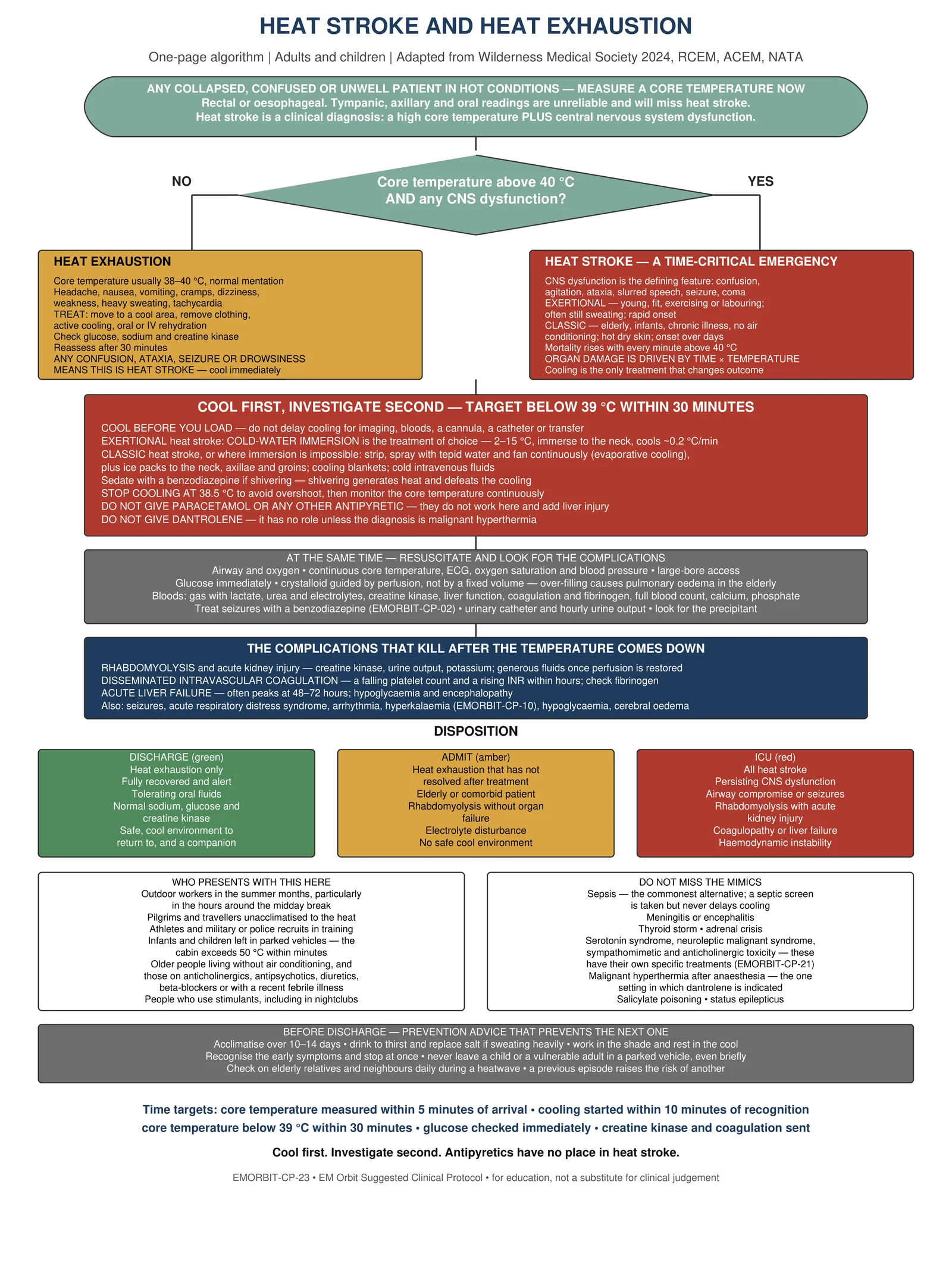
The one-page algorithm is shown at the top of this page.
6Team roles
6.1Triage Nurse:
6.1.1 Recognise heat illness in any patient who has collapsed or is confused after heat exposure; assign Category 1; move the patient to the resuscitation area.
6.1.2 Measure a core temperature rectally within 5 minutes and record the site used; check capillary glucose.
6.1.3 Begin undressing and cooling under the approved nursing standing order without waiting for physician review.
6.2ED Nurses:
6.2.1 Deliver and maintain the cooling method continuously; keep the skin wet where evaporative cooling is used; protect monitoring leads during immersion.
6.2.2 Record the core temperature at least every 5 minutes during active cooling and stop at 38.5 °C, informing the treating physician.
6.2.3 Maintain fluid balance and hourly urine output; report any dark urine suggesting myoglobinuria.
6.2.4 Ensure privacy and dignity while the patient is undressed, and maintain safe manual handling during immersion.
6.3Clinical Pharmacist:
6.3.1 Ensure benzodiazepines, cooled intravenous fluids and vasopressors are available; review the patient's medication for drugs that impair thermoregulation.
6.3.2 Reinforce that antipyretics and dantrolene are not indicated, and support the team in withholding them.
6.4Critical Care:
6.4.1 Attend early for all heat stroke; direct airway management, haemodynamic support, and the management of rhabdomyolysis, coagulopathy and hepatic failure; accept to intensive care.
6.5Nephrology and Haematology:
6.5.1 Advise on rhabdomyolysis, acute kidney injury and renal replacement therapy, and on disseminated intravascular coagulation.
6.6Laboratory:
6.6.1 Prioritise creatine kinase, renal function, coagulation with fibrinogen, and liver function; report critical results verbally.
6.7Ambulance and Pre-hospital Providers:
6.7.1 Start cooling at the scene and continue it during transport; pre-alert the ED; report the time of collapse, the environment, and the cooling already given.
7The patient's role
7.1 Describe the exposure, the activity, fluid intake, and all medication and recreational drug use.
7.2 Cooperate with undressing and cooling, which is uncomfortable but is the treatment.
7.3 Follow the written prevention advice, and allow adequate time and medical clearance before returning to hot work, training or sport.
7.4 Family, employers and carers: ensure access to shade, rest and water; check on vulnerable people during hot weather; never leave anyone in a parked vehicle.
7.5 Return to the ED for recurrence of symptoms, dark urine, reduced urine output, persisting confusion, or bleeding.
8Definitions
8.1Core Temperature: the temperature of the body core, measured for these purposes rectally or oesophageally. Tympanic, temporal, oral and axillary readings are not core temperatures and are unreliable in heat illness.
8.2Heat Exhaustion: heat illness with a core temperature usually between 38 and 40 °C and normal mentation, which resolves with cooling and rehydration.
8.3Heat Stroke: a raised core temperature, usually above 40 °C, with central nervous system dysfunction, constituting a medical emergency with a high mortality.
8.4Classic (Non-exertional) Heat Stroke: heat stroke arising from environmental exposure without exertion, typically in older, very young or chronically ill people during a heatwave.
8.5Exertional Heat Stroke: heat stroke arising during physical exertion, typically in young, previously healthy people.
8.6Acclimatisation: the physiological adaptation to heat that occurs over 10 to 14 days of graded exposure, improving sweating efficiency and cardiovascular stability.
8.7Rhabdomyolysis: breakdown of skeletal muscle releasing myoglobin, creatine kinase and potassium, which may cause acute kidney injury.
8.8Anhidrosis: absence of sweating; a classic but unreliable sign, since many patients with exertional heat stroke are still sweating.
8.9WMS, RCEM, ACEP, ACEM, NATA: Wilderness Medical Society; Royal College of Emergency Medicine; American College of Emergency Physicians; Australasian College for Emergency Medicine; National Athletic Trainers' Association.
9Attachments
- Attachment 1: One-page algorithm (top of this page)
- Attachment 2: The Spectrum of Heat Illness, and Classic versus Exertional Heat Stroke
- Attachment 3: Cooling Methods and Targets
- Attachment 4: Heat Stroke Time-Record and Complication Screen
11Suggested quality indicators
11.1Core temperature measured correctly: (Number of suspected heat illness patients with a rectal or oesophageal temperature documented within 5 minutes of arrival / Total number of suspected heat illness patients) × 100. Target ≥ 90%.
11.2Time to start of cooling: (Number of heat stroke patients in whom active cooling was started within 10 minutes of recognition / Total number of heat stroke patients) × 100. Target ≥ 90%.
11.3Cooling target achieved: (Number of heat stroke patients with a core temperature below 39 °C within 30 minutes of recognition / Total number of heat stroke patients) × 100. Target ≥ 80%.
11.4Antipyretics avoided: (Number of heat stroke patients who received no antipyretic in the ED / Total number of heat stroke patients) × 100. Target 100%.
11.5Complication screen completed: (Number of heat stroke patients with creatine kinase, coagulation profile and renal function sent in the ED / Total number of heat stroke patients) × 100. Target ≥ 95%.
11.6Outcome indicators (monitored, no fixed target): mortality; acute kidney injury requiring renal replacement therapy; intensive care length of stay; and the seasonal number of presentations, reported by month and by occupational group.
13References
- Lipman GS, Gaudio FG, Eifling KP, et al. Wilderness Medical Society Clinical Practice Guidelines for the Prevention and Treatment of Heat Illness: 2024 Update. Wilderness Environ Med.
- Epstein Y, Yanovich R. Heatstroke. N Engl J Med. 2019;380(25):2449–2459.
- Bouchama A, Knochel JP. Heat stroke. N Engl J Med. 2002;346(25):1978–1988.
- Casa DJ, DeMartini JK, Bergeron MF, et al. National Athletic Trainers' Association Position Statement: Exertional Heat Illnesses. J Athl Train. 2015;50(9):986–1000.
- Bouchama A, Abuyassin B, Lehe C, et al. Classic and exertional heatstroke. Nat Rev Dis Primers. 2022;8:8.
- Royal College of Emergency Medicine. Clinical standards and best practice guidance relevant to environmental emergencies. London: RCEM.
- World Health Organization. Heat and health; public health advice on heatwaves.
A2Attachment 2: The Spectrum of Heat Illness, and Classic versus Exertional Heat Stroke
| Condition | Core temperature | Clinical features | ED action |
|---|---|---|---|
| Heat cramps | Normal | Painful cramps of the exercising muscles, usually calves, thighs or abdomen; sweating; normal mentation | Rest in the cool, oral rehydration with salt-containing fluid, gentle stretching; discharge with advice |
| Heat syncope | Normal or mildly raised | Transient loss of consciousness on standing after heat exposure, with rapid and complete recovery | Lie flat, cool, rehydrate; exclude other causes of syncope before attributing it to heat |
| Heat exhaustion | Usually 38–40 °C | Headache, nausea, vomiting, dizziness, weakness, myalgia, heavy sweating, tachycardia; mentation is normal | Cool actively, rehydrate orally or intravenously, check glucose, sodium and creatine kinase, reassess at 30 minutes |
| HEAT STROKE | Usually above 40 °C | Any central nervous system dysfunction: confusion, agitation, irritability, ataxia, slurred speech, bizarre behaviour, seizure, coma | IMMEDIATE AGGRESSIVE COOLING; resuscitation; intensive care |
A patient who is confused, ataxic or drowsy after heat exposure has heat stroke until proven otherwise, even if the recorded temperature is below 40 °C — the temperature may already have fallen with pre-hospital cooling, or may have been measured at an unreliable site. Treat on the clinical picture.
| Feature | Classic (non-exertional) | Exertional |
|---|---|---|
| Typical patient | Older person, infant, chronic illness, immobility, psychiatric illness, no air conditioning; a child left in a parked vehicle | Young and fit: outdoor labourer, athlete, military or police recruit, pilgrim walking in the heat |
| Onset | Over hours to days, during a heatwave | Over minutes to hours, during exertion |
| Skin | Classically hot and dry (anhidrosis) | Often still sweating profusely — sweating does not exclude heat stroke |
| Contributing factors | Anticholinergics, antipsychotics, diuretics, beta-blockers, antihistamines; dehydration; recent febrile illness; social isolation | High humidity, heavy clothing or protective equipment, poor acclimatisation, dehydration, sleep deprivation, stimulant use, intercurrent illness |
| Preferred cooling | Evaporative and convective cooling (spray and fan) plus ice packs; immersion is often impractical and poorly tolerated | Cold-water immersion, which is the treatment of choice and has the fastest cooling rate |
| Complications | Cardiovascular collapse, acute kidney injury, and the complications of the precipitating illness | Rhabdomyolysis, acute kidney injury, disseminated intravascular coagulation and hepatic injury are more prominent |
A3Attachment 3: Cooling Methods and Targets
Cooling is the only intervention that alters outcome in heat stroke. It begins at recognition, continues without interruption, and is not delayed for investigation, imaging or transfer. The target is a core temperature below 39 °C within 30 minutes, stopping active cooling at 38.5 °C to avoid overshoot.
| Method | Approximate rate | How it is done | Cautions |
|---|---|---|---|
| Cold-water immersion | 0.15–0.35 °C per minute | Immerse to the neck in water at 2–15 °C, with continuous agitation; one person holds the head and airway at all times | Needs a tub, water and staff; impractical in an unstable or unconscious patient without a secured airway; monitoring leads must be protected |
| Evaporative and convective cooling | 0.05–0.1 °C per minute | Undress completely, spray continuously with tepid water (approximately 20–25 °C) and direct large fans over the patient | The default when immersion is impossible; keep the skin wet, otherwise it stops working; effective in the elderly |
| Ice packs to the neck, axillae and groins | Adjunct only | Applied over the great vessels, in addition to one of the methods above | Not sufficient on its own |
| Cold intravenous fluid | Adjunct only | Refrigerated 0.9% sodium chloride, volume guided by perfusion | Do not use volume loading as a cooling strategy |
| Cooling blankets, intravascular and endovascular devices | Variable | Where available, usually in the intensive care unit | Should not delay the immediate methods above |
| Antipyretics (paracetamol, ibuprofen, aspirin) | NO ROLE | Not to be given for heat stroke | The hypothalamic set point is normal in heat stroke, so antipyretics do not lower the temperature; they add hepatic and renal injury and worsen coagulopathy |
| Dantrolene | NO ROLE | Not to be given for heat stroke | Ineffective in heat stroke; reserved for malignant hyperthermia and neuroleptic malignant syndrome |
A4Attachment 4: Heat Stroke Time-Record and Complication Screen
This record shall be completed contemporaneously for every patient with heat stroke and filed in the medical record, with a copy retained by the ED quality team for audit.
| Item | Time | Entry / initials |
|---|---|---|
| Arrival at the ED | ||
| First core temperature (state the site used) | ________ °C, site: ________ | |
| Capillary glucose | ________ mmol/L | |
| Heat stroke recognised (T0) | ||
| Active cooling started (state the method) | ||
| Core temperature at 10 minutes | ________ °C | |
| Core temperature at 20 minutes | ________ °C | |
| Core temperature at 30 minutes (target below 39 °C) | ________ °C | |
| Active cooling stopped at 38.5 °C | ||
| Benzodiazepine given for shivering | ||
| Intensive care informed | ||
| Departure from the ED (destination) |
| Investigation | On arrival | At 6–12 hours | Action taken |
|---|---|---|---|
| Creatine kinase | |||
| Creatinine and potassium | |||
| INR, platelets, fibrinogen | |||
| ALT / AST and bilirubin | |||
| Lactate and pH | |||
| Glucose | |||
| Urine output (mL/kg/hour) and colour |
| ✓ | Item |
|---|---|
| ☐ | No antipyretic and no dantrolene was given. |
| ☐ | Core temperature monitoring is continuing, and the receiving team knows the target and the rebound risk. |
| ☐ | Creatine kinase, coagulation and renal function sent, and the repeat timing handed over. |
| ☐ | Alternative diagnoses considered and documented, in particular sepsis. |
| ☐ | Exposure circumstances documented; safeguarding referral made where a child or vulnerable adult was involved. |
| ☐ | Occupational cluster considered and reported where relevant. |
| ☐ | Written prevention advice given in the patient's language (for discharged patients). |