General Approach to the Poisoned Patient in the Emergency Department
EMORBIT-CP-21 · Chapter 10 · Toxicological and Environmental Emergencies
Open in the appFree, works on your phone and offline, with every tool alongside.
Evidence base: AACT/EAPCCT; TOXBASE; ACEM
1Purpose
1.1 Provide a standardized, evidence-based framework for the assessment, resuscitation, risk assessment, treatment, observation and safe disposition of patients of all ages presenting to the Emergency Department (ED) after acute poisoning, whether deliberate, accidental, occupational or recreational.
1.2 Establish the governing principle of clinical toxicology: the poisoned patient is treated by supportive care directed at the disturbed physiology, not by identification of the poison. The great majority of poisoned patients survive without sequelae if the airway, breathing, circulation, blood glucose, core temperature and seizures are managed properly, and delay to those measures while the agent is being identified is the commonest avoidable cause of death.
1.3 Ensure that the small number of interventions that change outcome — the empirical antidotes given during resuscitation, sodium bicarbonate for a wide QRS, benzodiazepines for seizures and agitation, active cooling for hyperthermia, the specific antidote where one exists, and extracorporeal removal where it is indicated — are delivered without delay and in the correct order.
1.4 Standardize a structured risk assessment (agent, dose, time since ingestion, co-ingestants and patient factors) as the basis for every decision about decontamination, investigation, observation period and disposition, on the understanding that the history in overdose is unreliable and the worst plausible ingestion shall be assumed until it is excluded.
1.5 Ensure that every patient who presents after deliberate self-poisoning receives a documented psychosocial and risk assessment before discharge, and that safeguarding concerns in children and vulnerable adults are recognised and escalated.
1.6 Ensure consistency of practice among all healthcare providers (HCP) and alignment with TOXBASE and the United Kingdom National Poisons Information Service (NPIS), the position papers of the American Academy of Clinical Toxicology (AACT) and the European Association of Poisons Centres and Clinical Toxicologists (EAPCCT), the Extracorporeal Treatments in Poisoning (EXTRIP) workgroup, the American College of Medical Toxicology (ACMT), the Royal College of Emergency Medicine (RCEM), the American College of Emergency Physicians (ACEP), the Australasian College for Emergency Medicine (ACEM) and the World Health Organization (WHO).
2Who this protocol applies to
2.1 All patients of any age presenting to, or deteriorating within, the ED after known or suspected acute poisoning by any route (ingestion, inhalation, injection, dermal, ocular or mucosal), including deliberate self-poisoning, recreational drug use, accidental and exploratory ingestion in children, therapeutic error, occupational and environmental exposure, and deliberate poisoning by a third party.
2.2 Patients with an unexplained reduced level of consciousness, unexplained seizure, unexplained metabolic acidosis, unexplained arrhythmia or conduction abnormality, unexplained hyperthermia or agitated delirium, in whom poisoning is a possible cause.
2.3 Patients who are asymptomatic after a potentially toxic exposure and who require risk assessment, an observation period, or laboratory confirmation before discharge.
2.4 Body packers and body stuffers, and patients presenting after suspected drug-facilitated crime.
2.5 Patients brought by ambulance with pre-hospital treatment for suspected poisoning (naloxone, glucose, activated charcoal), including those whose symptoms have resolved on arrival.
3Not covered by this protocol
3.1 Chronic substance misuse presenting for detoxification, opioid substitution therapy or rehabilitation without acute toxicity, which is referred to the addiction and psychiatry services.
3.2 Adverse drug reactions and drug interactions at therapeutic doses that do not constitute poisoning, which are managed under local medication management and pharmacovigilance policies.
3.3 Envenomation by snakes, scorpions, marine animals and arthropods, which is managed under the ED guideline on envenomation.
3.4 Food-borne illness and microbial food poisoning without a chemical toxin, which is managed under the relevant infection guideline.
3.5 Acute behavioural disturbance without poisoning, which is managed under the ED guideline on Acute Behavioural Disturbance; where both are present, both guidelines apply and sedation follows the acute behavioural disturbance guideline.
3.6 Paracetamol poisoning beyond the requirement to take a level, which is managed in full under EMORBIT-CP-22 Paracetamol Poisoning; and agent-specific guidelines for organophosphates, carbon monoxide, and iron, lithium and salicylate poisoning, which expand on this general approach and do not replace it.
4Protocol
4.1History and Assessment:
4.1.1Triage and Recognition:
4.1.1.1 The poisoned patient shall be triaged on physiology, not on the reported agent or the reported dose. Any patient with a reduced level of consciousness, a respiratory rate below 12 or above 25 breaths per minute, oxygen saturation below 94% on air, systolic blood pressure below 90 mmHg, a heart rate below 50 or above 120 beats per minute, a core temperature above 38.5 or below 35.0 degrees Celsius, a seizure, or agitated delirium shall be triaged to the highest acuity category (Category 1 / immediate) and taken directly to the resuscitation area.
4.1.1.2 An ED physician shall attend within 5 minutes of a Category 1 triage and within 15 minutes for any patient who has taken a deliberate overdose, however well the patient appears.
4.1.1.3 The asymptomatic patient who has taken a potentially lethal agent — a modified-release cardiovascular drug, a tricyclic antidepressant, a sulfonylurea, an antimalarial, colchicine, a toxic alcohol, or an unknown quantity of an unknown drug — shall be triaged as Category 2 (emergency) and placed on a monitored bed, because the absence of symptoms in the first hours is expected and is not reassuring.
4.1.1.4 A 12-lead ECG and a bedside capillary glucose shall be obtained at triage for every patient presenting after a deliberate overdose or an unknown poisoning, before the patient is moved to a waiting area.
4.1.1.5 The triage nurse shall record the time of ingestion or exposure, the agents named, and whether any treatment was given before arrival, and shall retain any containers, packaging, prescriptions or suicide note brought with the patient.
4.1.1.6 Poisoning shall be actively considered in any patient with an unexplained coma, seizure, acidosis, arrhythmia or hyperthermia, and in any patient with a history that does not fit the clinical findings.
4.1.2Resuscitation-First Assessment (ABCDE with empirical antidotes):
4.1.2.1 Assessment and resuscitation occur together and take precedence over identification of the poison. The clinician shall not leave the bedside to research an agent while the patient is unstable.
4.1.2.2 Airway: assess patency and protective reflexes. The commonest cause of death in poisoning is loss of the airway in an unconscious patient. Position, suction, and use simple adjuncts; intubate for a Glasgow Coma Scale (GCS) below 9 with absent protective reflexes, for failure to maintain oxygenation or ventilation, for intractable seizures, for agitation that cannot be controlled safely, or to permit cooling and paralysis in severe hyperthermia. A GCS score alone is not an automatic indication to intubate a poisoned patient who is protecting the airway and is expected to improve.
4.1.2.3 Breathing: give high-flow oxygen initially to any hypoxic, unconscious or shocked patient and titrate to an oxygen saturation of 94 to 98% once stable (and to the maximum available concentration, without titration, in suspected carbon monoxide or cyanide poisoning). Support ventilation with a bag-valve-mask for a respiratory rate below 8 breaths per minute or rising carbon dioxide. Waveform capnography shall be used where available.
4.1.2.4 Circulation: obtain intravenous access and attach continuous ECG, pulse oximetry and non-invasive blood pressure monitoring. Treat hypotension initially with a crystalloid bolus (adult 500 to 1000 mL; child 10 to 20 mL/kg). Obtain a 12-lead ECG within 30 minutes of arrival and measure the QRS duration and the QT interval as numbers (section 4.2 and Table 3).
4.1.2.5 Disability: measure the capillary blood glucose immediately in every patient with a reduced level of consciousness or a seizure and correct hypoglycaemia before anything else; assess pupils, GCS and focal signs; consider and exclude head injury, hypoxia, hypoglycaemia, hyponatraemia, meningitis, stroke and non-convulsive status epilepticus as alternative or additional causes of coma.
4.1.2.6 Exposure: undress the patient fully, measure the core temperature (rectal, oesophageal or bladder; a tympanic or axillary reading is unreliable in the poisoned patient), examine the skin for patches, needle marks, burns, corrosive injury and rash, and remove any transdermal patch. Decontaminate the skin where there has been a dermal exposure, with staff in appropriate personal protective equipment.
4.1.2.7The empirical antidotes given during resuscitation, before any agent is identified, are:
- Oxygen — for hypoxia, and at the highest available concentration for suspected carbon monoxide or cyanide poisoning or smoke inhalation.
- Glucose — for a capillary glucose below 4.0 mmol/L: adult 50 mL of 20% glucose intravenously (or 100 mL of 10%); child 2 mL/kg of 10% glucose. Recheck at 15 minutes. Give thiamine 100 to 500 mg intravenously before or with glucose where there is alcohol dependence or malnutrition.
- Naloxone — for a respiratory rate below 12 breaths per minute with reduced consciousness and pinpoint pupils: 400 micrograms intravenously, intramuscularly or intraosseously, repeated every 2 to 3 minutes, titrated to restore adequate ventilation and not to restore full consciousness; reconsider the diagnosis if there is no response after a total of about 10 mg. In a known or suspected opioid-dependent patient start at 40 to 100 micrograms to avoid precipitating acute withdrawal, agitation and non-cardiogenic pulmonary oedema. In children give 100 micrograms/kg (maximum 2 mg per dose), repeated if there is no response (AHA PALS).
- Sodium bicarbonate — where the initial ECG shows a QRS above 100 milliseconds (section 4.3.6).
4.1.2.8 Naloxone that produces no improvement in a patient with a genuine opioid toxidrome shall prompt reconsideration of the diagnosis; naloxone that produces improvement shall prompt planning for re-sedation, because its duration of action is shorter than that of methadone, buprenorphine and modified-release opioids.
4.1.2.9 Flumazenil shall not be used for the undifferentiated poisoned patient. It may precipitate seizures that are then refractory to benzodiazepines, particularly where a tricyclic antidepressant or another proconvulsant has been co-ingested and in benzodiazepine-dependent patients. Its only accepted use is the reversal of iatrogenic procedural sedation.
4.1.3History and Risk Assessment:
4.1.3.1 The risk assessment is the central cognitive act in clinical toxicology. It answers a single question: what is the worst that this exposure can do to this patient, and when will it happen? It is made explicitly, is written in the record, and is repeated whenever new information becomes available.
4.1.3.2The risk assessment has five components:
- Agent — the exact drug or chemical, its formulation (immediate-release, modified-release, enteric-coated, liquid, patch), and its strength. Count the tablets remaining, read the dispensing label, and check the date of dispensing against the number originally supplied.
- Dose — the maximum quantity the patient could plausibly have taken, expressed in mg/kg for children. Where the quantity is uncertain, the risk assessment is made on the largest amount that cannot be excluded.
- Time since ingestion — the time of the ingestion, not the time of arrival. Where the ingestion was staggered or the time is unknown, treat as the earliest plausible time for the purposes of treatment and the latest plausible time for the purposes of observation.
- Co-ingestants — alcohol and paracetamol are the commonest and the most frequently missed. Every deliberate overdose is assumed to contain paracetamol and salicylate until the levels prove otherwise.
- Patient factors — age and weight, pregnancy, renal and hepatic function, cardiac disease, regular medication (including those that interact, prolong the QT interval, or are serotonergic), chronic alcohol or drug use, previous overdose, and current mental state.
4.1.3.3 The history in overdose is unreliable. Patients under-report and over-report, are confused, intoxicated, amnesic, or actively concealing. Collateral information shall be sought in every case from the ambulance crew, family, friends, police, the community pharmacy, the general practitioner, and the electronic health record medication list, and shall be documented with its source.
4.1.3.4 Where the agent remains unknown, manage the patient on the toxidrome and the physiology (Table 1), and assume the worst plausible ingestion consistent with the findings.
4.1.3.5 Establish the circumstances: was the act deliberate, and if so what was the degree of planning, the expectation of lethality, the presence of a note, the precautions against discovery, and the patient current wishes about living; was it accidental or a therapeutic error; was it recreational; is there any possibility that the poisoning was administered by someone else.
4.1.3.6 AMPLE history (Allergies, Medications, Past history, Last meal, Events) and, in a deliberate overdose, a history of previous self-harm, psychiatric illness, substance misuse, recent loss or crisis, and current social circumstances.
4.1.3.7 Ask specifically about herbal, traditional and unlicensed remedies, imported and internet-purchased medicines, novel psychoactive substances, e-liquids, household and garden chemicals, pesticides, and occupational exposures.
4.1.4Examination and Toxidrome Recognition:
4.1.4.1 Perform a full examination with the patient undressed, and record a complete set of observations including the core temperature, the respiratory rate counted over a full minute, the pupil size in millimetres, the skin (dry or moist), the bowel sounds, and the bladder volume by bedside ultrasound where retention is suspected.
4.1.4.2 Identify the toxidrome from the pattern of vital signs, pupils, skin, mental state, neuromuscular findings and bowel sounds, using Table 1 (Attachment 2). The toxidrome directs treatment before any laboratory result is available.
4.1.4.3 Where there is hyperthermia or rigidity, distinguish serotonin toxicity, neuroleptic malignant syndrome, malignant hyperthermia and anticholinergic delirium using Table 2, because the specific treatments differ and the timing and the neuromuscular findings separate them reliably.
4.1.4.4 Examine for the complications of the unconscious poisoned patient: aspiration, pressure necrosis, compartment syndrome, rhabdomyolysis, corneal abrasion, and occult injury from a fall.
4.1.4.5 Look for evidence of the route and the agent: tablet residue or corrosive injury in the mouth, a hydrocarbon or solvent odour, needle tracks and injection abscesses, transdermal patches (including on the back and between the toes), and a body-packing history suggested by a recent flight or police involvement.
4.1.4.6 Repeat the examination at fixed intervals. Poisoning is a dynamic process, and a patient who is well at presentation may deteriorate for many hours as absorption continues.
4.1.5Risk Stratification and Severity:
4.1.5.1High risk — resuscitation area, monitored bed, senior review, early poisons centre discussion:
- Reduced consciousness (GCS below 12), seizure, or agitated delirium.
- QRS above 100 milliseconds, QT above the at-risk line of the nomogram, arrhythmia, or conduction block.
- Systolic blood pressure below 90 mmHg, or a heart rate below 50 or above 130 beats per minute.
- Core temperature above 39 or below 35 degrees Celsius.
- Metabolic acidosis with a raised anion gap, a raised osmolar gap, or a lactate above 4 mmol/L.
- A known ingestion of an agent with a high case fatality: tricyclic antidepressant, calcium-channel blocker, beta-blocker, digoxin, antimalarial, colchicine, theophylline, toxic alcohol, paraquat, organophosphate, iron, or a modified-release cardiovascular preparation.
4.1.5.2Intermediate risk — monitored bed in the ED observation area, defined observation period (Table 7):
- Asymptomatic after a potentially toxic ingestion within the expected time to peak effect.
- Modified-release preparation, agent with delayed toxicity, or an uncertain but potentially significant dose.
- Persistent mild symptoms with normal vital signs and a normal ECG.
4.1.5.3Low risk — assessment, observation to the minimum period, and psychosocial assessment:
- Ingestion of a non-toxic or sub-toxic quantity confirmed by risk assessment and, where necessary, the poisons centre.
- Asymptomatic throughout with normal vital signs, a normal ECG and a normal mental state.
4.1.5.4 The category is reassessed at every review. A patient may only move down a category after the full observation period for the agent has elapsed; a patient moves up immediately on any new abnormality.
4.1.6Differential Diagnosis:
4.1.6.1 Consider and exclude in every poisoned patient with reduced consciousness: hypoglycaemia, hypoxia, hypercapnia, hyponatraemia, hypernatraemia, hypercalcaemia, uraemia, hepatic encephalopathy, myxoedema, adrenal crisis, sepsis and meningoencephalitis, intracranial haemorrhage and ischaemic stroke, traumatic brain injury (including an unwitnessed fall while intoxicated), non-convulsive status epilepticus, hypothermia and heat stroke, and Wernicke encephalopathy.
4.1.6.2 Poisoning and a second pathology frequently coexist: the intoxicated patient who has also fallen, the overdose patient who is also septic, and the patient with an intracranial bleed whose reduced consciousness is attributed to alcohol. A reduced consciousness that does not improve as expected shall prompt computed tomography of the head and a review of the differential diagnosis.
4.1.6.3 Metabolic acidosis with a raised anion gap has toxicological and non-toxicological causes: methanol, uraemia, diabetic and alcoholic ketoacidosis, propylene glycol and paraldehyde, iron and isoniazid, lactate (including from metformin, cyanide, carbon monoxide, seizures and shock), ethylene glycol, and salicylate.
4.1.6.4 Not every abnormal finding in a poisoned patient is caused by the poison: hypotension may be haemorrhagic, a wide QRS may be a pre-existing bundle branch block, and agitation may be hypoxic. Compare with previous ECGs and records wherever they exist.
4.1.7Special Populations:
4.1.7.1 Children with exploratory ingestion: most ingestions by children under 5 years involve a small quantity and are non-toxic, but a single adult tablet of certain drugs can kill a toddler (Table 8, Attachment 4). Risk-assess on a mg/kg basis using the child weight and the maximum number of units missing. Observe for the period appropriate to the agent. Consider safeguarding where the child is over 5 years, where there have been repeated ingestions, where the history is inconsistent or changes, where presentation was delayed, or where the substance was not stored in the household.
4.1.7.2 Deliberate poisoning of a child or a dependent adult (non-accidental poisoning): consider where there are recurrent unexplained symptoms, an unexplained toxidrome in a child, a drug found in a child who has no access to it, or a carer whose account is inconsistent. Preserve the first urine and blood samples for toxicology, document verbatim, involve the paediatric or adult safeguarding lead immediately, and do not discharge the patient into the suspected environment.
4.1.7.3 Pregnancy: treat the mother first; the best treatment for the fetus is the resuscitation of the mother. No antidote required to save the mother shall be withheld because of pregnancy, including acetylcysteine, fomepizole, hydroxocobalamin and digoxin-specific antibody fragments. Position with left lateral tilt beyond 20 weeks, give oxygen for longer in carbon monoxide poisoning because fetal haemoglobin has a higher affinity for carbon monoxide, arrange cardiotocography beyond the threshold of viability once the mother is stable, and involve Obstetrics early. Naloxone in an opioid-dependent pregnant patient may precipitate fetal withdrawal and preterm labour, so titrate in small increments.
4.1.7.4 The elderly: a smaller ingestion produces greater toxicity because of reduced renal and hepatic clearance, reduced protein binding, polypharmacy and cardiac comorbidity; deliberate self-poisoning in an older person carries a higher suicidal intent and a higher completed-suicide rate; delirium is frequently attributed to age rather than to the drug; and therapeutic error is a common mechanism. Review the full medication list, including recently started and recently stopped drugs.
4.1.7.5 Body packers (who have deliberately swallowed well-wrapped packets for concealment) are usually asymptomatic and are at risk of catastrophic toxicity if a packet ruptures. Admit to a monitored bed, confirm with abdominal imaging, perform whole bowel irrigation until the effluent is clear and imaging is negative, and observe for a further 24 hours. Endoscopic retrieval shall not be attempted. Surgical removal is indicated for bowel obstruction and for suspected rupture, which in cocaine packers is a surgical emergency treated concurrently with benzodiazepines, cooling and vasodilators.
4.1.7.6 Body stuffers (who have hastily swallowed poorly wrapped drugs to avoid arrest) carry a lower total dose but a much higher probability of early toxicity. Observe on a monitored bed for a minimum of 6 to 8 hours, longer for a sympathomimetic or an unknown wrapping; activated charcoal may be considered.
4.1.7.7 Patients in police custody or under arrest: the clinical assessment, the observation period and the disposition are decided on clinical grounds alone. The patient retains the right to confidentiality and to refuse examination; document capacity and consent, and do not perform intimate searches or imaging for law-enforcement purposes without lawful authority and the patient consent.
4.1.7.8 Drug-facilitated sexual assault or crime: preserve the earliest urine and blood samples with documented chain of custody, because the common agents (ethanol, benzodiazepines, gamma-hydroxybutyrate) are cleared quickly; involve the forensic and safeguarding pathways; and offer support irrespective of whether the patient wishes to involve the police.
4.2Investigations:
4.2.1 No investigation shall delay resuscitation, the empirical antidotes, or the treatment of a life-threatening physiological abnormality. Most decisions in poisoning are made on the risk assessment and the bedside findings.
4.2.2Bedside tests in every poisoned patient:
- Capillary blood glucose, immediately, in every patient with a reduced level of consciousness, a seizure or agitation.
- A 12-lead ECG within 30 minutes of arrival in every deliberate overdose and every unknown poisoning, repeated at 6 hours and before discharge in patients who have taken a cardiotoxic or QT-prolonging agent (Table 3).
- Core temperature by a reliable route, oxygen saturation, and, where available, waveform capnography and bedside ultrasound of the inferior vena cava and cardiac function in the shocked patient.
- Urine pregnancy test in every woman of child-bearing potential.
4.2.3The electrocardiogram is the single most informative investigation in poisoning and shall be interpreted with two numbers written in the record:
- QRS duration. A QRS above 100 milliseconds indicates sodium-channel blockade and predicts seizures; above 120 milliseconds it predicts ventricular arrhythmia. A terminal R wave in lead aVR greater than 3 mm, or an R/S ratio in aVR greater than 0.7, carries the same significance. The action is sodium bicarbonate (section 4.3.6).
- QT interval. The absolute QT shall be measured and plotted against the heart rate on the QT nomogram rather than relying on a corrected QT alone, because rate correction formulae mislead at the extremes of heart rate. The action is correction of potassium and magnesium, withdrawal of other QT-prolonging drugs, and continuous monitoring.
4.2.4Blood gas with lactate (venous is sufficient for pH, bicarbonate, sodium, potassium, glucose and lactate) in every patient with reduced consciousness, hypotension, hyperventilation, seizure, hyperthermia or a suspected toxic alcohol:
- A metabolic acidosis with a raised anion gap identifies a small group of highly treatable poisonings and shall always be explained.
- A raised lactate suggests tissue hypoxia, seizure, shock, metformin, cyanide, carbon monoxide, iron or isoniazid.
- Carboxyhaemoglobin and methaemoglobin fractions shall be requested on the blood gas sample where there has been smoke inhalation, a combustion source, or exposure to a local anaesthetic, dapsone or a nitrite. A normal pulse oximetry reading does not exclude either.
4.2.5The anion gap and the osmolar gap:
- Anion gap = (sodium + potassium) − (chloride + bicarbonate), normal approximately 10 to 18 mmol/L; or sodium − (chloride + bicarbonate), normal approximately 8 to 16 mmol/L. State which formula the laboratory uses.
- Osmolar gap = measured osmolality − calculated osmolarity, where calculated osmolarity = (2 × sodium) + urea + glucose (all in mmol/L). A gap above 10 mOsm/kg is abnormal and, in the right clinical setting, suggests methanol, ethylene glycol, isopropanol, diethylene glycol, propylene glycol or ethanol.
- A normal osmolar gap does not exclude toxic alcohol poisoning: late in the course the parent alcohol has been metabolised to its toxic acid metabolite, and by then the osmolar gap has closed while the anion gap has opened. The two gaps shall be interpreted together and with the time since ingestion.
- Measured osmolality shall be requested by freezing-point depression; vapour-pressure osmometry does not detect volatile alcohols.
4.2.6Paracetamol and salicylate concentrations shall be measured in every patient presenting after a deliberate overdose, regardless of the agent reported, because:
- Both are commonly co-ingested, both are frequently not reported, and both are asymptomatic in the early hours when treatment is most effective.
- The paracetamol sample is taken at 4 hours or later after an acute ingestion and interpreted under EMORBIT-CP-22 Paracetamol Poisoning; where the time is unknown or the ingestion was staggered, a level is taken on arrival and acetylcysteine is started while the result is awaited.
- The salicylate concentration is repeated every 2 to 4 hours until it is clearly falling, because absorption is erratic and tablet concretions continue to release drug.
4.2.7Laboratory investigations directed by the risk assessment:
- Urea, electrolytes, creatinine and estimated glomerular filtration rate in all but the lowest-risk patients (renal function determines elimination and dialysis decisions).
- Liver function tests and international normalised ratio where the agent is hepatotoxic, in chronic alcohol use, and in all patients receiving acetylcysteine.
- Full blood count; creatine kinase where there has been prolonged immobility, agitation, hyperthermia or seizures; calcium, magnesium and phosphate where the QT interval is prolonged.
- Specific drug concentrations only where the result changes management: paracetamol, salicylate, ethanol, methanol and ethylene glycol, iron, lithium, digoxin, theophylline, valproate, carbamazepine, phenytoin, and carboxyhaemoglobin and methaemoglobin.
- Serum ammonia in any drowsy patient taking valproate.
4.2.8Investigations that are usually unhelpful in the ED:
- A qualitative urine drugs-of-abuse screen does not change acute management: it detects drug classes rather than drugs, remains positive for days after the effect has gone, misses most novel agents, and generates false positives. It shall be requested only for a defined purpose agreed with the toxicology or psychiatry service, or for forensic reasons with chain of custody.
- A comprehensive toxicology screen is not available in real time and shall not be used to guide acute treatment.
4.2.9Imaging:
- Computed tomography of the head where consciousness is reduced out of proportion to the exposure, where it does not improve as expected, where there is a focal neurological deficit, or where head injury is possible.
- Chest radiograph for suspected aspiration, hydrocarbon pneumonitis, non-cardiogenic pulmonary oedema or corrosive perforation.
- Abdominal radiograph or computed tomography for radiopaque tablets (iron, potassium, some heavy metals, enteric-coated preparations) and for confirmation and follow-up of body packing.
- Erect chest radiograph and urgent surgical referral for suspected perforation after a corrosive ingestion.
4.3Plan of Care:
4.3.1Immediate Actions (first 10 minutes):
4.3.1.1 Move the patient to the resuscitation area, call for senior help, and assign a team leader and a scribe who records the time of every drug and every observation.
4.3.1.2 Deliver the ABCDE assessment of section 4.1.2 with the empirical antidotes — oxygen, glucose and naloxone — given on the physiological indication and not on a confirmed diagnosis.
4.3.1.3 Attach continuous ECG, pulse oximetry and non-invasive blood pressure monitoring, obtain intravenous access, and send the initial blood tests including a venous gas with lactate, paracetamol and salicylate.
4.3.1.4 Obtain the 12-lead ECG and measure and record the QRS duration and the QT interval.
4.3.1.5 Measure the core temperature and start active cooling immediately if it exceeds 39 degrees Celsius (section 4.3.6.4).
4.3.1.6 Terminate any seizure with a benzodiazepine (section 4.3.6.1) and check the glucose.
4.3.1.7 Remove the patient from continuing exposure: remove transdermal patches, remove and seal contaminated clothing, irrigate contaminated skin and eyes, and move the patient away from a contaminated environment. Staff shall wear appropriate personal protective equipment before touching a chemically contaminated patient.
4.3.1.8 Keep the patient under direct observation. A patient who has taken a deliberate overdose shall not be left unattended, shall not be placed in an unobserved cubicle, and shall be searched for further medication with their knowledge and consent.
4.3.1.9 Make and record the risk assessment (section 4.1.3), and contact the poisons centre at this point for any high-risk or unfamiliar agent (section 4.3.8).
4.3.2Supportive Care — the Definitive Treatment:
4.3.2.1 Meticulous supportive care is the treatment of poisoning. An antidote exists for fewer than 5% of poisonings, and in most of the remainder the outcome is determined entirely by the quality of airway management, oxygenation, circulatory support, glycaemic control, temperature control and seizure control.
4.3.2.2 Airway and ventilation as in section 4.1.2; nurse the unconscious patient in the lateral position with suction available until the airway is definitively secured.
4.3.2.3 Circulation: maintain perfusion with crystalloid and, where fluid alone is insufficient, noradrenaline as the first-line vasopressor through a central or reliable large-bore line; add the specific therapy for the class of poison (calcium and high-dose insulin for calcium-channel blockade, glucagon and high-dose insulin for beta-blockade, sodium bicarbonate for sodium-channel blockade).
4.3.2.4 Glucose: maintain normoglycaemia; measure the glucose hourly in sulfonylurea, insulin, beta-blocker, salicylate and toxic alcohol poisoning and in every unconscious patient.
4.3.2.5 Temperature: treat hyperthermia as an emergency (section 4.3.6.4) and rewarm the hypothermic patient with warmed fluids and forced-air warming.
4.3.2.6 Electrolytes and acid-base: correct potassium, magnesium and calcium; treat acidosis by treating its cause, and with sodium bicarbonate where the acidosis itself is contributing to toxicity (sodium-channel blockade, salicylate).
4.3.2.7 Renal: maintain urine output at 0.5 to 1 mL/kg/hour; treat rhabdomyolysis with generous crystalloid; measure creatine kinase where there has been agitation, prolonged immobility or hyperthermia.
4.3.2.8 Prevent secondary harm: eye care and pressure-area care in the unconscious patient; venous thromboembolism prophylaxis where admission is prolonged; check for compartment syndrome in a limb that has been compressed; nurse in a safe, low-stimulus environment with one-to-one observation where there is a risk of self-harm.
4.3.3Gastrointestinal Decontamination (Attachment 3, Table 4):
4.3.3.1 Decontamination is an adjunct of limited and diminishing value. It shall never take precedence over resuscitation, and it shall be undertaken only where the risk assessment indicates that the ingestion is potentially toxic, the agent is adsorbed or removable, the timing is favourable, and the airway is intact or protected.
4.3.3.2 Single-dose activated charcoal 50 g in adults, or 1 g/kg (maximum 50 g) in children, may be considered within 1 hour of a potentially toxic ingestion in a patient with a protected airway. It is the only decontamination measure in routine use. It has not been shown to improve clinical outcome and is therefore a considered decision, not a reflex.
4.3.3.3 Charcoal beyond 1 hour may be considered on toxicology advice after a modified-release or enteric-coated preparation, an agent that delays gastric emptying, a massive ingestion, or in the intubated patient.
4.3.3.4 Charcoal does not bind: potassium and other metals, hydrocarbons, alcohols, iron, lithium, solvents, corrosives, or cyanide.
4.3.3.5 Charcoal shall not be given to a patient whose airway is not protected, after a corrosive or hydrocarbon ingestion, or where there is ileus, obstruction or a risk of perforation. It shall not be forced on an unwilling patient and shall not be instilled by nasogastric tube solely to overcome refusal.
4.3.3.6 Multiple-dose activated charcoal (50 g then 25 to 50 g every 4 hours, or 12.5 g per hour) is considered for life-threatening carbamazepine, dapsone, phenobarbital, quinine or theophylline poisoning, provided the airway is protected and bowel sounds are present.
4.3.3.7 Gastric lavage is obsolete and shall not be performed. There is no evidence that it improves outcome, and there is good evidence of harm including aspiration, hypoxia, oesophageal perforation and arrhythmia. In the exceptional case of a life-threatening ingestion presenting within 60 minutes for which no other option exists, it may only be considered after discussion with the poisons centre, by an experienced operator, with the airway secured.
4.3.3.8 Induced emesis with ipecac shall not be used in any circumstance.
4.3.3.9 Whole bowel irrigation with polyethylene glycol electrolyte solution has narrow indications: a potentially toxic ingestion of a sustained-release or enteric-coated preparation, iron, lead, potassium or lithium, and the removal of packets in body packers. Give 1500 to 2000 mL per hour in adults, 1000 mL per hour in children 6 to 12 years, and 500 mL per hour in children 9 months to 6 years, by nasogastric tube, until the rectal effluent is clear. It is contraindicated in bowel obstruction, perforation, ileus, gastrointestinal haemorrhage, haemodynamic instability, intractable vomiting and an unprotected airway.
4.3.3.10 Surgical or endoscopic removal is reserved for a large pharmacobezoar, a ruptured or obstructing drug packet, and a corrosive injury requiring assessment; endoscopy shall not be used to retrieve intact drug packets.
4.3.4Enhanced Elimination (Attachment 3, Table 5):
4.3.4.1 Enhanced elimination is considered where the poison has a small volume of distribution, low protein binding and low endogenous clearance, and where the clinical severity justifies it. It supplements, and never replaces, supportive care and the specific antidote.
4.3.4.2Urinary alkalinisation increases the renal elimination of weak acids and is used principally for moderately severe salicylate poisoning that does not meet the criteria for haemodialysis, and occasionally for phenobarbital, methotrexate, chlorpropamide and the herbicide 2,4-dichlorophenoxyacetic acid:
- Give sodium bicarbonate 1.26% 1000 to 1500 mL intravenously over 2 to 3 hours, or 8.4% sodium bicarbonate 1 to 2 mmol/kg as a bolus followed by an infusion, titrated to a urine pH of 7.5 to 8.5.
- Hypokalaemia must be corrected and prevented, or alkalinisation will fail: in the presence of hypokalaemia the kidney exchanges potassium for hydrogen ions and the urine remains acid. Add potassium to the infusion and measure the serum potassium every 1 to 2 hours.
- Monitor the urine pH hourly, the arterial or venous pH (keep below 7.55), and the serum sodium, potassium and ionised calcium; watch for fluid overload, particularly in the elderly and in renal impairment.
- Forced diuresis and urinary acidification are not used: they are ineffective and harmful.
4.3.4.3Extracorporeal treatment (haemodialysis) is indicated for a small number of poisons, following the EXTRIP workgroup recommendations set out in Table 5:
- Toxic alcohols (methanol, ethylene glycol, diethylene glycol) — with an alcohol dehydrogenase blocker given first and never delayed for the dialysis decision.
- Salicylate — for a very high concentration, altered mental status, hypoxaemia requiring oxygen, acidosis, or failure of standard therapy.
- Lithium — for a very high concentration, a high concentration with renal impairment, or severe neurological features at any concentration.
- Metformin with lactic acidosis — for a lactate above 20 mmol/L, pH of 7.0 or below, shock, reduced consciousness, or failure of supportive measures.
- Valproate, carbamazepine and theophylline — for very high concentrations or severe clinical toxicity (Table 5).
- Haemodialysis is of no value for the great majority of poisons, including tricyclic antidepressants, benzodiazepines, opioids, calcium-channel blockers and digoxin, because they are lipophilic, highly protein-bound, or have a very large volume of distribution.
4.3.4.4 Nephrology, intensive care and the poisons centre shall be contacted when the criteria are approached, not when they are met, so that vascular access and the dialysis circuit are ready.
4.3.4.5 Extracorporeal membrane oxygenation, where available, may be considered for refractory cardiogenic shock or cardiac arrest from a cardiotoxic poison, because the poison will eventually be metabolised if the circulation can be maintained.
4.3.5Antidotes (Attachment 3, Table 6):
4.3.5.1 An antidote is given on the basis of the risk assessment and the clinical findings, and in most cases before the confirmatory concentration is available. The full antidote table with adult and paediatric doses is Attachment 3.
4.3.5.2 The antidotes that shall be immediately available in the ED resuscitation area are: glucose, naloxone, sodium bicarbonate 8.4%, atropine, calcium gluconate and calcium chloride, glucagon, soluble insulin with 50% glucose, magnesium sulphate, acetylcysteine, lipid emulsion 20%, hydroxocobalamin, methylthioninium chloride, pyridoxine, and digoxin-specific antibody fragments.
4.3.5.3 The antidotes that shall be obtainable within 1 hour from the hospital pharmacy or the regional antidote store are: fomepizole, desferrioxamine, pralidoxime, octreotide, dantrolene, L-carnitine, and idarucizumab.
4.3.5.4 The ED pharmacist shall audit antidote stock monthly against the local antidote list and escalate any gap; the antidote cupboard shall be checked at every shift handover for the resuscitation-area items.
4.3.5.5 Time to antidote is a performance indicator (section 11). Where an antidote is indicated it shall be given within 60 minutes of the decision, and immediately in cardiac arrest.
4.3.6Management of the Common Life-Threatening Effects:
4.3.6.1Seizures:
- Give a benzodiazepine as first-line treatment for every toxic seizure: lorazepam 4 mg intravenously (child 0.1 mg/kg, maximum 4 mg), or midazolam 10 mg intramuscularly or buccally (child 0.15 to 0.2 mg/kg, maximum 10 mg), or diazepam 5 to 10 mg intravenously, repeated once after 5 minutes.
- Check and correct the blood glucose, oxygenation and core temperature with the first dose.
- Phenytoin and fosphenytoin shall be avoided in toxic seizures. They are ineffective in most poisonings, they worsen sodium-channel blockade, and they are associated with harm in tricyclic antidepressant and theophylline poisoning.
- Second-line treatment is phenobarbital, levetiracetam or propofol with airway control, under senior direction.
- Give the specific treatment where one exists: pyridoxine for isoniazid or hydrazine; sodium bicarbonate for tricyclic antidepressant and other sodium-channel blockade; glucose for hypoglycaemia; hypertonic saline for symptomatic hyponatraemia; lipid emulsion for local anaesthetic toxicity; pyridoxine and benzodiazepines for theophylline-related seizures with correction of hypokalaemia.
- A seizure that does not stop after two benzodiazepine doses shall prompt rapid sequence induction and continuous EEG, as per the ED Convulsive Status Epilepticus guideline; look actively for hypoglycaemia, hyponatraemia, hyperthermia and an untreated sodium-channel blockade.
4.3.6.2Wide QRS complex (sodium-channel blockade):
- Give sodium bicarbonate 8.4% 1 to 2 mmol/kg (1 to 2 mL/kg) as an intravenous bolus as soon as the QRS exceeds 100 milliseconds, and repeat every 3 to 5 minutes until the QRS narrows, the blood pressure improves, or the arterial pH reaches 7.55.
- Follow with an infusion where the abnormality recurs; monitor sodium (keep below 155 mmol/L), potassium (bicarbonate drives potassium into cells) and ionised calcium.
- Ensure adequate oxygenation and ventilation; hypoxia and acidosis both worsen sodium-channel blockade, and a paralysed, ventilated patient shall be hyperventilated modestly to maintain alkalaemia.
- Treat hypotension with fluid and noradrenaline; give lipid emulsion for local anaesthetic toxicity and consider it as rescue therapy in refractory collapse from another lipophilic sodium-channel blocker.
- Do not give class Ia, Ic or III antiarrhythmic drugs (procainamide, flecainide, amiodarone) or phenytoin, all of which worsen the block.
4.3.6.3Hypotension and shock:
- Give a crystalloid bolus (adult 500 to 1000 mL; child 10 to 20 mL/kg) and reassess; use bedside ultrasound to distinguish vasodilatation from myocardial depression.
- Use noradrenaline as the first-line vasopressor for vasodilatory shock; adrenaline where there is myocardial depression.
- Give the class-specific therapy: calcium and high-dose insulin euglycaemia therapy for calcium-channel blockade; glucagon and high-dose insulin for beta-blockade; sodium bicarbonate for sodium-channel blockade; digoxin-specific antibody fragments for cardiac glycosides.
- Consider lipid emulsion and extracorporeal life support in refractory shock from a lipophilic cardiotoxin.
- Look for and treat non-toxicological contributors: haemorrhage, sepsis, tension pneumothorax, and adrenal insufficiency.
4.3.6.4Hyperthermia:
- A core temperature above 39 degrees Celsius in a poisoned patient is a time-critical emergency; above 41 degrees Celsius it causes rhabdomyolysis, disseminated intravascular coagulation, hepatic failure and death within hours.
- Start active cooling immediately: remove clothing, apply cold water spray with fans (evaporative cooling), apply ice packs to the neck, axillae and groins, give cold intravenous crystalloid, and use a cooling blanket or cold-water immersion where available. Measure the core temperature continuously.
- Sedate with titrated intravenous benzodiazepines: muscle activity is the source of the heat, and sedation is a cooling measure.
- If the temperature remains above 39.5 degrees Celsius despite these measures, proceed to rapid sequence induction with non-depolarising neuromuscular blockade and mechanical ventilation. Suxamethonium is avoided because of hyperkalaemia in rhabdomyolysis.
- Antipyretics shall not be used. Paracetamol and non-steroidal anti-inflammatory drugs act on the hypothalamic set point, which is not raised in toxic hyperthermia; they are ineffective, and paracetamol both confounds the interpretation of the paracetamol concentration and adds hepatotoxicity to a patient who may already have hepatic injury.
- Give the syndrome-specific treatment (Table 2): cyproheptadine for serotonin toxicity; dantrolene for malignant hyperthermia and, on specialist advice, for neuroleptic malignant syndrome; withdrawal of the causative drug in all.
- Treat the complications: rhabdomyolysis with generous crystalloid, hyperkalaemia, coagulopathy, and acute kidney injury.
4.3.6.5Agitation and delirium:
- Use verbal de-escalation and a low-stimulus environment first; exclude hypoxia, hypoglycaemia, hyperthermia, hyponatraemia, head injury and urinary retention as causes before attributing agitation to the drug.
- Sedate with benzodiazepines as first-line treatment: diazepam 5 to 10 mg intravenously repeated every 5 to 10 minutes, or midazolam 5 to 10 mg intramuscularly, titrated to a calm, rousable patient. Large cumulative doses are frequently required in sympathomimetic and withdrawal states and are safe provided the airway and ventilation are monitored.
- Antipsychotics are not first-line in the poisoned patient: they prolong the QT interval, lower the seizure threshold, impair heat loss and may worsen an anticholinergic or serotonergic state. Where an antipsychotic is used it shall be under the ED Acute Behavioural Disturbance guideline with ECG monitoring.
- Ketamine or rapid sequence induction may be required for extreme agitation that threatens the patient or staff, or where cooling and assessment cannot otherwise be achieved.
- Physical restraint shall be the shortest and least restrictive possible, shall never be used without simultaneous sedation and continuous monitoring, and shall be documented with the reason, the duration and the observations, as per the ED Acute Behavioural Disturbance guideline.
4.3.6.6Arrhythmia:
- Correct hypoxia, acidosis, hypokalaemia, hypomagnesaemia, hypocalcaemia and hyperthermia before considering any antiarrhythmic drug; most toxic arrhythmias resolve when the physiology is corrected.
- Broad-complex tachycardia with a history suggesting sodium-channel blockade is treated with sodium bicarbonate, not with amiodarone.
- Torsade de pointes is treated with magnesium sulphate 2 g intravenously (child 25 to 50 mg/kg, maximum 2 g), correction of potassium to above 4.0 mmol/L, withdrawal of the offending drug, and overdrive pacing or isoprenaline for recurrent episodes.
- Bradycardia with hypotension is treated with atropine, then the class-specific antidote (calcium, glucagon, high-dose insulin, digoxin-specific antibody fragments), then pacing; pacing frequently fails to capture in severe cardiotoxin poisoning.
- Cardiac arrest from poisoning is managed by standard advanced life support with prolonged resuscitation, because the patient is often young with a structurally normal heart and the poison will be metabolised; give the specific antidote during the arrest, consider lipid emulsion, and consider mechanical chest compression and extracorporeal cardiopulmonary resuscitation where available.
4.3.7Lipid Emulsion Therapy:
4.3.7.1 Intravenous lipid emulsion 20% is an established treatment for local anaesthetic systemic toxicity, where it shall be given without delay: 1.5 mL/kg over 2 to 3 minutes, then 0.25 mL/kg/min (15 mL/kg/hour); for persistent cardiovascular instability the bolus is repeated once or twice and the infusion doubled to 30 mL/kg/hour, to an upper limit of approximately 12 mL/kg in the first 30 minutes (ASRA).
4.3.7.2 For poisoning by other lipophilic agents (tricyclic antidepressants, bupropion, verapamil, diltiazem, propranolol, some antipsychotics), the evidence is limited to case reports and animal data. The AACT/ACMT evidence-based recommendations support its use as a rescue therapy in cardiac arrest or peri-arrest not responding to standard measures, and do not support its routine use in a haemodynamically stable poisoned patient.
4.3.7.3 Lipid emulsion shall not delay or displace standard resuscitation, the specific antidote, or extracorporeal support; standard advanced life support continues throughout its administration.
4.3.7.4 Recognised harms include interference with laboratory analysers (which may render subsequent biochemistry, including drug concentrations, uninterpretable — take the samples first where possible), hyperlipidaemia, pancreatitis, acute lung injury, fat embolism, and fouling of an extracorporeal circuit. Inform the laboratory and the intensive care team that lipid has been given.
4.3.7.5 The decision to give lipid emulsion outside local anaesthetic toxicity shall be made by, or after discussion with, the ED consultant and the poisons centre, and the indication shall be recorded.
4.3.8Consultation with the Poisons Centre:
4.3.8.1The poisons information service shall be contacted for:
- Any unfamiliar agent, product or plant, and any industrial or agricultural chemical.
- Any high-risk ingestion (section 4.1.5) and any patient who is unstable or deteriorating.
- Any decision about decontamination beyond single-dose activated charcoal, about enhanced elimination, or about an antidote outside the standard doses in Attachment 3.
- Every paediatric ingestion of an agent on the "one pill can kill" list (Table 8).
- Any poisoning in pregnancy, and any suspected deliberate poisoning of another person.
- Confirmation that an ingestion is non-toxic, so that a patient can be discharged safely without an observation period.
4.3.8.2Have the following ready before telephoning:
- Patient age, sex, weight and pregnancy status; relevant comorbidity, renal and hepatic function, and regular medication.
- The exact product name, formulation, strength and the manufacturer where known; the container itself if available.
- The maximum possible quantity taken and the exact time of ingestion or exposure; the route; whether the ingestion was acute, staggered or chronic.
- All co-ingestants, including alcohol, and the results of the paracetamol and salicylate concentrations.
- Current vital signs including the core temperature, the GCS, the pupils, the toxidrome identified, and the measured QRS duration and QT interval.
- Blood gas with lactate, anion gap and osmolar gap, renal function, and any drug concentrations already available.
- All treatment already given with the times, and the current trajectory (improving, static, deteriorating).
4.3.8.3 The advice received, the name and designation of the adviser, the time of the call, and the reference number shall be recorded in the medical record. The toxicology monograph source approved by the hospital shall be consulted before the telephone call for any common agent, and the monograph accessed shall be recorded.
4.3.8.4 The ED shall display the current telephone number of the national poisons centre and the local Drug and Poison Information Centre at every clinical workstation and in the resuscitation area.
4.3.9Monitoring and Reassessment:
4.3.9.1 Record vital signs including the core temperature and the GCS every 15 minutes until the patient is stable, then every 30 minutes for 2 hours, then hourly for the remainder of the observation period; more frequently in a high-risk patient.
4.3.9.2 Repeat the 12-lead ECG at least at 6 hours and before discharge in any patient who has taken a cardiotoxic or QT-prolonging agent, and after every sodium bicarbonate bolus given for a wide QRS.
4.3.9.3 Repeat the capillary glucose hourly in sulfonylurea, insulin, beta-blocker, toxic alcohol and salicylate poisoning and in every unconscious patient.
4.3.9.4 Repeat the blood gas, the anion gap and the relevant drug concentration at intervals determined by the agent (Table 7); a single concentration never excludes toxicity for salicylate, lithium, iron, paracetamol after a staggered ingestion, or any modified-release preparation.
4.3.9.5 Reassess and rewrite the risk assessment whenever new information arrives — a collateral history, a tablet count, a drug concentration or a change in the physiology.
4.3.9.6 A patient who deteriorates, or who fails to improve on the expected trajectory, shall be reviewed by the ED consultant and discussed again with the poisons centre, and the differential diagnosis shall be reopened.
4.3.9.7 Nursing observation of a patient who has self-poisoned shall be at the level determined by the risk of further self-harm and absconding, and shall be documented; the level of observation is reviewed at each nursing handover.
4.3.10Psychiatric Assessment, Capacity and Safeguarding:
4.3.10.1 Every patient who presents after deliberate self-poisoning shall receive a documented psychosocial assessment by a clinician trained to perform it, before discharge from the ED, irrespective of the medical severity of the overdose. An overdose described as "small" or "not serious" is not a reason to omit it.
4.3.10.2The psychosocial assessment shall record at least:
- The circumstances and the degree of intent: planning, precautions against discovery, a note or message, final acts such as giving away possessions, the expectation of death, and the patient feelings now about having survived.
- Current suicidal ideation, intent and plan; access to means; hopelessness.
- Psychiatric history, current treatment and adherence; alcohol and substance use; previous self-harm, which is the strongest predictor of repetition.
- Social circumstances: housing, employment, finances, relationships, recent loss, isolation, and the presence of dependants and whether they are safe.
- Physical and psychological needs, protective factors and the patient own view of what would help.
- A formulation of risk and the agreed plan, rather than a numerical risk score alone; risk-stratification scales shall not be used on their own to decide who is discharged.
4.3.10.3 Refer to the on-call psychiatry or liaison mental health service in accordance with the local mental health pathway for every patient with active suicidal intent, a serious psychiatric illness, a repeated presentation, an overdose of high lethality or high planning, an inability to agree a safety plan, or where the assessing clinician has any doubt.
4.3.10.4 Capacity. A patient who has taken a deliberate overdose is presumed to have capacity unless assessed otherwise, but capacity is frequently impaired by the drug, by hypoxia, by hypoglycaemia and by the acute mental state, and it fluctuates. Capacity shall be assessed and documented in relation to the specific decision at hand (to accept treatment, to leave), addressing whether the patient can understand, retain, weigh and communicate the decision.
4.3.10.5 The patient who wishes to leave before treatment or assessment is complete. Do not allow the patient simply to walk out. Attempt to engage and de-escalate; explain the specific medical risk in plain language and in the patient own language; involve a senior clinician immediately. Where the patient lacks capacity and is at risk of serious harm, the patient shall be prevented from leaving and treated under the doctrine of necessity and the applicable national mental health legislation and local policy, using the least restrictive intervention, with security and the mental health team involved and every step documented. Where the patient has capacity and still refuses, document the assessment, the information given, and the refusal; provide written return advice; and inform the psychiatry service and, with consent, the family or the general practitioner. A patient who absconds after a potentially serious ingestion shall be treated as a medical emergency: the ED consultant shall be informed and an attempt made to locate the patient through the contact details, the next of kin and, where the risk to life is immediate, the police.
4.3.10.6 Means restriction and harm minimisation shall be discussed before discharge: reducing the quantity of medication held at home, having medication held by another person, removing ligature points and firearms, and how to contact help urgently.
4.3.10.7Safeguarding. A safeguarding referral shall be made where:
- A child or a vulnerable adult has been poisoned and neglect, deliberate administration or fabricated illness is suspected.
- A child has ingested a substance belonging to a household member and there are concerns about supervision, substance misuse in the home, or repeated events.
- A young person under 18 years has self-harmed: all shall be discussed with the paediatric team, and admission for a period of assessment is the default rather than discharge from the ED.
- There are features of domestic abuse, coercive control, human trafficking, or drug-facilitated assault.
- A dependent adult or child is left without a safe carer because of the patient presentation.
4.3.10.8 The deliberate self-harm pathway, the level of nursing observation, the use of restraint, and rapid tranquillisation follow the ED guideline on Acute Behavioural Disturbance and the local mental health policy; this guideline does not override them.
4.3.11Disposition and Observation (Attachment 4, Table 7):
4.3.11.1Intensive Care Unit:
- Intubated, ventilated or requiring airway protection; failure of oxygenation or ventilation.
- Shock requiring a vasopressor, high-dose insulin euglycaemia therapy, or an antidote infusion.
- Recurrent seizures, status epilepticus, or the need for continuous EEG.
- Persistent wide QRS, significant arrhythmia, or a requirement for pacing.
- Core temperature above 39.5 degrees Celsius requiring paralysis, or severe rhabdomyolysis.
- Requirement for haemodialysis or extracorporeal support for poisoning.
4.3.11.2Monitored bed (High Dependency Unit, or an ED monitored observation bed with continuous cardiac monitoring and one-to-one nursing):
- Any cardiotoxic or QT-prolonging ingestion within the observation window.
- Modified-release preparation of a potentially toxic agent.
- Persisting toxidrome, drowsiness, or abnormal vital signs not requiring intensive care.
- Patients receiving multiple-dose activated charcoal, whole bowel irrigation, urinary alkalinisation, or an antidote infusion.
- Body packers and body stuffers.
4.3.11.3Ward or short-stay admission:
- Medically stable patients who require an observation period longer than the ED can provide, treatment of a complication, or an inpatient mental health assessment.
- Frail and elderly patients, patients with significant comorbidity, and children requiring a prolonged observation period.
4.3.11.4Discharge from the ED requires ALL of the following:
- The minimum observation period for the agent (Table 7) has elapsed, counted from the time of ingestion.
- The patient is asymptomatic with normal vital signs and normal mental state, and a repeat ECG with a documented QRS and QT is normal where a cardiotoxic agent was possible.
- The paracetamol and salicylate concentrations have been reviewed and acted upon.
- The risk assessment has been revisited with all available collateral information and does not predict late toxicity.
- The psychosocial assessment has been completed and documented, with a plan agreed and any referral made.
- A responsible adult accompanies the patient where there has been any impairment of consciousness, and means-restriction advice has been given.
- Discharge is by, or after discussion with, an ED specialist or consultant.
4.3.11.5 Patients who are medically fit but require inpatient psychiatric care shall remain in a safe, observed area of the ED with continued nursing observation until the mental health team accepts the transfer; they shall not be discharged to a waiting area.
4.3.12Discharge and Follow-up:
4.3.12.1 Give written and verbal discharge advice in the patient own language: the expected course, the specific symptoms that require immediate return, and the telephone number of the ED and the ambulance service (the emergency number).
4.3.12.2 Provide the mental health follow-up arrangement in writing with a named service and a date, and ensure that the patient knows how to seek help urgently in a crisis; communicate with the community mental health team or the general practitioner on the day of discharge with the patient consent.
4.3.12.3 Give harm-minimisation and means-restriction advice; where the overdose involved a prescribed medicine, review the quantity prescribed and communicate with the prescriber about smaller dispensing quantities.
4.3.12.4 For accidental and exploratory ingestions, give poison-prevention advice to the carer: storage of medicines and chemicals above shoulder height in a locked cupboard, keeping products in their original containers, not storing chemicals in drink bottles, safe disposal of unused medication, and the poisons centre telephone number.
4.3.12.5 For recreational drug and alcohol use, offer brief intervention and referral to the addiction service; offer naloxone supply and training to opioid users and their families where a take-home naloxone programme exists.
4.3.12.6 Advise against driving and against operating machinery until the effects have fully resolved, and for 24 hours after any sedating drug or antidote requiring observation.
4.3.12.7 Arrange specific follow-up where the agent requires it: repeat liver function and international normalised ratio after hepatotoxic exposures, repeat renal function after nephrotoxic exposures, repeat international normalised ratio at 24 and 48 hours after a superwarfarin ingestion, ophthalmology after methanol, and audiology after chronic salicylate exposure.
4.3.13Documentation and Reporting:
4.3.13.1 Document: the time of ingestion or exposure and the time of arrival; the agent, formulation and maximum possible dose with the source of that information; the co-ingestants; the written risk assessment; the toxidrome identified; the core temperature; the measured QRS and QT with the time of each ECG; the paracetamol and salicylate results; the decontamination decision with its justification; every drug and antidote with its dose and time; the poisons centre call with the adviser and reference number; the observation period and its end point; the psychosocial assessment and the plan; the capacity assessment where relevant; the safeguarding action; and the discharge criteria met.
4.3.13.2 Report through the local incident reporting system: therapeutic errors and medication errors causing poisoning; in-hospital poisoning; antidote stock-outs or delays to antidote administration; an absconding patient at risk; and any death.
4.3.13.3 Report adverse drug reactions to the pharmacovigilance system and notify occupational, industrial and chemical exposures, and any suspected deliberate poisoning of another person, through the relevant public health, occupational health and police pathways in accordance with local law and local policy.
4.3.13.4 All poisoning presentations shall be captured in the departmental toxicology audit (section 11), and deaths and severe cases shall be discussed at the ED morbidity and mortality meeting.
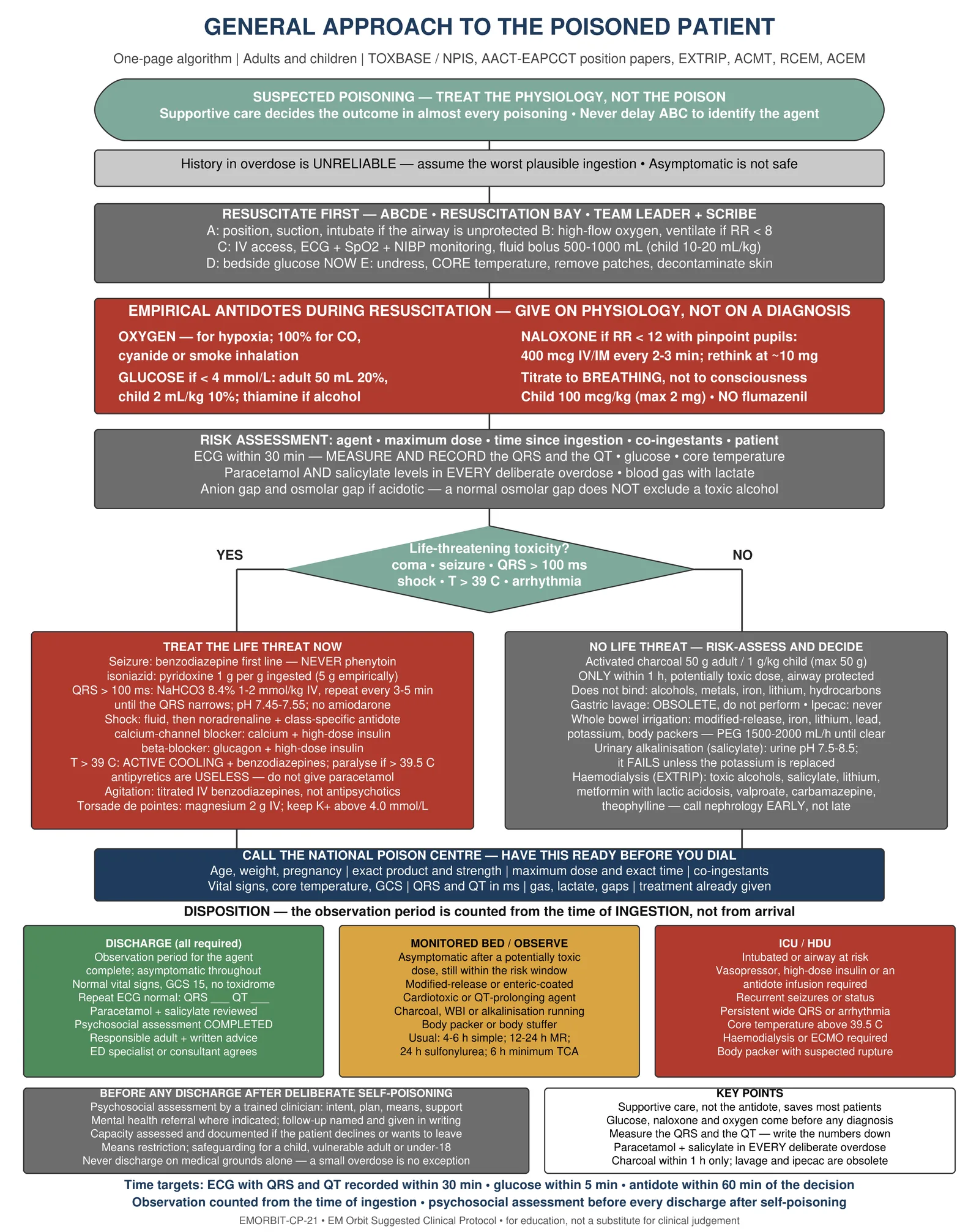
5Algorithm
The one-page algorithm is shown at the top of this page.
6Team roles
6.1Triage and ED Nurses Role:
6.1.1 Triage on physiology rather than on the reported agent; assign Category 1 to any patient with an abnormal airway, breathing, circulation, conscious level, temperature or a seizure, and Category 2 to any asymptomatic patient who has taken a potentially lethal agent.
6.1.2 Obtain a capillary glucose and a 12-lead ECG at triage for every deliberate overdose and every unknown poisoning, and inform the physician of a QRS above 100 milliseconds immediately.
6.1.3 Record the time of ingestion, the agents named, the quantity, pre-hospital treatment, and the source of the information; retain containers, packaging and any note, and label them.
6.1.4 Measure and record a core temperature in any patient who is agitated, rigid, sympathomimetic or febrile, and escalate a temperature above 39 degrees Celsius immediately as a time-critical emergency.
6.1.5 Place the patient in a directly observed area, search for further medication with the patient knowledge and consent, and maintain the prescribed level of observation for risk of self-harm and absconding; escalate immediately if the patient attempts to leave.
6.1.6 Administer and record antidotes, monitor for the expected adverse effects (vomiting after glucagon, withdrawal after naloxone, hypoglycaemia and hypokalaemia during high-dose insulin therapy), and record the response.
6.1.7 Deliver activated charcoal, whole bowel irrigation and urinary alkalinisation safely, including hourly urine pH measurement where alkalinisation is in progress, and stop and escalate for vomiting, abdominal distension or a fall in conscious level.
6.1.8 Provide poison-prevention education to carers of children, and deliver and document the written discharge advice.
6.2Pharmacist:
6.2.1 Maintain the ED antidote stock against the local antidote list, audit it monthly, and ensure that resuscitation-area antidotes are checked at every shift handover.
6.2.2 Identify the exact product, formulation and strength from the dispensing record and the community pharmacy, reconcile the tablet count, and provide the maximum possible ingested dose in mg/kg.
6.2.3 Verify antidote doses, dilutions and infusion rates; prepare high-risk infusions (high-dose insulin, adrenaline, sodium bicarbonate, fomepizole) and label them clearly.
6.2.4 Advise on drug interactions, serotonergic and QT-prolonging combinations, and the pharmacokinetics that determine the observation period and the value of enhanced elimination.
6.2.5 Advise on dispensing quantity and supervised dispensing at discharge where a prescribed medicine was used in an overdose, and report adverse drug reactions and medication errors.
6.3Clinical Toxicology / Poisons Information Service:
6.3.1 Provide 24-hour advice on risk assessment, decontamination, antidotes, enhanced elimination and disposition; provide the agent-specific monograph; and advise on unfamiliar, industrial and imported products.
6.3.2 Support the ED in decisions to discharge a patient after a non-toxic exposure without an observation period.
6.4Psychiatry and Liaison Mental Health Service:
6.4.1 Provide timely assessment of every patient referred after deliberate self-poisoning, agree the management plan and the follow-up, and arrange inpatient admission where required.
6.4.2 Support the ED team in capacity assessment and in the management of the patient who wishes to leave.
6.5Intensive Care and Anaesthesia:
6.5.1 Attend for airway management, refractory seizures, refractory shock, severe hyperthermia requiring paralysis, and extracorporeal support; accept patients meeting the criteria in section 4.3.11.
6.6Nephrology:
6.6.1 Provide urgent haemodialysis for the EXTRIP indications in Table 5, and be contacted when the criteria are approached rather than met.
6.7Paediatrician and Paediatric Safeguarding Lead:
6.7.1 Review every child admitted after poisoning, determine the observation period and disposition, and assess for neglect, deliberate administration and fabricated or induced illness.
6.7.2 Admit every young person under 18 years who has self-harmed for a period of assessment as the default position.
6.8Obstetrics:
6.8.1 Attend for any poisoned patient beyond the threshold of fetal viability, arrange fetal monitoring once the mother is stable, and plan delivery where maternal deterioration requires it.
6.9Laboratory:
6.9.1 Provide paracetamol, salicylate, ethanol, iron, lithium, digoxin, theophylline, valproate, carbamazepine, carboxyhaemoglobin and methaemoglobin results urgently, and measured osmolality by freezing-point depression.
6.9.2 Telephone all critical results to the treating team, and advise on assay interference where hydroxocobalamin or lipid emulsion has been given.
6.10Radiology:
6.10.1 Provide urgent abdominal imaging for suspected body packing and radiopaque ingestions, and urgent computed tomography of the head for unexplained or non-improving coma.
6.11Ambulance / Pre-hospital Providers:
6.11.1 Bring the containers, packaging, prescriptions and any note from the scene; record the scene findings, the number of tablets missing and the account given by bystanders.
6.11.2 Hand over using a structured format the time of ingestion, the agents, the quantity, the co-ingestants, the pre-hospital treatment (including naloxone and glucose with doses and times), and the response.
6.11.3 Pre-alert the ED for any patient with reduced consciousness, seizure, arrhythmia, hyperthermia or a suspected high-risk agent.
6.12Security and Safeguarding Team:
6.12.1 Support the safe management of the patient at risk of absconding or of harm to self or others, using the least restrictive means, under the direction of the treating clinician.
7The patient's role
7.1 Tell the treating team as accurately as possible what was taken, how much, when, and what else was taken with it, including alcohol, herbal and traditional remedies and drugs bought online; bring the containers and packaging.
7.2 Remain in the department for the full observation period advised, even when feeling well, because many poisons cause no symptoms in the first hours.
7.3 Report new symptoms immediately: drowsiness, palpitations, chest pain, difficulty breathing, vomiting, abdominal pain, confusion or shaking.
7.4 Take part in the psychosocial assessment, and tell the team honestly about thoughts of self-harm so that the right help can be arranged.
7.5 Agree and follow the safety plan at discharge, including reducing access to medication and knowing whom to contact urgently in a crisis; attend the mental health follow-up appointment.
7.6 Family and carers: stay with the patient after discharge where advised, store medicines and chemicals out of reach of children and in their original containers, keep the poisons centre number available, and call the emergency number immediately if the person becomes drowsy, fits, or is difficult to wake.
8Definitions
8.1Poisoning: harm caused by exposure to a chemical or drug in a quantity, or by a route, that produces a toxic effect; it may be acute or chronic, and deliberate, accidental, occupational, recreational or inflicted.
8.2Risk Assessment (toxicological): the explicit prediction of the worst clinical course that a given exposure can produce in a given patient, based on the agent, the maximum plausible dose, the time since exposure, the co-ingestants and the patient factors; it determines every subsequent management decision.
8.3Toxidrome: a recognisable constellation of vital signs, pupillary, dermal, neurological and gastrointestinal findings characteristic of a class of poison, which permits treatment before the agent is identified.
8.4Supportive Care: the maintenance of airway, oxygenation, ventilation, circulation, glycaemia, temperature, electrolytes and seizure control; the definitive treatment of the great majority of poisonings.
8.5Decontamination: the removal of poison that has not yet been absorbed, from the skin, eyes or gastrointestinal tract.
8.6Enhanced Elimination: the acceleration of removal of poison that has already been absorbed, by urinary alkalinisation, multiple-dose activated charcoal, or extracorporeal treatment.
8.7Extracorporeal Treatment (ECTR): haemodialysis, haemoperfusion, haemofiltration or exchange transfusion used to remove a poison; the EXTRIP workgroup publishes systematic, agent-specific recommendations for its use.
8.8Antidote: an agent that specifically counteracts the toxic effect of a poison by receptor antagonism, enzyme inhibition, chelation, immune binding, or provision of a substrate.
8.9Anion Gap: (sodium + potassium) − (chloride + bicarbonate), normally approximately 10 to 18 mmol/L; a raised gap with metabolic acidosis narrows the differential diagnosis to a small and treatable group of poisons.
8.10Osmolar Gap: measured serum osmolality minus calculated osmolarity ((2 × sodium) + urea + glucose); a gap above 10 mOsm/kg suggests an unmeasured low-molecular-weight solute such as a toxic alcohol. A normal gap does not exclude late toxic-alcohol poisoning.
8.11Serotonin Toxicity (Serotonin Syndrome): a dose-related toxic state caused by excess central and peripheral serotonin, characterised by neuromuscular excitation (clonus, hyperreflexia, rigidity, greatest in the lower limbs), autonomic instability and altered mental state, occurring within 24 hours of a change in a serotonergic drug (Hunter Serotonin Toxicity Criteria).
8.12Neuroleptic Malignant Syndrome: an idiosyncratic reaction to dopamine antagonism, developing over days to weeks, with generalised lead-pipe rigidity, hyperthermia, autonomic instability, altered consciousness and a markedly raised creatine kinase.
8.13Malignant Hyperthermia: an inherited pharmacogenetic disorder of skeletal muscle calcium handling triggered within minutes by volatile anaesthetic agents or suxamethonium, causing rigidity, rising end-tidal carbon dioxide, hyperthermia and rhabdomyolysis, treated with dantrolene.
8.14Anticholinergic (Antimuscarinic) Delirium: an agitated delirium with mydriasis, dry flushed skin, urinary retention, absent bowel sounds, hyperthermia and tachycardia, and with normal reflexes and no clonus.
8.15Body Packer: a person who has deliberately swallowed or concealed multiple well-wrapped packets of an illicit drug for the purpose of transport; usually asymptomatic, but at risk of fatal toxicity if a packet ruptures.
8.16Body Stuffer: a person who has hastily swallowed poorly wrapped drug, usually to avoid detection at arrest; the total dose is smaller but early toxicity is much more likely.
8.17Deliberate Self-Poisoning / Self-Harm: intentional self-poisoning or self-injury irrespective of the apparent purpose or the degree of suicidal intent (NICE NG225).
8.18Capacity: the ability, at the time a decision must be made, to understand the relevant information, retain it, weigh it in reaching a decision, and communicate that decision; it is decision-specific and may fluctuate in the poisoned patient.
8.19Psychosocial Assessment: a structured assessment of the circumstances, intent, mental state, risk, social situation and needs of a person who has self-harmed, performed before discharge by a clinician trained to do so.
8.20"One Pill Can Kill": the group of agents of which a single adult dose may be lethal to a small child (Table 8).
8.21TOXBASE, NPIS, AACT, EAPCCT, EXTRIP, ACMT: the clinical toxicology database of the UK National Poisons Information Service; the National Poisons Information Service; the American Academy of Clinical Toxicology; the European Association of Poisons Centres and Clinical Toxicologists; the Extracorporeal Treatments in Poisoning workgroup; the American College of Medical Toxicology.
9Attachments
- Attachment 1: One-page algorithm (top of this page)
- Attachment 2: Toxidrome Recognition
- Attachment 3: Antidotes, Decontamination, Enhanced Elimination and the ECG
- Attachment 4: Risk Assessment, Observation Period and Psychosocial Discharge Checklist
11Suggested quality indicators
11.1Paracetamol and salicylate concentrations in every deliberate overdose: (Number of patients presenting after a deliberate overdose in whom both a paracetamol and a salicylate concentration were requested / Total number of patients presenting after a deliberate overdose) × 100. Target ≥ 95%. Data source: laboratory information system linked to the ED presenting complaint.
11.2ECG performed with QRS and QT documented: (Number of poisoned patients with a 12-lead ECG performed within 30 minutes of arrival and with the QRS duration and QT interval recorded as numerical values in the medical record / Total number of patients presenting after a deliberate overdose or an unknown poisoning) × 100. Target ≥ 90%.
11.3Time to antidote where indicated: (Number of patients in whom an antidote was indicated and was administered within 60 minutes of the clinical decision — immediately in cardiac arrest / Total number of patients in whom an antidote was indicated) × 100. Target ≥ 90%.
11.4Documented toxicological risk assessment: (Number of poisoned patients with a documented risk assessment stating agent, maximum dose, time since ingestion, co-ingestants and patient factors / Total number of poisoned patients) × 100. Target ≥ 85%.
11.5Psychosocial assessment documented before discharge: (Number of patients discharged after deliberate self-poisoning with a documented psychosocial assessment and an agreed follow-up plan / Total number of patients discharged after deliberate self-poisoning) × 100. Target ≥ 90%.
11.6Unplanned deterioration after admission (outcome): (Number of poisoned patients admitted to a ward or observation area who required unplanned transfer to the Intensive Care Unit, intubation, or cardiopulmonary resuscitation within 24 hours of admission / Total number of poisoned patients admitted) × 100. Monitored as an outcome indicator without a fixed target; every case is reviewed at the ED morbidity and mortality meeting, together with any unplanned return within 72 hours of discharge.
13References
- National Poisons Information Service. TOXBASE: the clinical toxicology database of the UK National Poisons Information Service. Edinburgh: NPIS / UK Health Security Agency; 2024.
- Chyka PA, Seger D, Krenzelok EP, Vale JA; American Academy of Clinical Toxicology; European Association of Poisons Centres and Clinical Toxicologists. Position paper: Single-dose activated charcoal. Clin Toxicol (Phila). 2005;43(2):61–87.
- Benson BE, Hoppu K, Troutman WG, et al; AACT; EAPCCT. Position paper update: gastric lavage for gastrointestinal decontamination. Clin Toxicol (Phila). 2013;51(3):140–146.
- Thanacoody R, Caravati EM, Troutman B, et al; AACT; EAPCCT. Position paper update: whole bowel irrigation for gastrointestinal decontamination of overdose patients. Clin Toxicol (Phila). 2015;53(1):5–12.
- American Academy of Clinical Toxicology; European Association of Poisons Centres and Clinical Toxicologists. Position paper: Ipecac syrup. J Toxicol Clin Toxicol. 2004;42(2):133–143.
- American Academy of Clinical Toxicology; European Association of Poisons Centres and Clinical Toxicologists. Position statement and practice guidelines on the use of multi-dose activated charcoal in the treatment of acute poisoning. J Toxicol Clin Toxicol. 1999;37(6):731–751.
- Proudfoot AT, Krenzelok EP, Vale JA. Position paper on urine alkalinization. J Toxicol Clin Toxicol. 2004;42(1):1–26.
- Juurlink DN, Gosselin S, Kielstein JT, et al; EXTRIP Workgroup. Extracorporeal treatment for salicylate poisoning: systematic review and recommendations from the EXTRIP workgroup. Ann Emerg Med. 2015;66(2):165–181.
- Decker BS, Goldfarb DS, Dargan PI, et al; EXTRIP Workgroup. Extracorporeal treatment for lithium poisoning: systematic review and recommendations from the EXTRIP workgroup. Clin J Am Soc Nephrol. 2015;10(5):875–887.
- Calello DP, Liu KD, Wiegand TJ, et al; EXTRIP Workgroup. Extracorporeal treatment for metformin poisoning: systematic review and recommendations from the EXTRIP workgroup. Crit Care Med. 2015;43(8):1716–1730.
- Ghannoum M, Laliberté M, Nolin TD, et al; EXTRIP Workgroup. Extracorporeal treatment for valproic acid poisoning: systematic review and recommendations from the EXTRIP workgroup. Clin Toxicol (Phila). 2015;53(5):454–465.
- Ghannoum M, Yates C, Galvao TF, et al; EXTRIP Workgroup. Extracorporeal treatment for carbamazepine poisoning: systematic review and recommendations from the EXTRIP workgroup. Clin Toxicol (Phila). 2014;52(10):993–1004.
- Ghannoum M, Wiegand TJ, Liu KD, et al; EXTRIP Workgroup. Extracorporeal treatment for theophylline poisoning: systematic review and recommendations from the EXTRIP workgroup. Clin Toxicol (Phila). 2015;53(4):215–229.
- Roberts DM, Yates C, Megarbane B, et al; EXTRIP Workgroup. Recommendations for the role of extracorporeal treatments in the management of acute methanol poisoning: a systematic review and consensus statement. Crit Care Med. 2015;43(2):461–472.
- Gosselin S, Hoegberg LCG, Hoffman RS, et al. Evidence-based recommendations on the use of intravenous lipid emulsion therapy in poisoning. Clin Toxicol (Phila). 2016;54(10):899–923.
- Dunkley EJC, Isbister GK, Sibbritt D, Dawson AH, Whyte IM. The Hunter Serotonin Toxicity Criteria: simple and accurate diagnostic decision rules for serotonin toxicity. QJM. 2003;96(9):635–642.
- Boyer EW, Shannon M. The serotonin syndrome. N Engl J Med. 2005;352(11):1112–1120.
- Boehnert MT, Lovejoy FH. Value of the QRS duration versus the serum drug level in predicting seizures and ventricular arrhythmias after an acute overdose of tricyclic antidepressants. N Engl J Med. 1985;313(8):474–479.
- Chan A, Isbister GK, Kirkpatrick CMJ, Duffull SB. Drug-induced QT prolongation and torsades de pointes: evaluation of a QT nomogram. QJM. 2007;100(10):609–615.
- National Institute for Health and Care Excellence. Self-harm: assessment, management and preventing recurrence. NICE guideline NG225; 2022.
- Royal College of Emergency Medicine. Mental Health in Emergency Departments: a toolkit for improving care. London: RCEM; 2021.
- Murray L, Little M, Pascu O, Hoggett K. Toxicology Handbook. 3rd ed. Sydney: Elsevier Australia; 2015.
- Nelson LS, Howland MA, Lewin NA, Smith SW, Goldfrank LR, Hoffman RS, editors. Goldfrank's Toxicologic Emergencies. 11th ed. New York: McGraw-Hill; 2019.
- World Health Organization. Guidelines for establishing a poison centre. Geneva: WHO; 2020.
A2Attachment 2: Toxidrome Recognition
The toxidrome is read from the vital signs, the pupils, the skin, the mental state, the neuromuscular findings and the bowel sounds. It permits treatment to begin before the agent is known.
| Toxidrome | Vital signs and pupils | Distinguishing features | Typical agents | ED priority |
|---|---|---|---|---|
| Anticholinergic (antimuscarinic) | Tachycardia, hypertension, hyperthermia, mydriasis, dry flushed skin | Agitated mumbling delirium, picking at air, urinary retention, absent bowel sounds, dry axillae, normal reflexes, no clonus | Tricyclic antidepressants, promethazine and other sedating antihistamines, olanzapine and quetiapine, atropine, benztropine, Datura (angel trumpet) seeds | Benzodiazepines, active cooling, bladder catheter, ECG for QRS and QT; physostigmine only on toxicology advice and never with a wide QRS |
| Cholinergic (muscarinic and nicotinic) | Bradycardia (or tachycardia), hypotension, miosis, profuse secretions | DUMBELS: diarrhoea, urination, miosis, bronchorrhoea and bronchospasm, emesis, lacrimation, salivation; fasciculations, weakness, paralysis, seizures | Organophosphate and carbamate pesticides, nerve agents, physostigmine, neostigmine, some mushrooms | Airway and secretion control; atropine doubled every 5 minutes until the chest is dry; pralidoxime; personal protective equipment and decontamination of the patient |
| Sympathomimetic | Tachycardia, hypertension, hyperthermia, mydriasis, moist diaphoretic skin | Agitation, tremor, hyperalertness, bowel sounds present, rhabdomyolysis, hyponatraemia (MDMA), chest pain, stroke | Cocaine, amfetamine, methamfetamine, MDMA, synthetic cathinones, theophylline, caffeine, salbutamol, pseudoephedrine | Titrated intravenous benzodiazepines, active cooling, fluids, ECG and troponin; avoid an unopposed beta-blocker in cocaine toxicity |
| Opioid | Bradypnoea (respiratory rate < 12), hypotension, hypothermia, pinpoint pupils | Reduced consciousness with preserved response to painful stimulus until late, reduced bowel sounds, needle marks, non-cardiogenic pulmonary oedema | Morphine, tramadol, oxycodone, methadone, buprenorphine, fentanyl and its analogues, codeine, loperamide in massive dose | Airway and ventilation first; titrated naloxone to restore ventilation, not consciousness; observe for re-sedation after long-acting agents |
| Sedative-hypnotic | Normal or mildly depressed vital signs, normal or small pupils, normal temperature | Slurred speech, ataxia, nystagmus, drowsiness progressing to coma with relatively preserved respiration until deep coma | Benzodiazepines, zopiclone and zolpidem, ethanol, gamma-hydroxybutyrate (GHB), barbiturates, pregabalin, baclofen | Supportive care, airway positioning and monitoring; flumazenil is almost never indicated and is contraindicated where a proconvulsant has been co-ingested |
| Serotonergic (serotonin toxicity) | Tachycardia, hypertension, hyperthermia, mydriasis, diaphoresis | Neuromuscular excitation greatest in the lower limbs: spontaneous, inducible or ocular clonus, hyperreflexia, rigidity, tremor, agitation, diarrhoea; onset within 24 hours of a dose increase or a new drug | Selective serotonin reuptake inhibitors, serotonin-noradrenaline reuptake inhibitors, monoamine oxidase inhibitors, tramadol, linezolid, lithium, MDMA, St John wort | Stop all serotonergic drugs, benzodiazepines, active cooling; cyproheptadine; intubation and paralysis if the core temperature exceeds 39.5 degrees Celsius |
A toxidrome is a pattern, not a diagnosis. Mixed ingestions blunt or combine toxidromes, and the absence of a recognisable toxidrome never excludes serious poisoning. The single most useful bedside discriminator between the anticholinergic and the sympathomimetic patient is the skin: anticholinergic skin is dry and flushed, sympathomimetic skin is wet.
| Feature | Serotonin toxicity | Neuroleptic malignant syndrome | Malignant hyperthermia | Anticholinergic delirium |
|---|---|---|---|---|
| Causative drug | Serotonergic agent added or increased | Dopamine antagonist started or increased, or dopamine agonist withdrawn | Volatile anaesthetic agent or suxamethonium in a susceptible patient | Antimuscarinic agent in overdose |
| Time course | Minutes to 24 hours; resolves in 24 hours once the drug is stopped | Days to weeks; resolves over 7 to 10 days | Minutes after exposure | Hours; may persist 24 to 48 hours with long-acting agents |
| Neuromuscular signs | Clonus and hyperreflexia, greater in the legs; tremor | Lead-pipe rigidity throughout, bradyreflexia, akinesia | Masseter spasm then generalised rigidity | No rigidity, no clonus, normal reflexes |
| Mental state | Agitation, hypervigilance | Stupor, mutism, catatonia | Not assessable under anaesthesia | Agitated delirium with mumbling and visual hallucinations |
| Pupils and skin | Mydriasis, sweating | Normal or mydriasis, sweating, sialorrhoea | Mottled, sweating | Mydriasis, dry flushed skin |
| Other clues | Diarrhoea, hyperactive bowel sounds | Creatine kinase markedly raised, leucocytosis, autonomic instability | Rising end-tidal carbon dioxide, severe hyperkalaemia and acidosis | Urinary retention, absent bowel sounds |
| Specific treatment | Cyproheptadine; paralysis if temperature exceeds 39.5 degrees Celsius | Dantrolene or bromocriptine on specialist advice | Dantrolene 2.5 mg/kg IV repeated to 10 mg/kg | Supportive; physostigmine only on toxicology advice |
Core temperature above 39 degrees Celsius from any of these causes is a medical emergency and shall be treated by immediate active cooling and sedation. Paracetamol and non-steroidal anti-inflammatory drugs do not lower a temperature that is generated by muscle activity rather than by a raised hypothalamic set point, and paracetamol additionally confounds the interpretation of the paracetamol concentration.
A3Attachment 3: Antidotes, Decontamination, Enhanced Elimination and the ECG
Every dose below shall be checked against the local formulary and confirmed with the poisons centre before administration. Doses are for the first hour of treatment in the Emergency Department; continuing therapy is directed by clinical toxicology and intensive care.
| Measurement | Threshold of concern | ED action |
|---|---|---|
| QRS duration | Greater than 100 milliseconds (any lead); greater than 120 milliseconds indicates a high risk of ventricular arrhythmia | Give sodium bicarbonate 8.4% 1 to 2 mmol/kg (1 to 2 mL/kg) intravenously and repeat every 3 to 5 minutes until the QRS narrows; target arterial pH 7.45 to 7.55 and serum sodium below 155 mmol/L; correct hypoxia, acidosis and hypotension; repeat the ECG after every bolus |
| Terminal R wave in lead aVR | R wave greater than 3 mm, or R/S ratio greater than 0.7 | Treat as sodium-channel blockade even if the QRS is at the upper limit of normal; admit to a monitored bed |
| QT interval | Absolute QT plotted against heart rate above the at-risk line of the QT nomogram (an uncorrected QT of 500 milliseconds at any rate is always of concern) | Correct potassium to above 4.0 mmol/L and magnesium to above 1.0 mmol/L; give magnesium sulphate 2 g IV (child 25 to 50 mg/kg, maximum 2 g) if there is torsade de pointes; stop all other QT-prolonging drugs; continuous cardiac monitoring |
| Rate and rhythm | Bradycardia with hypotension; broad-complex tachycardia; any degree of heart block | Treat the poison, not the rhythm: sodium bicarbonate for sodium-channel blockade, calcium and high-dose insulin for calcium-channel blockade, glucagon and high-dose insulin for beta-blockade, digoxin-specific antibody fragments for digoxin; avoid amiodarone, procainamide and other class Ia, Ic and III agents in sodium-channel blockade |
| Ischaemia | ST elevation or depression, particularly after cocaine or a sympathomimetic | Manage as per the ED Chest Pain and Acute Coronary Syndrome guideline; give benzodiazepines and glyceryl trinitrate first in cocaine-associated chest pain |
A 12-lead ECG shall be performed within 30 minutes of arrival in every patient presenting after a deliberate overdose or a poisoning of unknown agent, and the QRS duration and QT interval shall be measured and recorded as numbers in the medical record, not described as "normal".
| Technique | Position and indication | Method and dose | Contraindications and cautions |
|---|---|---|---|
| Single-dose activated charcoal | May be considered within 1 hour of a potentially toxic ingestion of a substance that is adsorbed by charcoal, in a patient with an intact or protected airway. There is no evidence that it improves clinical outcome, and it is not given routinely. | Adult 50 g orally; child 1 g/kg (maximum 50 g). Given as a single dose, mixed as a slurry, drunk by the patient or given by nasogastric tube only when the airway is protected. | Reduced conscious level without a protected airway; corrosive or hydrocarbon ingestion; ileus, obstruction, or risk of perforation; uncontrolled vomiting. Poorly adsorbed substances: potassium, hydrocarbons, alcohols, iron, lithium, solvents, corrosives, cyanide. |
| Activated charcoal beyond 1 hour | May be considered on toxicology advice after a modified-release or enteric-coated preparation, a massive ingestion, an agent that slows gastric emptying (anticholinergic, opioid, salicylate), or where the patient is intubated. | Same dose as above. The time limit is a guide, not a rule; the decision is made on the risk assessment. | As above. The benefit falls with time and the aspiration risk does not. |
| Multiple-dose activated charcoal | Considered for life-threatening poisoning by carbamazepine, dapsone, phenobarbital, quinine or theophylline, where it increases elimination. | Adult 50 g initially then 25 to 50 g every 4 hours (or 12.5 g per hour) until clinical and biochemical improvement; child 1 g/kg every 4 hours. | Requires a protected airway and active bowel sounds; stop if the abdomen becomes distended or bowel sounds are absent; an antiemetic may be required. |
| Gastric lavage | Shall not be used. It is obsolete in routine practice: there is no evidence of improved outcome and there is clear evidence of harm. | Not performed in Emergency Departments. In the exceptional circumstance of a life-threatening ingestion within 60 minutes with no alternative, it may be performed only by an experienced operator after discussion with the poisons centre and with the airway secured. | Aspiration pneumonitis, hypoxia, laryngospasm, oesophageal and gastric perforation, dysrhythmia, electrolyte disturbance, and delay to definitive supportive care. |
| Whole bowel irrigation | Narrow indications only: potentially toxic ingestion of a sustained-release or enteric-coated preparation, iron, lead, potassium or lithium, and the removal of drug packets in body packers. | Polyethylene glycol electrolyte solution by nasogastric tube: adult 1500 to 2000 mL per hour; child 6 to 12 years 1000 mL per hour; child 9 months to 6 years 500 mL per hour (or 25 mL/kg per hour). Continue until the rectal effluent is clear. | Bowel obstruction, perforation, ileus, significant gastrointestinal haemorrhage, haemodynamic instability, intractable vomiting, unprotected airway. Nurse the patient on a commode; the procedure is prolonged and labour-intensive. |
| Induced emesis (ipecac) | Shall not be used in any circumstance. | Not stocked in the Emergency Department. | Prolonged vomiting delays charcoal and oral antidotes; aspiration; no evidence of benefit. |
| Skin and eye decontamination | Indicated for dermal and ocular exposure, and for organophosphate and corrosive contamination, before or during resuscitation. | Remove all clothing and seal it; brush off dry chemical; irrigate the skin with copious lukewarm water; irrigate the eye with 1 to 2 L of 0.9% sodium chloride after topical anaesthetic and check the pH until it is 7.0 to 7.5. | Staff shall wear appropriate personal protective equipment. Do not attempt chemical neutralisation. Hydrofluoric acid burns require calcium gluconate gel. |
| Poison | Indication for enhanced elimination | Method |
|---|---|---|
| Salicylate | Urinary alkalinisation for any symptomatic patient or a level above approximately 2.2 mmol/L (30 mg/dL) and rising. Haemodialysis for a level above 7.2 mmol/L (100 mg/dL) acutely, or above 6.5 mmol/L (90 mg/dL) with impaired kidney function, or at any level with altered mental status, hypoxaemia requiring oxygen, arterial pH of 7.20 or below, or failure of standard therapy. | Urinary alkalinisation and intermittent haemodialysis; haemodialysis also corrects acidosis and fluid overload |
| Methanol and ethylene glycol | Coma, seizures, new visual deficit, metabolic acidosis with pH below 7.15 or a persistent high anion gap, renal failure (ethylene glycol), or a high measured concentration. Give the alcohol dehydrogenase blocker first and do not wait for the level. | Fomepizole (or ethanol) plus haemodialysis; folinic acid for methanol, thiamine and pyridoxine for ethylene glycol |
| Lithium | Level above 5.0 mmol/L, or above 4.0 mmol/L with impaired kidney function, or reduced consciousness, seizures or life-threatening dysrhythmia at any level, or where the level is not expected to fall below 1.0 mmol/L within 36 hours with optimal supportive care. | Intermittent haemodialysis; rebound rise is common and levels shall be repeated 6 to 8 hours after the session |
| Metformin (metformin-associated lactic acidosis) | Lactate above 20 mmol/L, arterial pH of 7.0 or below, shock, reduced consciousness, or failure of standard supportive measures. | Intermittent haemodialysis with a bicarbonate buffer; continuous therapy if the patient is too unstable |
| Valproate | Level above approximately 9000 micromol/L (1300 mg/L); or above approximately 6250 micromol/L (900 mg/L) with coma, respiratory depression, acute hyperammonaemia, or pH of 7.10 or below. | Intermittent haemodialysis; intravenous L-carnitine for hyperammonaemic encephalopathy |
| Carbamazepine | Seizures refractory to treatment, life-threatening dysrhythmia, prolonged coma or respiratory depression, or a rising level despite multiple-dose activated charcoal. | Intermittent haemodialysis (or haemoperfusion where available) |
| Theophylline | Acute poisoning with a level above approximately 555 micromol/L (100 mg/L); seizures, life-threatening dysrhythmia or shock at any level; chronic poisoning with a level above approximately 333 micromol/L (60 mg/L), or above 278 micromol/L (50 mg/L) in a patient over 60 years. | Intermittent haemodialysis plus multiple-dose activated charcoal |
| Phenobarbital, thallium, potassium, some other agents | On the advice of the poisons centre and the nephrologist; extracorporeal treatment is of no value for the great majority of poisons, which are lipophilic, highly protein-bound, or have a large volume of distribution. | Intermittent haemodialysis; multiple-dose activated charcoal for phenobarbital |
Extracorporeal treatment is never a substitute for supportive care and the specific antidote. The nephrology and intensive care teams shall be involved at the point that the criteria are approached, not after they are met, because vascular access and machine set-up take time.
| Poison | Antidote | Adult dose | Paediatric dose | Notes |
|---|---|---|---|---|
| Any patient with reduced consciousness | Glucose | 50 mL of 20% glucose IV (or 100 mL of 10%), repeated to maintain normoglycaemia | 2 mL/kg of 10% glucose IV | Give after a bedside glucose; thiamine 100 to 500 mg IV first or with glucose in alcohol dependence or malnutrition |
| Opioid | Naloxone | 400 micrograms IV/IM/IO; repeat every 2 to 3 minutes titrated to respiratory rate, reconsidering the diagnosis if there is no response after a total of about 10 mg; infusion at two-thirds of the total waking dose per hour where re-sedation occurs | 100 micrograms/kg IV/IM/IO (maximum 2 mg per dose), repeated | Titrate to ventilation, not to consciousness; start at 40 to 100 micrograms in the opioid-dependent patient to avoid acute withdrawal; the effect is shorter than that of methadone or a modified-release opioid |
| Paracetamol | Acetylcysteine | As per EMORBIT-CP-22 Paracetamol Poisoning: 300 mg/kg in total (three-bag 150, 50 and 100 mg/kg over 21 hours, or two-bag 200 mg/kg over 4 hours then 100 mg/kg over 16 hours); weight capped at 100 kg | As per EMORBIT-CP-22: the same mg/kg as the adult, in reduced diluent volumes (EMORBIT-CP-22, Table 8) | Paracetamol is covered in full by EMORBIT-CP-22; this guideline requires only that the level is taken |
| Tricyclic antidepressant and other sodium-channel blockers (flecainide, propranolol, quinine, cocaine, local anaesthetic) | Sodium bicarbonate 8.4% | 1 to 2 mmol/kg (1 to 2 mL/kg) IV bolus; repeat every 3 to 5 minutes until the QRS narrows | 1 to 2 mmol/kg (1 to 2 mL/kg) IV bolus; repeat as for the adult | Target pH 7.45 to 7.55; monitor sodium and potassium; avoid class Ia, Ic and III antiarrhythmics; avoid phenytoin |
| Beta-blocker | Glucagon, then high-dose insulin euglycaemia therapy | Glucagon 3 to 10 mg IV over 1 to 2 minutes, then 1 to 5 mg/hour. Insulin (soluble) 1 unit/kg IV bolus then 1 to 10 units/kg/hour with 10% glucose to maintain normoglycaemia | Glucagon 50 to 150 micrograms/kg IV (maximum 10 mg), then infusion. Insulin 1 unit/kg bolus then 1 unit/kg/hour titrated | Expect vomiting after glucagon; protect the airway. Check glucose every 15 to 30 minutes and potassium hourly during insulin therapy |
| Calcium-channel blocker | Calcium salt, then high-dose insulin euglycaemia therapy | Calcium chloride 10% 10 to 20 mL IV (or calcium gluconate 10% 30 to 60 mL) via a large vein, repeated; insulin as above | Calcium gluconate 10% 0.6 mL/kg IV (maximum 20 mL), repeated; insulin as above | Calcium chloride requires central or large-vein access; noradrenaline is the vasopressor of choice; glucagon (doses as for beta-blocker poisoning) may be added as an adjunct; consider lipid emulsion and extracorporeal support in refractory shock |
| Organophosphate and carbamate | Atropine, then pralidoxime | Atropine 1 to 2 mg IV, doubled every 5 minutes until the chest is clear of secretions and the patient is dry, with no ceiling dose; pralidoxime 30 mg/kg IV over 30 minutes then 8 mg/kg/hour | Atropine 20 micrograms/kg IV, doubled every 5 minutes to the same end point; pralidoxime 30 mg/kg IV over 30 minutes then 8 mg/kg/hour | The end point is drying of bronchial secretions, not pupil size or heart rate; very large cumulative atropine doses may be required; staff protection and patient decontamination first |
| Digoxin and cardiac glycoside (including oleander) | Digoxin-specific antibody fragments | Cardiac arrest or life-threatening arrhythmia in acute poisoning: 10 vials empirically, repeated. Chronic toxicity: 6 vials and reassess. Calculated dose where the level is known and the patient is stable | Chronic toxicity in a child under 20 kg: 1 vial. Otherwise calculated on serum concentration and weight; discuss every paediatric case with the poisons centre | Do not delay for a level in the arresting patient; the fragments are the treatment for hyperkalaemia in digoxin toxicity; calcium is no longer considered absolutely contraindicated and may be given for life-threatening ECG changes if fragments are not immediately available, after toxicology advice (diluted, over 20 minutes) |
| Iron | Desferrioxamine | 15 mg/kg/hour IV, reduced after 4 to 6 hours; maximum 80 mg/kg in 24 hours | 15 mg/kg/hour IV; maximum 80 mg/kg in 24 hours | Indicated for shock, acidosis, reduced consciousness, or a serum iron above approximately 90 micromol/L; activated charcoal does not bind iron; consider whole bowel irrigation |
| Methanol and ethylene glycol | Fomepizole (or ethanol if fomepizole is unavailable) | Fomepizole 15 mg/kg IV over 30 minutes, then 10 mg/kg every 12 hours for 4 doses, then 15 mg/kg every 12 hours; during haemodialysis the dose is repeated every 4 hours | Fomepizole 15 mg/kg IV, then 10 mg/kg every 12 hours for 4 doses, then 15 mg/kg every 12 hours; every 4 hours during haemodialysis (as for the adult) | Give on suspicion; do not wait for a level. Add folinic acid (methanol) or thiamine and pyridoxine (ethylene glycol); arrange haemodialysis |
| Cyanide (including smoke inhalation) | Hydroxocobalamin | 5 g IV over 15 minutes; a second 5 g may be given | 70 mg/kg IV (maximum 5 g) | Give on clinical suspicion in fire victims with soot, reduced consciousness and a lactate above 8 to 10 mmol/L; it discolours skin, urine and some laboratory assays |
| Carbon monoxide | Oxygen | 100% oxygen by tight-fitting reservoir mask or endotracheal tube until symptoms resolve and carboxyhaemoglobin is below 5% | Same | Hyperbaric oxygen may be discussed with the poisons centre for coma, neurological deficit, pregnancy or a very high carboxyhaemoglobin; do not delay the basics |
| Methaemoglobinaemia (local anaesthetics, dapsone, nitrites) | Methylthioninium chloride (methylene blue) | 1 to 2 mg/kg IV over 5 minutes; may repeat once after 1 hour | 1 mg/kg IV over 5 minutes | Indicated for a methaemoglobin fraction above 20% or above 10% with symptoms; ineffective and potentially harmful in glucose-6-phosphate dehydrogenase deficiency |
| Isoniazid | Pyridoxine | 1 g IV per gram of isoniazid ingested; 5 g empirically where the dose is unknown | 70 mg/kg IV (maximum 5 g) | Seizures caused by isoniazid do not respond to benzodiazepines alone |
| Sulfonylurea | Glucose, then octreotide | Glucose as above; octreotide 50 micrograms subcutaneously every 6 to 12 hours | Octreotide 1 microgram/kg subcutaneously every 6 to 12 hours | Do not give prophylactic glucose infusions, which provoke further insulin release; observe children for 12 to 24 hours even if asymptomatic |
| Warfarin and other vitamin K antagonists | Vitamin K (phytomenadione), prothrombin complex concentrate | Vitamin K 5 to 10 mg slow IV or oral by indication; prothrombin complex concentrate for major bleeding as per the local anticoagulant reversal pathway | Vitamin K 250 to 300 micrograms/kg slow IV | Check the international normalised ratio at presentation and at 24 and 48 hours after a superwarfarin (rodenticide) ingestion |
| Dabigatran; apixaban and rivaroxaban | Idarucizumab; andexanet alfa or prothrombin complex concentrate | Idarucizumab 5 g IV (two 2.5 g vials); andexanet alfa or 4-factor prothrombin complex concentrate 25 to 50 units/kg as per the local reversal pathway | Discuss every case with haematology and the poisons centre | Reversal is indicated for life-threatening bleeding, not for the ingestion alone |
| Local anaesthetic systemic toxicity | Lipid emulsion 20% | 1.5 mL/kg IV over 2 to 3 minutes, then 0.25 mL/kg/min (15 mL/kg/hour); for persistent cardiovascular instability repeat the bolus once or twice and double the infusion to 30 mL/kg/hour; upper limit approximately 12 mL/kg in the first 30 minutes | 1.5 mL/kg IV bolus then 15 mL/kg/hour | Continue standard advanced life support throughout; reduce adrenaline boluses to 1 microgram/kg; avoid lidocaine |
| Serotonin toxicity | Cyproheptadine | 12 mg orally or by nasogastric tube, then 2 mg every 2 hours while symptoms persist (maximum 32 mg in 24 hours) | 0.25 mg/kg in 24 hours in divided doses (maximum 12 mg in 24 hours) | Adjunct only; benzodiazepines, cooling and, if the temperature exceeds 39.5 degrees Celsius, intubation and paralysis come first |
| Valproate with hyperammonaemic encephalopathy | L-carnitine | 100 mg/kg IV (maximum 6 g) over 30 minutes, then 15 mg/kg every 4 hours | 100 mg/kg IV (maximum 6 g) then 15 mg/kg every 4 hours | Send an ammonia level in any drowsy patient on valproate |
This table is a quick reference for the first hour. Every antidote decision, and every dose outside the ranges above, shall be confirmed with the poisons centre. The ED pharmacist shall verify antidote stock levels monthly and escalate any shortfall to the ED and Pharmacy leads.
A4Attachment 4: Risk Assessment, Observation Period and Psychosocial Discharge Checklist
This attachment is completed for every patient presenting after poisoning and is filed in the medical record. Section A is completed on arrival, Section B before any decision to observe or discharge, and Section C before discharge from the Emergency Department.
| Element | Recorded finding |
|---|---|
| Agent(s) and formulation | Exact product, immediate-release / modified-release / enteric-coated / liquid / patch, strength; source of the information (container, dispensing label, pharmacy, family, patient) |
| Maximum possible dose | Total units and mg; mg/kg for children; tablet count reconciled against the dispensed quantity |
| Time since ingestion | Exact time of ingestion; acute / staggered / chronic; earliest and latest plausible time where uncertain |
| Co-ingestants | Alcohol; paracetamol and salicylate concentrations requested (mandatory in every deliberate overdose); recreational drugs; other household members’ medicines |
| Patient factors | Age, weight, pregnancy status, renal and hepatic function, cardiac disease, regular medication, chronic alcohol or drug use, previous overdose |
| Predicted worst outcome and timing | The specific toxicity expected, and the hour at which it is expected; the observation period that follows from it |
| Poisons centre advice | Time of call, adviser, reference number, advice given; monograph source consulted |
| ✓ | Item |
|---|---|
| ☐ | Airway, breathing and circulation normal; vital signs normal for age and stable over the last two sets of observations. |
| ☐ | Core temperature measured and between 35.0 and 38.5 degrees Celsius. |
| ☐ | Capillary glucose normal; no episode of hypoglycaemia during the observation period. |
| ☐ | Mental state normal, Glasgow Coma Scale 15, no toxidrome present, no ataxia. |
| ☐ | 12-lead ECG repeated before discharge where a cardiotoxic or QT-prolonging agent was possible: QRS ____ ms, QT ____ ms, heart rate ____ /min, plotted on the QT nomogram. |
| ☐ | Paracetamol concentration ____ (time taken ____ ) and salicylate concentration ____ reviewed and acted upon. |
| ☐ | Minimum observation period for the agent (Table 7) completed, counted from the time of ingestion, not from arrival. |
| ☐ | Risk assessment revisited with all collateral information; no late toxicity predicted; no modified-release preparation unaccounted for. |
| ☐ | ED specialist or consultant has reviewed the patient and agrees to discharge. |
| ✓ | Item |
|---|---|
| ☐ | Psychosocial assessment completed and documented by a trained clinician: circumstances, intent, planning, precautions against discovery, note, current suicidal ideation and plan, access to means, hopelessness. |
| ☐ | Psychiatric history, substance use, previous self-harm and current treatment documented; social circumstances and dependants documented. |
| ☐ | Formulation of risk and an agreed plan recorded (a risk-stratification score alone is not acceptable as the basis for discharge). |
| ☐ | Mental health referral made where indicated, with the service named, the outcome of the referral, and the follow-up date given to the patient in writing. |
| ☐ | Capacity assessed and documented where the patient declined treatment, assessment or admission. |
| ☐ | Means-restriction and harm-minimisation advice given: quantity of medication at home reduced, medication held by another person, safe storage, crisis contact numbers. |
| ☐ | Safeguarding considered and referral made where indicated: child or vulnerable adult, suspected deliberate administration, domestic abuse, under-18 self-harm (paediatric discussion mandatory), dependants left unsupervised. |
| ☐ | Responsible adult accompanying the patient where there has been any impairment of consciousness; return advice given verbally and in writing in the patient’s language. |
| ☐ | Prescriber and general practitioner informed (with consent) about the overdose and the dispensing quantity; community mental health team informed. |
| ☐ | Poison-prevention advice given to the carer where a child was involved; poisons centre telephone number provided. |
| Agent or class | Minimum observation | Conditions and notes |
|---|---|---|
| Most immediate-release preparations of low-risk agents | 4 to 6 hours | Asymptomatic throughout, normal vital signs, normal ECG with a documented QRS and QT, normal mental state, and a completed risk assessment |
| Paracetamol | Level at 4 hours or later after an acute ingestion | Managed under EMORBIT-CP-22; staggered or unknown-time ingestions require a level and treatment on arrival |
| Salicylate | Serial levels every 2 to 4 hours until falling | A single level never excludes toxicity because absorption is erratic and concretions form; observe until the level falls and the patient is asymptomatic with a normal pH |
| Tricyclic antidepressant | 6 hours minimum, monitored | Discharge only if there has been no anticholinergic toxidrome, no reduced consciousness, and the QRS and QT are normal on serial ECGs |
| Modified-release or enteric-coated preparations of any agent | 12 to 24 hours, monitored | Includes modified-release verapamil, diltiazem, nifedipine, bupropion, lithium, theophylline, venlafaxine and opioids; consider whole bowel irrigation |
| Calcium-channel blocker (modified release) and beta-blocker (sotalol) | 24 hours, monitored bed | Sotalol requires QT monitoring for 24 hours; a normal early ECG is not reassuring |
| Sulfonylurea | 12 to 24 hours (24 hours in children) | Hypoglycaemia may be delayed and recurrent; do not give prophylactic glucose |
| Long-acting and modified-release opioids (methadone, buprenorphine, oxycodone MR) | 12 to 24 hours | Re-sedation after naloxone is expected; an infusion and a monitored bed are usually required |
| Toxic alcohols | Until the anion gap and osmolar gap have resolved | A normal osmolar gap late after ingestion does not exclude poisoning because the parent alcohol has already been metabolised |
| Iron | 6 hours | Abdominal radiograph may show tablets; a symptom-free patient at 6 hours with a normal examination may be discharged |
| Lithium (acute) | Serial levels every 4 to 6 hours until falling | Chronic toxicity is more dangerous at a lower level than acute toxicity |
| Body packer | Until all packets have passed and imaging is clear, plus 24 hours | Admit to a monitored bed; whole bowel irrigation; surgical removal if there is obstruction or suspected rupture |
| Body stuffer | 6 to 8 hours minimum, monitored | Longer where the wrapping is unknown or the drug is a sympathomimetic; activated charcoal may be considered |
| Unknown agent in a symptomatic patient | Until symptom-free for at least 6 hours with a normal ECG | Re-take the history once the patient is alert; repeat the ECG before discharge |
These periods are minimums for the medically fit patient. No patient who has taken a deliberate overdose is discharged on medical grounds alone: the psychosocial assessment in Attachment 4 shall be completed first.
| Class | Examples | Action for an exploratory ingestion |
|---|---|---|
| Calcium-channel blockers | Verapamil, diltiazem, amlodipine (especially modified release) | Refer for 24 hours of monitored observation even if asymptomatic |
| Opioids | Methadone, buprenorphine, morphine, fentanyl patches, tramadol | Naloxone available at the bedside; 12 to 24 hours of observation for long-acting agents |
| Tricyclic antidepressants | Amitriptyline, dosulepin, imipramine, clomipramine | ECG on arrival and at 6 hours; monitored bed |
| Sulfonylureas | Glibenclamide, gliclazide, glimepiride | 24 hours of observation with hourly to 2-hourly glucose; no prophylactic glucose |
| Antimalarials | Chloroquine, hydroxychloroquine, quinine | Immediate ECG and monitored bed; discuss with the poisons centre at once |
| Antiarrhythmics | Flecainide, propafenone, sotalol, digoxin | Continuous cardiac monitoring for at least 12 to 24 hours |
| Topical and oral anaesthetics | Benzocaine, lidocaine gels, prilocaine | Methaemoglobinaemia: co-oximetry, methylthioninium chloride available |
| Alpha-2 agonists and imidazolines | Clonidine, tizanidine, oxymetazoline and xylometazoline nasal drops | Observe for bradycardia, hypotension and apnoea for at least 6 hours |
| Salicylates, including topical | Oil of wintergreen (methyl salicylate), teething gels, aspirin | One teaspoon of oil of wintergreen can be fatal; serial levels and blood gases |
| Camphor and essential oils | Camphor-containing rubs, eucalyptus oil, tea tree oil | Seizure risk; observe for at least 6 hours |
| Toxic alcohols and hydrocarbons | Methanol, ethylene glycol (antifreeze), lamp oil, kerosene | Blood gas, anion and osmolar gap; hydrocarbons risk aspiration pneumonitis; no charcoal |
| Theophylline | Theophylline, aminophylline (modified release) | Serial levels, monitored bed, multiple-dose activated charcoal |
Exploratory ingestion in a child under 5 years is usually of a small quantity and most children can be discharged after a period of observation. A history of ingestion in a child older than 5 years, a repeat presentation, an inconsistent history, or an ingestion of a drug not prescribed to anyone in the household shall prompt a safeguarding assessment.
Note: the observation periods in Table 7 are minimums for an asymptomatic, medically fit patient and are counted from the time of ingestion. They shall be extended on the advice of the poisons centre, for modified-release preparations, for staggered ingestions, and wherever the history is uncertain.
Note: no patient who has taken a deliberate overdose is discharged on medical grounds alone. Sections B and C shall both be complete.