Convulsive Status Epilepticus and First Seizure in the Emergency Department
EMORBIT-CP-02 · Chapter 4 · Neurological Emergencies
Open in the appFree, works on your phone and offline, with every tool alongside.
Evidence base: NICE NG217 2022; AES 2016; ACEP CP 2014
1Purpose
1.1 Provide a standardized, evidence-based, time-based framework for the recognition and treatment of convulsive status epilepticus in adults and children presenting to the Emergency Department (ED), with the goal of terminating seizures as early as possible and preventing neuronal injury, airway compromise, and death.
1.2 Ensure that treatment escalates on a fixed clock (first-line benzodiazepine by 5 minutes, second-line anti-seizure medication by 20 minutes, anaesthesia decision by 40 minutes) rather than on repeated benzodiazepine dosing.
1.3 Standardize the ED assessment, investigation, safe discharge, and referral of patients presenting after a first seizure or a breakthrough seizure who have recovered.
1.4 Ensure consistency of practice among all healthcare providers (HCP) and alignment with the National Institute for Health and Care Excellence (NICE NG217), the International League Against Epilepsy (ILAE), the American Epilepsy Society (AES), the American College of Emergency Physicians (ACEP), the Royal College of Emergency Medicine (RCEM), and the Australasian College for Emergency Medicine (ACEM).
2Who this protocol applies to
2.1 Patients of any age presenting to, or developing within, the ED with a generalized convulsive seizure that is ongoing on arrival, lasts 5 minutes or longer, or recurs without full recovery of consciousness between seizures (convulsive status epilepticus).
2.2 Patients with focal motor status epilepticus, non-convulsive status epilepticus suspected in the ED (persistent altered consciousness after a convulsive seizure, fluctuating confusion, subtle motor signs), and refractory or super-refractory status epilepticus awaiting ICU admission.
2.3 Patients presenting after a first unprovoked seizure, a provoked (acute symptomatic) seizure, or a breakthrough seizure in known epilepsy who have recovered on arrival.
2.4 Seizures in pregnancy, including eclampsia, for the ED phase before obstetric care.
3Not covered by this protocol
3.1 Psychogenic non-epileptic seizures once confidently diagnosed (managed with neurology and psychiatry input; if in doubt, treat as epileptic).
3.2 Neonatal seizures (age < 28 days), which are managed by the neonatal team under the local neonatal guidelines.
3.3 Febrile seizures in children that have terminated before arrival with full recovery, which are managed under the ED guideline on the febrile child, unless they meet the definition of status epilepticus.
3.4 Long-term epilepsy management, anti-seizure medication titration, and epilepsy surgery evaluation (neurology outpatient services).
4Protocol
4.1History and Assessment:
4.1.1Triage and Recognition:
4.1.1.1 Any patient who is actively seizing on arrival, has a seizure lasting 5 minutes or longer, or has recurrent seizures without recovery shall be triaged to the highest acuity category (Category 1 / immediate) and moved directly to the resuscitation area; an ED physician shall attend immediately and a nurse shall record the time of seizure onset (including pre-hospital time) as the clock start.
4.1.1.2 Operational definition (ILAE 2015): convulsive status epilepticus is a generalized tonic-clonic seizure lasting 5 minutes or more (t1), or two or more seizures without recovery of consciousness between them; seizures lasting 30 minutes or more (t2) carry a high risk of long-term neuronal injury.
4.1.1.3 Patients who have recovered after a seizure shall be triaged as Category 2 (emergency) if there is head injury, focal deficit, persistent confusion, fever, pregnancy, or a first seizure; otherwise Category 3.
4.1.1.4 A patient who does not regain consciousness within 30–60 minutes after a convulsive seizure, or whose level of consciousness fluctuates, shall be assumed to be in non-convulsive status epilepticus until an EEG or neurology assessment proves otherwise.
4.1.2History (from witnesses, ambulance crew, family, and the medical record; in parallel with treatment):
4.1.2.1 Time of onset, duration, number of seizures, and recovery between them; seizure semiology (focal onset, head or eye deviation, automatisms, tongue biting, incontinence); pre-hospital treatment given (drug, dose, time, route).
4.1.2.2 Known epilepsy: usual seizure type and frequency, current anti-seizure medications (ASM), recent dose changes, adherence, missed doses, recent intercurrent illness, sleep deprivation.
4.1.2.3 Provoking factors: alcohol or benzodiazepine withdrawal, recreational drugs, prescribed drugs that lower the seizure threshold (tramadol, bupropion, antipsychotics, isoniazid, theophylline, tricyclics), poisoning, head injury, fever or recent infection, diabetes and hypoglycaemic agents, renal failure, pregnancy or recent delivery (eclampsia up to 6 weeks postpartum), cancer, immunosuppression, HIV, anticoagulation, recent neurosurgery, ventriculo-peritoneal shunt.
4.1.2.4 Features favouring syncope or non-epileptic events: prodrome, precipitating posture, brief duration, rapid recovery, eyes closed during the event, waxing and waning course, pelvic thrusting, no post-ictal phase.
4.1.2.5 AMPLE history (Allergies, Medications, Past history, Last meal, Events).
4.1.3Examination:
4.1.3.1 ABCDE assessment with continuous reassessment; airway patency and protective reflexes; respiratory rate and pattern, SpO₂, and end-tidal CO₂ where available; heart rate, blood pressure, temperature, capillary glucose.
4.1.3.2 Neurological examination: Glasgow Coma Scale, pupils, focal deficits (Todd paresis versus stroke), meningism, papilloedema; subtle signs of ongoing seizure activity (nystagmus, eye deviation, facial or finger twitching).
4.1.3.3 Examination for injury (head, tongue, posterior shoulder dislocation, vertebral fracture), aspiration, and signs of the underlying cause (needle marks, medical alert jewellery, rash, toxidrome, gravid uterus).
4.1.4Classification and Severity:
4.1.4.1 Early status: 5–20 minutes from onset (benzodiazepine-responsive phase).
4.1.4.2 Established status: 20–40 minutes, or persisting after two adequate benzodiazepine doses (requires second-line ASM).
4.1.4.3 Refractory status: persisting after a benzodiazepine and at least one second-line ASM, or beyond 40–60 minutes (requires general anaesthesia and ICU).
4.1.4.4 Super-refractory status: continuing or recurring 24 hours or more after the onset of anaesthetic therapy.
4.1.4.5 Poor prognostic features: age > 60 years, acute symptomatic cause (stroke, hypoxia, encephalitis), duration > 1 hour, non-convulsive status, and delay to first treatment.
4.1.5Differential Diagnosis:
4.1.5.1 Convulsive syncope, psychogenic non-epileptic seizure, movement disorders (dystonia, myoclonus), rigors, decerebrate/decorticate posturing, hyperventilation, sleep disorders, and, in children, breath-holding spells and benign sleep myoclonus.
4.1.5.2 Acute symptomatic causes to identify and treat in parallel: hypoglycaemia, hyponatraemia, hypocalcaemia, hypomagnesaemia, hypoxia, meningitis/encephalitis, stroke or intracranial haemorrhage, traumatic brain injury, drug toxicity or withdrawal, eclampsia, hypertensive encephalopathy, posterior reversible encephalopathy syndrome, cerebral venous thrombosis, and febrile illness in children.
4.1.6Special Populations:
4.1.6.1 Children: weight-based dosing (Table 1 and Table 2); consider pyridoxine 100 mg IV for infants with refractory seizures; lower threshold for meningitis/encephalitis treatment; febrile status epilepticus requires the same escalation; non-accidental injury shall be considered in infants with seizures and no clear cause.
4.1.6.2 Pregnancy: eclampsia (seizure with hypertension or proteinuria from 20 weeks to 6 weeks postpartum) is treated with magnesium sulphate 4 g IV over 5–15 minutes then 1 g/hour infusion, with left lateral positioning and urgent obstetric review; benzodiazepines are used for status not responding to magnesium; levetiracetam is the preferred second-line ASM; valproate is avoided.
4.1.6.3 Elderly: lower benzodiazepine doses may be needed (lorazepam 2 mg increments); a structural cause (stroke, tumour, subdural haematoma) is more likely and CT is indicated.
4.1.6.4 Alcohol-related seizures: give thiamine before or with glucose; benzodiazepines are the treatment for withdrawal seizures; phenytoin is ineffective for alcohol withdrawal seizures.
4.1.6.5 Toxin-induced seizures (tricyclics, isoniazid, theophylline, local anaesthetic): benzodiazepines first line; phenytoin is not recommended; give the specific antidote (sodium bicarbonate, pyridoxine, lipid emulsion) as in section 4.3.4.
4.2Investigations:
4.2.1 Bedside capillary glucose immediately in every seizing patient and within 5 minutes of arrival; correct hypoglycaemia before any other drug.
4.2.2 Venous blood gas (pH, lactate, sodium, potassium, ionized calcium, glucose) at the first IV access; lactate and acidosis resolve within 1 hour of a terminated seizure and persistent acidosis suggests ongoing seizure or another cause.
4.2.3 Laboratory: full blood count, urea and electrolytes, calcium, magnesium, phosphate, liver function, creatine kinase, anti-seizure medication levels (phenytoin, valproate, carbamazepine where the patient is on them), toxicology screen and paracetamol/salicylate levels where poisoning is possible, blood cultures if febrile, and a pregnancy test in all women of child-bearing age.
4.2.4 12-lead ECG in all patients after the seizure to exclude a cardiac cause of collapse (long QT, Brugada pattern, Wolff-Parkinson-White, heart block, ischaemia) and before phenytoin.
4.2.5Computed tomography of the head in the ED is indicated for:
- Status epilepticus once the airway is secure and the patient is stable enough for transfer.
- New focal neurological deficit, persistent altered mental status or failure to return to baseline, head trauma, fever with meningism, persistent headache, history of cancer, anticoagulation or bleeding disorder, immunosuppression or HIV, ventriculo-peritoneal shunt, and age > 40 years with a first seizure.
- First seizure with no clear provoking cause (CT in the ED, or urgent outpatient MRI within 2 weeks where the patient has fully recovered and has no red flags, as per NICE NG217 and ACEP 2014).
4.2.6 Lumbar puncture after CT when meningitis or encephalitis is suspected (fever, meningism, immunosuppression, altered consciousness); empirical antimicrobials shall not be delayed for imaging or lumbar puncture.
4.2.7 Electroencephalography (EEG) as an emergency when non-convulsive status is suspected, in refractory status under anaesthesia (continuous EEG where available), and as a routine outpatient investigation after a first unprovoked seizure.
4.2.8 Investigations shall never delay first-line and second-line treatment; the second-line drug is given on clinical grounds without waiting for ASM levels.
4.3Plan of Care:
4.3.1Immediate Actions — 0 to 5 minutes (stabilization):
4.3.1.1 Move to the resuscitation area, call for help, assign a team leader and a scribe; record the time of seizure onset and of every drug.
4.3.1.2 Airway: place in the lateral or recovery position where possible, suction secretions, insert a nasopharyngeal airway if needed (avoid forcing oral airways), and give high-flow oxygen by non-rebreather mask; monitor SpO₂ and, where available, waveform capnography; prepare bag-valve-mask ventilation.
4.3.1.3 Monitoring: continuous ECG, pulse oximetry, non-invasive blood pressure, temperature.
4.3.1.4 Vascular access: IV cannula (two if possible); if IV access fails within 2 attempts or 2 minutes in a seizing patient, give the first-line drug by the buccal or IM route and obtain intraosseous access if the patient is unstable.
4.3.1.5 Check capillary glucose; if < 3 mmol/L (or < 4 mmol/L with symptoms) give glucose: adult 50 mL of 20% glucose IV (or 100 mL of 10%), child 2 mL/kg of 10% glucose; give thiamine 100–500 mg IV (or Pabrinex 1 pair) before or with glucose in patients with alcohol misuse or malnutrition.
4.3.1.6 Protect the patient from injury; do not restrain limbs or insert objects into the mouth.
4.3.2First-Line Treatment — 5 to 20 minutes (benzodiazepine):
4.3.2.1 Give a benzodiazepine as soon as the seizure has lasted 5 minutes or is ongoing on arrival, by the fastest available route (Table 1): lorazepam 4 mg IV (child 0.1 mg/kg, maximum 4 mg) when IV access is available; midazolam 10 mg buccal or IM (child 0.3 mg/kg buccal or 0.2 mg/kg IM, maximum 10 mg) when it is not.
4.3.2.2 If the seizure continues 5–10 minutes after the first dose, give a second dose of the benzodiazepine and simultaneously prepare the second-line ASM; a dose given by ambulance or carers counts as the first dose.
4.3.2.3 No more than two doses of benzodiazepine shall be given in total; further doses cause respiratory depression and hypotension without additional benefit.
4.3.2.4 Reassess airway and breathing after every dose; support ventilation with bag-valve-mask if the respiratory rate falls or capnography rises.
4.3.2.5
Table 1: First-line benzodiazepines (maximum two doses in total, including any pre-hospital dose) Drug / route Adult (> 12 years) Child Notes Lorazepam IV (preferred with IV access) 4 mg IV over 2 minutes; repeat once after 5–10 min if still seizing 0.1 mg/kg IV (maximum 4 mg); repeat once Dilute 1:1 with 0.9% NaCl; less respiratory depression and longer action than diazepam Midazolam buccal (no IV access) 10 mg buccal 0.3 mg/kg (maximum 10 mg); or age bands: 3–11 months 2.5 mg; 1–4 years 5 mg; 5–9 years 7.5 mg; ≥ 10 years 10 mg Use the buccal preparation; may be repeated once after 10 min Midazolam IM (no IV access) 10 mg IM (> 40 kg); 5 mg (13–40 kg) 0.2 mg/kg IM (maximum 10 mg) Anterolateral thigh; RAMPART regimen Diazepam IV 0.15–0.2 mg/kg IV (maximum 10 mg per dose) over 2–5 min; repeat once 0.15–0.2 mg/kg IV (maximum 10 mg per dose) (AES) Short duration; higher respiratory depression risk Diazepam rectal 10–20 mg PR 0.2–0.5 mg/kg PR (maximum 20 mg) (AES) When buccal midazolam unavailable Respiratory depression is expected after benzodiazepines: monitor SpO₂, respiratory rate, and capnography where available; prepare bag-valve-mask ventilation. Do not give more than two doses in total; further doses add respiratory depression without improving seizure control.
4.3.3Second-Line Treatment — 20 to 40 minutes (established status epilepticus):
4.3.3.1 If the seizure continues 5–10 minutes after the second benzodiazepine dose, or recurs, give one second-line ASM over 10 minutes (Table 2): levetiracetam 60 mg/kg IV (maximum 4.5 g) is preferred; sodium valproate 40 mg/kg IV (maximum 3 g) or phenytoin 20 mg/kg IV (maximum 2 g, at no more than 50 mg/min with ECG and blood pressure monitoring; fosphenytoin 20 mg PE/kg) are alternatives.
4.3.3.2 The choice takes account of the patient's existing ASM (do not give a full loading dose of a drug the patient already takes at full dose; give levetiracetam instead), pregnancy or child-bearing potential (avoid valproate), liver disease (avoid valproate), cardiac disease and hypotension (avoid phenytoin), and toxin-induced seizures (avoid phenytoin).
4.3.3.3 If seizures continue 10 minutes after completion of the first second-line agent, give a second agent from Table 2 while calling anaesthesia and the ICU; do not repeat benzodiazepines.
4.3.3.4 Senior ED physician, anaesthesia/critical care, and neurology (or paediatrics with paediatric neurology advice) shall be informed by the 20-minute point of any patient who has needed a second-line ASM.
4.3.3.5
Table 2: Second-line anti-seizure medication (choose one; give over 10 minutes; if still seizing, give a different agent from the list while calling anaesthesia) Drug Adult dose Child dose Cautions Levetiracetam IV (preferred) 60 mg/kg IV over 10 min (maximum 4.5 g) 60 mg/kg IV over 10 min (maximum 4.5 g), all ages (AES 2016; ESETT) Reduce in renal impairment; minimal interactions; no cardiac monitoring required Sodium valproate IV 40 mg/kg IV over 10 min (maximum 3 g) 40 mg/kg IV over 10 min (maximum 3 g) Avoid in pregnancy and women of child-bearing potential, hepatic disease, mitochondrial disease, children < 2 years with unexplained seizures; check ammonia if drowsy Phenytoin IV 20 mg/kg IV (maximum 2 g) at ≤ 50 mg/min 20 mg/kg IV (maximum 2 g) at ≤ 1 mg/kg/min (maximum 50 mg/min) Continuous ECG and BP; hypotension and arrhythmia; not in 5% glucose; large vein with in-line filter; not for toxin-induced seizures or in patients already on phenytoin at full dose Fosphenytoin IV 20 mg PE/kg at up to 150 mg PE/min 20 mg PE/kg at up to 3 mg PE/kg/min ECG and BP monitoring; less venous irritation than phenytoin Evidence: in ESETT (2019) levetiracetam, fosphenytoin, and valproate stopped benzodiazepine-refractory status in approximately half of patients each, with no difference in efficacy; levetiracetam is preferred for its safety profile. Doses shall be verified by the ED pharmacist against the local formulary.
4.3.4Third-Line Treatment — 40 to 60 minutes (refractory status epilepticus):
4.3.4.1 Seizures continuing 40–60 minutes after onset despite a benzodiazepine and a second-line ASM constitute refractory status epilepticus and require rapid sequence induction of general anaesthesia by the most experienced operator with a difficult airway plan.
4.3.4.2 Induction and maintenance options (critical care/anaesthesia direction): propofol 1–2 mg/kg IV then 2–10 mg/kg/hour; midazolam 0.2 mg/kg IV then 0.1–0.4 mg/kg/hour (higher doses in children under specialist direction); ketamine 1–2 mg/kg IV then 1–5 mg/kg/hour, usually in combination; thiopental 3–5 mg/kg then infusion under ICU direction. A non-depolarizing neuromuscular blocker abolishes motor activity but not seizures; EEG monitoring is then mandatory.
4.3.4.3 Titrate anaesthesia to seizure suppression or burst suppression on continuous EEG for 24–48 hours before weaning, in the ICU.
4.3.4.4 Continue the second-line ASM as maintenance and add further ASM under neurology direction.
4.3.4.5 Consider and treat the cause: CT head, lumbar puncture, MRI, autoimmune and infectious encephalitis work-up, toxicology, and immunotherapy where indicated, in the ICU.
4.3.5Treatment of Reversible and Specific Causes (in parallel with the escalation ladder):
4.3.5.1 Hypoglycaemia: glucose as in 4.3.1; recheck in 15 minutes.
4.3.5.2 Hyponatraemia (sodium < 120 mmol/L, or any level with seizures): hypertonic 3% sodium chloride 150 mL IV over 20 minutes in adults (2–5 mL/kg in children), repeated up to twice to a rise of 4–6 mmol/L; then correction limited to 8–10 mmol/L in 24 hours.
4.3.5.3 Hypocalcaemia: calcium gluconate 10% 10–30 mL IV over 10 minutes (child 0.5 mL/kg, maximum 20 mL); hypomagnesaemia: magnesium sulphate 2 g IV over 10–15 minutes (child 25–50 mg/kg).
4.3.5.4 Eclampsia: magnesium sulphate 4 g IV over 5–15 minutes then 1 g/hour; a further 2 g bolus for recurrent seizure; obstetric team and delivery planning.
4.3.5.5 Isoniazid poisoning: pyridoxine IV 1 g per gram of isoniazid ingested, or 5 g empirically (child 70 mg/kg, maximum 5 g).
4.3.5.6 Tricyclic antidepressant or sodium-channel blocker toxicity: sodium bicarbonate 8.4% 1–2 mmol/kg IV bolus; benzodiazepines; avoid phenytoin.
4.3.5.7 Local anaesthetic systemic toxicity: lipid emulsion 20% 1.5 mL/kg bolus then infusion; benzodiazepines.
4.3.5.8 Suspected bacterial meningitis or encephalitis: ceftriaxone 2 g IV (child 80 mg/kg, maximum 2 g) plus aciclovir 10 mg/kg IV, with dexamethasone where indicated, after blood cultures and without waiting for CT or lumbar puncture.
4.3.5.9 Hypertensive encephalopathy / posterior reversible encephalopathy: controlled blood pressure reduction with labetalol or nicardipine under senior direction.
4.3.5.10 Alcohol withdrawal: benzodiazepine loading (chlordiazepoxide or diazepam regimen) and thiamine.
4.3.6Monitoring and Reassessment:
4.3.6.1 Continuous ECG, SpO₂, capnography where available, and blood pressure every 5 minutes during treatment; temperature and glucose hourly; treat hyperthermia > 38.5 °C with cooling and paracetamol.
4.3.6.2 Neurological reassessment (GCS, pupils, motor signs) every 15 minutes until GCS is 15; a patient not improving within 30–60 minutes of seizure cessation requires EEG and neurology review for non-convulsive status.
4.3.6.3 Watch for airway obstruction, aspiration, respiratory depression, hypotension, and arrhythmia after each drug; rhabdomyolysis (creatine kinase, urine output) after prolonged seizures.
4.3.7Disposition:
4.3.7.1ICU / HDU admission:
- Any patient who required a second-line ASM, general anaesthesia, or intubation.
- Airway compromise, aspiration, respiratory depression requiring support, or haemodynamic instability.
- Eclampsia, encephalitis, GCS < 9 at 60 minutes after seizure termination, or non-convulsive status.
4.3.7.2Ward admission (monitored bed):
- Status epilepticus terminated by a benzodiazepine alone, with full recovery, for 24 hours of observation and cause identification.
- First seizure with an abnormal CT, focal deficit, persistent confusion, or an acute symptomatic cause requiring inpatient treatment.
- Provoked seizures requiring treatment of the cause (alcohol withdrawal, infection, metabolic derangement, drug toxicity).
- Recurrent seizures within the ED stay, or inability to arrange safe discharge.
4.3.7.3Discharge from the ED (all criteria):
- Known epilepsy with a single typical breakthrough seizure and full recovery to baseline (GCS 15), or a first seizure with a normal examination, normal glucose and sodium, normal ECG, no red flags (section 4.2), and a normal CT where CT was indicated.
- No injury requiring admission, no aspiration, no ongoing provoking factor.
- A responsible adult to accompany the patient and stay with them for 24 hours.
- Neurology (first-fit clinic) referral within 2 weeks for a first seizure, or communication with the treating neurologist for known epilepsy; ASM adherence reviewed and a supply of the patient's usual ASM ensured.
- Discharge by, or after discussion with, an ED specialist/consultant.
4.3.8First Seizure and Discharge Advice:
4.3.8.1 Patients with a first unprovoked seizure who have returned to baseline, with normal glucose and sodium, a normal ECG, and no red flags, may be discharged with an outpatient MRI, EEG, and neurology first-fit clinic appointment within 2 weeks (ACEP 2014 Level C; NICE NG217).
4.3.8.2 Anti-seizure medication is not routinely started in the ED after a single unprovoked seizure; it may be started after discussion with neurology where a second seizure is likely (abnormal imaging, epileptiform EEG, focal seizure, nocturnal seizure).
4.3.8.3Written safety advice (in Arabic and English) shall be given and documented:
- No driving until reviewed and cleared by neurology, in accordance with local driving licence regulations; the patient is informed of their legal responsibility.
- No swimming or bathing alone, avoid heights, open flames, and operating machinery; shower rather than bath; supervise infants' bathing by another adult.
- Regular sleep, avoid alcohol and recreational drugs, take ASM as prescribed, do not stop ASM suddenly.
- Seizure first aid for the family: protect from injury, time the seizure, recovery position, do not put anything in the mouth, call the emergency number if the seizure lasts more than 5 minutes, recurs, or the person is injured, pregnant, or does not wake.
- Return to the ED immediately for recurrent seizure, persistent headache, fever, confusion, or new weakness.
4.3.8.4 Women of child-bearing potential: document contraception and pregnancy status; valproate shall not be started; refer for pre-conception counselling where relevant.
4.3.9Documentation and Reporting:
4.3.9.1 Document: time of seizure onset and cessation, seizure description, pre-hospital treatment, time and dose of every drug, airway interventions, glucose and electrolyte results, imaging decision and result, cause identified, disposition, discharge advice given (including driving), and referral made.
4.3.9.2 Seizures related to medication error, drug toxicity, or occurring during procedural sedation shall be reported through the local incident reporting system.
4.3.9.3 Status epilepticus cases shall be recorded for the departmental audit (section 11) with the time intervals in the algorithm.
5Algorithm
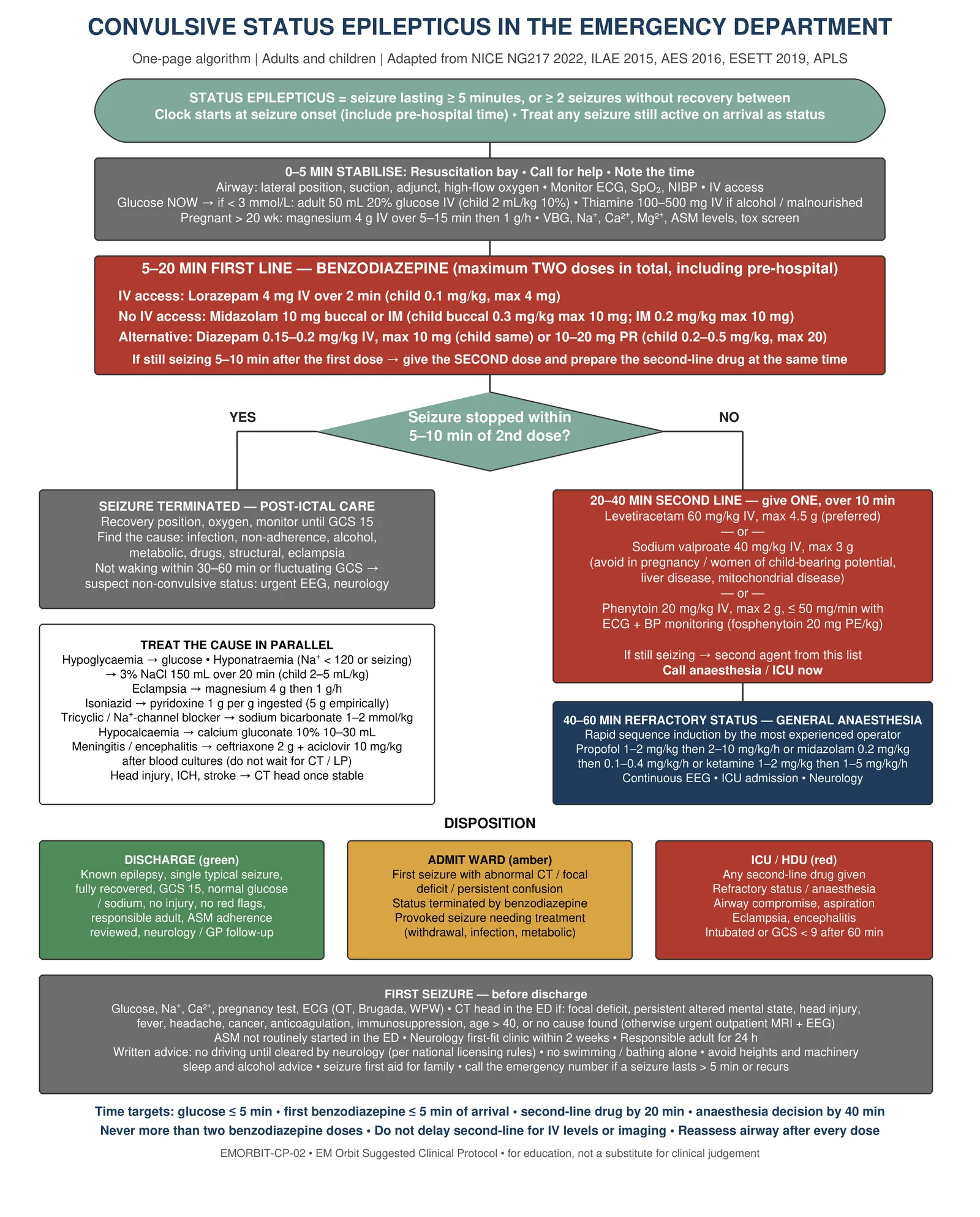
The one-page algorithm is shown at the top of this page.
6Team roles
6.1Triage and ED Nurses Role:
6.1.1 Recognize ongoing seizure at triage, assign Category 1, move the patient to the resuscitation area, record the time of onset, and call the ED physician.
6.1.2 Position the patient safely, apply oxygen and monitoring, check capillary glucose within 5 minutes, and prepare the first-line benzodiazepine (buccal midazolam ready if no IV access) for immediate administration on physician order or per approved nursing standing order.
6.1.3 Record the time of every drug and the seizure end time; monitor respiratory rate, SpO₂, and blood pressure after each dose; reassess GCS every 15 minutes.
6.1.4 Deliver and document the written seizure safety advice and first-aid teaching to the patient and family before discharge.
6.2Pharmacist:
6.2.1 Ensure lorazepam, buccal and injectable midazolam, levetiracetam, sodium valproate, phenytoin/fosphenytoin, hypertonic saline, pyridoxine, and thiamine are available in the resuscitation area with weight-based dose charts.
6.2.2 Verify second-line ASM loading doses, infusion rates, and compatibility; review the patient's ASM history and interactions; ensure the patient's usual ASM supply at discharge.
6.3Anaesthesia / Critical Care:
6.3.1 Attend by the 20-minute point when called for established status; lead rapid sequence induction and anaesthetic infusion for refractory status; accept to ICU with continuous EEG.
6.4Neurology / Paediatric Neurology:
6.4.1 Provide advice on second-line and maintenance ASM, EEG interpretation, and diagnosis of non-convulsive status; receive first-fit clinic referrals within 2 weeks; review known epilepsy patients with breakthrough seizures.
6.5Paediatrician:
6.5.1 Review all children with status epilepticus or a first seizure in the ED and determine disposition; assess for non-accidental injury where indicated.
6.6Obstetrician:
6.6.1 Attend immediately for eclampsia and any seizure in pregnancy beyond 20 weeks or within 6 weeks postpartum.
6.7Radiology and Laboratory:
6.7.1 Prioritize CT head for status epilepticus and first seizure with red flags; report critical results verbally; process ASM levels, electrolytes, and toxicology urgently.
6.8Ambulance / Pre-hospital Providers:
6.8.1 Pre-alert for ongoing seizure; hand over the time of onset and every benzodiazepine dose given, so that the ED does not exceed two doses.
7The patient's role
7.1 Inform healthcare providers of known epilepsy, current anti-seizure medications, missed doses, alcohol or drug use, pregnancy, and previous seizure triggers.
7.2 Take anti-seizure medication as prescribed, do not stop it abruptly, and attend the neurology clinic appointment.
7.3 Follow the written safety advice, including not driving until cleared by neurology and avoiding swimming or bathing alone.
7.4 Family and carers: learn seizure first aid, time seizures, and call the emergency number for a seizure lasting more than 5 minutes.
7.5 Return to the ED for recurrent seizures, injury, fever, persistent headache, or confusion.
8Definitions
8.1Convulsive Status Epilepticus: a generalized tonic-clonic seizure lasting 5 minutes or more, or two or more seizures without recovery of consciousness in between (ILAE 2015 operational definition, t1 = 5 minutes; t2 = 30 minutes for risk of long-term consequences).
8.2Established Status Epilepticus: status epilepticus persisting after adequate first-line benzodiazepine treatment (typically 20–40 minutes from onset).
8.3Refractory Status Epilepticus: status epilepticus persisting despite a benzodiazepine and at least one second-line anti-seizure medication, requiring general anaesthesia.
8.4Super-refractory Status Epilepticus: status epilepticus continuing or recurring 24 hours or more after the start of anaesthetic therapy.
8.5Non-convulsive Status Epilepticus (NCSE): prolonged electrographic seizure activity with altered consciousness or behaviour without prominent motor features, diagnosed by EEG.
8.6First Unprovoked Seizure: a seizure occurring without an identifiable acute precipitant in a patient without a diagnosis of epilepsy.
8.7Acute Symptomatic (Provoked) Seizure: a seizure occurring in close temporal relationship with an acute central nervous system insult (metabolic, toxic, structural, infectious, or inflammatory).
8.8Anti-seizure Medication (ASM): medication used to prevent or terminate seizures (formerly anti-epileptic drug).
8.9PE: phenytoin equivalents (fosphenytoin dosing unit).
8.10NICE, ILAE, AES, ACEP, RCEM, ACEM, APLS: National Institute for Health and Care Excellence; International League Against Epilepsy; American Epilepsy Society; American College of Emergency Physicians; Royal College of Emergency Medicine; Australasian College for Emergency Medicine; Advanced Paediatric Life Support.
9Attachments
- Attachment 1: One-page algorithm (top of this page)
- Attachment 2: Drug Quick Reference (adult and paediatric)
- Attachment 3: Reversible and Specific Causes — Recognition and Treatment
- Attachment 4: First Seizure — ED Assessment and Safe Discharge Checklist
11Suggested quality indicators
11.1Time to first benzodiazepine: (Number of patients seizing on arrival who received a benzodiazepine within 5 minutes of arrival / Total number of patients seizing on arrival) × 100. Target ≥ 90%.
11.2Glucose checked within 5 minutes: (Number of status epilepticus patients with a capillary glucose documented within 5 minutes of arrival / Total status epilepticus patients) × 100. Target 100%.
11.3Second-line ASM started by 20 minutes: (Number of patients still seizing after two benzodiazepine doses in whom a second-line ASM infusion was started within 20 minutes of seizure onset (or within 10 minutes of the second benzodiazepine dose) / Total such patients) × 100. Target ≥ 80%.
11.4Benzodiazepine over-dosing avoided: (Number of status epilepticus patients who received no more than two benzodiazepine doses in total / Total status epilepticus patients) × 100. Target ≥ 95%.
11.5First-seizure safe-discharge bundle: (Number of discharged first-seizure patients with documented ECG, glucose, sodium, written safety and driving advice, and neurology referral / Total discharged first-seizure patients) × 100. Target ≥ 90%.
11.6Outcome: proportion of status epilepticus patients requiring intubation, ICU length of stay, and 7-day ED return with recurrent seizure (monitored).
13References
- National Institute for Health and Care Excellence. Epilepsies in children, young people and adults. NICE guideline NG217; 2022.
- Trinka E, Cock H, Hesdorffer D, et al. A definition and classification of status epilepticus — Report of the ILAE Task Force on Classification of Status Epilepticus. Epilepsia. 2015;56(10):1515–1523.
- Glauser T, Shinnar S, Gloss D, et al. Evidence-based guideline: Treatment of convulsive status epilepticus in children and adults: Report of the Guideline Committee of the American Epilepsy Society. Epilepsy Curr. 2016;16(1):48–61.
- Kapur J, Elm J, Chamberlain JM, et al. Randomized trial of three anticonvulsant medications for status epilepticus (ESETT). N Engl J Med. 2019;381(22):2103–2113.
- Dalziel SR, Borland ML, Furyk J, et al. Levetiracetam versus phenytoin for second-line treatment of convulsive status epilepticus in children (ConSEPT). Lancet. 2019;393(10186):2135–2145.
- Lyttle MD, Rainford NEA, Gamble C, et al. Levetiracetam versus phenytoin for second-line treatment of paediatric convulsive status epilepticus (EcLiPSE). Lancet. 2019;393(10186):2125–2134.
- Silbergleit R, Durkalski V, Lowenstein D, et al. Intramuscular versus intravenous therapy for prehospital status epilepticus (RAMPART). N Engl J Med. 2012;366(7):591–600.
- Huff JS, Melnick ER, Tomaszewski CA, et al. Clinical policy: critical issues in the evaluation and management of adult patients presenting to the emergency department with seizures. Ann Emerg Med. 2014;63(4):437–447.e15.
- Advanced Life Support Group. Advanced Paediatric Life Support: A Practical Approach to Emergencies (APLS), 7th ed. Wiley-Blackwell; 2023.
- Royal College of Emergency Medicine. Best Practice Guideline / Clinical Standards relevant to seizures and status epilepticus. London: RCEM.
- Royal College of Obstetricians and Gynaecologists / NICE NG133. Hypertension in pregnancy: diagnosis and management; 2019 (updated 2023).
A2Attachment 2: Drug Quick Reference (adult and paediatric)
| Drug / route | Adult (> 12 years) | Child | Notes |
|---|---|---|---|
| Lorazepam IV (preferred with IV access) | 4 mg IV over 2 minutes; repeat once after 5–10 min if still seizing | 0.1 mg/kg IV (maximum 4 mg); repeat once | Dilute 1:1 with 0.9% NaCl; less respiratory depression and longer action than diazepam |
| Midazolam buccal (no IV access) | 10 mg buccal | 0.3 mg/kg (maximum 10 mg); or age bands: 3–11 months 2.5 mg; 1–4 years 5 mg; 5–9 years 7.5 mg; ≥ 10 years 10 mg | Use the buccal preparation; may be repeated once after 10 min |
| Midazolam IM (no IV access) | 10 mg IM (> 40 kg); 5 mg (13–40 kg) | 0.2 mg/kg IM (maximum 10 mg) | Anterolateral thigh; RAMPART regimen |
| Diazepam IV | 0.15–0.2 mg/kg IV (maximum 10 mg per dose) over 2–5 min; repeat once | 0.15–0.2 mg/kg IV (maximum 10 mg per dose) (AES) | Short duration; higher respiratory depression risk |
| Diazepam rectal | 10–20 mg PR | 0.2–0.5 mg/kg PR (maximum 20 mg) (AES) | When buccal midazolam unavailable |
Respiratory depression is expected after benzodiazepines: monitor SpO₂, respiratory rate, and capnography where available; prepare bag-valve-mask ventilation. Do not give more than two doses in total; further doses add respiratory depression without improving seizure control.
| Drug | Adult dose | Child dose | Cautions |
|---|---|---|---|
| Levetiracetam IV (preferred) | 60 mg/kg IV over 10 min (maximum 4.5 g) | 60 mg/kg IV over 10 min (maximum 4.5 g), all ages (AES 2016; ESETT) | Reduce in renal impairment; minimal interactions; no cardiac monitoring required |
| Sodium valproate IV | 40 mg/kg IV over 10 min (maximum 3 g) | 40 mg/kg IV over 10 min (maximum 3 g) | Avoid in pregnancy and women of child-bearing potential, hepatic disease, mitochondrial disease, children < 2 years with unexplained seizures; check ammonia if drowsy |
| Phenytoin IV | 20 mg/kg IV (maximum 2 g) at ≤ 50 mg/min | 20 mg/kg IV (maximum 2 g) at ≤ 1 mg/kg/min (maximum 50 mg/min) | Continuous ECG and BP; hypotension and arrhythmia; not in 5% glucose; large vein with in-line filter; not for toxin-induced seizures or in patients already on phenytoin at full dose |
| Fosphenytoin IV | 20 mg PE/kg at up to 150 mg PE/min | 20 mg PE/kg at up to 3 mg PE/kg/min | ECG and BP monitoring; less venous irritation than phenytoin |
Evidence: in ESETT (2019) levetiracetam, fosphenytoin, and valproate stopped benzodiazepine-refractory status in approximately half of patients each, with no difference in efficacy; levetiracetam is preferred for its safety profile. Doses shall be verified by the ED pharmacist against the local formulary.
| Agent | Induction | Maintenance infusion |
|---|---|---|
| Propofol | 1–2 mg/kg IV | 2–10 mg/kg/hour; limit duration and dose in children (propofol infusion syndrome) |
| Midazolam | 0.2 mg/kg IV | 0.1–0.4 mg/kg/hour (up to 2 mg/kg/hour in children under specialist direction) |
| Ketamine | 1–2 mg/kg IV | 1–5 mg/kg/hour, usually combined with propofol or midazolam |
| Thiopental | 3–5 mg/kg IV | 3–5 mg/kg/hour under ICU direction; prolonged sedation and hypotension |
A3Attachment 3: Reversible and Specific Causes — Recognition and Treatment
| Cause | Clues | ED treatment |
|---|---|---|
| Hypoglycaemia | Diabetes, insulin/sulfonylurea, alcohol, sepsis, glucose < 3 mmol/L | Glucose IV (adult 50 mL 20% or 100 mL 10%; child 2 mL/kg 10%); thiamine first if alcohol/malnutrition; recheck 15 min |
| Hyponatraemia | Na⁺ < 120 mmol/L, psychogenic polydipsia, SIADH, diuretics, MDMA | 3% NaCl 150 mL over 20 min (child 2–5 mL/kg), repeat up to twice; limit rise to 8–10 mmol/L per 24 h |
| Hypocalcaemia / hypomagnesaemia | Tetany, long QT, post-thyroidectomy, renal failure, alcohol | Calcium gluconate 10% 10–30 mL IV over 10 min; magnesium sulphate 2 g IV over 10–15 min |
| Eclampsia | Pregnancy > 20 weeks to 6 weeks postpartum, hypertension, proteinuria, headache | Magnesium sulphate 4 g IV then 1 g/h; further 2 g for recurrence; left lateral; obstetrics |
| Meningitis / encephalitis | Fever, headache, meningism, altered consciousness, immunosuppression | Blood cultures then ceftriaxone 2 g IV (child 80 mg/kg) + aciclovir 10 mg/kg IV; dexamethasone as indicated; CT then LP |
| Isoniazid poisoning | Tuberculosis treatment, refractory seizures with lactic acidosis | Pyridoxine 1 g per g ingested (5 g empirically; child 70 mg/kg); benzodiazepines |
| Tricyclic / sodium-channel toxicity | Wide QRS, tachycardia, anticholinergic toxidrome | Sodium bicarbonate 8.4% 1–2 mmol/kg IV; benzodiazepines; avoid phenytoin |
| Local anaesthetic systemic toxicity | Recent block/infiltration, perioral numbness, arrhythmia | Lipid emulsion 20% 1.5 mL/kg bolus then 15 mL/kg/h; benzodiazepines; ALS |
| Alcohol / benzodiazepine withdrawal | Cessation 6–48 h, tremor, sweating, tachycardia | Benzodiazepine loading; thiamine; phenytoin ineffective |
| Head injury / intracranial haemorrhage / stroke | Trauma, anticoagulation, focal deficit, sudden headache | CT head once stable; neurosurgery/stroke pathway; reverse anticoagulation |
| Hypertensive encephalopathy / PRES | Severe hypertension, headache, visual symptoms, pregnancy, immunosuppressants | Controlled BP reduction (labetalol/nicardipine); magnesium if eclampsia |
| Hypoxia | Respiratory failure, cardiac arrest, drowning | Oxygen, airway, ventilation; treat the cause |
A4Attachment 4: First Seizure — ED Assessment and Safe Discharge Checklist
| ✓ | Item |
|---|---|
| ☐ | Witness account and pre-hospital history documented; seizure versus syncope / non-epileptic event considered. |
| ☐ | Capillary glucose, sodium, calcium, magnesium, and pregnancy test (women of child-bearing age) documented. |
| ☐ | 12-lead ECG reviewed for long QT, Brugada pattern, pre-excitation, heart block. |
| ☐ | CT head performed in the ED where indicated (section 4.2), or urgent outpatient MRI arranged. |
| ☐ | Fully recovered to baseline (GCS 15), no focal deficit, no injury requiring admission, no ongoing provoking cause. |
| ☐ | Neurology first-fit clinic referral within 2 weeks and outpatient EEG requested. |
| ☐ | Written safety advice given in the patient's language: driving prohibition until neurology clearance (local regulations), swimming/bathing/heights/machinery, sleep and alcohol, seizure first aid, when to call the emergency number. |
| ☐ | Responsible adult present and will stay with the patient for 24 hours. |
| ☐ | For known epilepsy: ASM adherence reviewed, levels sent where relevant, usual ASM supply ensured, treating neurologist informed. |
| ☐ | Discharge approved by ED specialist/consultant; discharge letter to primary care physician. |