Hypertensive Emergencies and Severe Asymptomatic Hypertension in the Emergency Department
EMORBIT-CP-40 · Chapter 2 · Cardiovascular Emergencies
Open in the appFree, works on your phone and offline, with every tool alongside.
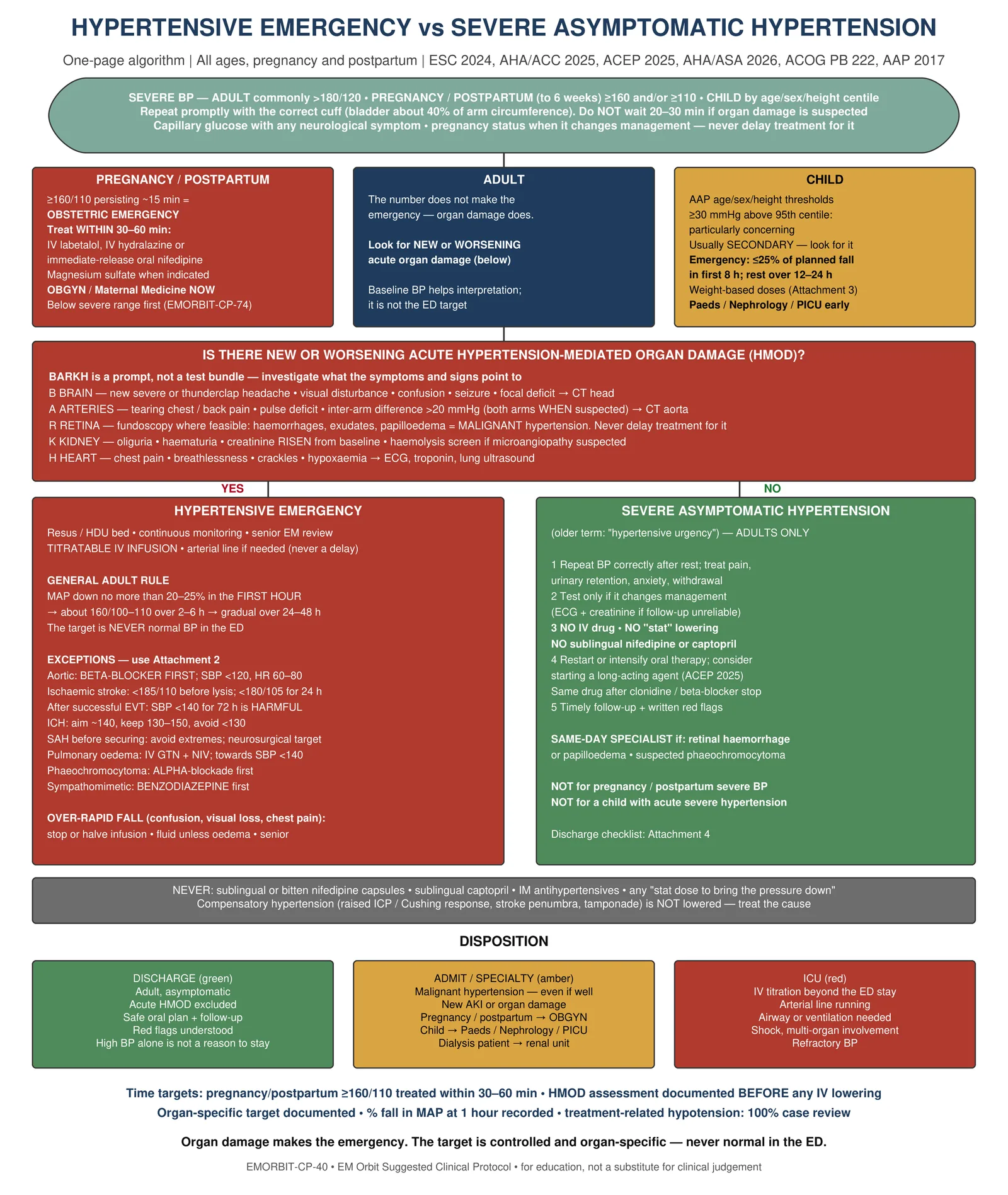
Evidence base: ESC 2024 HTN; ACEP CP 2013
1Purpose
1.1 Provide an service-wide, evidence-based ED framework for the recognition, assessment, initial treatment, monitoring and disposition of hypertensive emergencies across all age groups, including pregnancy and the postpartum period.
1.2 Define hypertensive emergency by new or worsening acute hypertension-mediated organ damage (HMOD), or a condition requiring urgent controlled BP reduction. The BP value alone does not define the emergency; age-specific and pregnancy-specific thresholds apply.
1.3 Distinguish hypertensive emergency from severe asymptomatic hypertension. In adults without acute HMOD, avoid rapid IV lowering; repeat BP correctly, address reversible causes, reinstitute or intensify oral therapy when indicated, and arrange reliable follow-up.
1.4 For most adult hypertensive emergencies, reduce MAP by no more than about 20–25% in the first hour, then towards about 160/100–110 mmHg over 2–6 hours, then cautiously over 24–48 hours. This rule does not apply to acute aortic syndrome, acute stroke, intracranial haemorrhage, pregnancy-related severe hypertension or paediatric hypertensive emergency.
1.5 Standardise organ-specific targets, first-line therapy and the core titratable agents, with adult and paediatric doses, cross-referencing the local pathways for stroke (EMORBIT-CP-14), intracerebral haemorrhage (EMORBIT-CP-44), aortic syndrome, ACS, acute heart failure and hypertensive disorders of pregnancy (EMORBIT-CP-74).
1.6 Ensure that the assessment for acute HMOD is documented before any acute BP lowering, and that the rate of reduction achieved is recorded and audited.
1.7 Align practice with ESC 2024, the AHA 2024 acute-care BP statement, the AHA/ACC 2025 adult BP guideline, ACEP 2025, the AHA/ASA 2026 acute ischaemic stroke guideline, AAP paediatric hypertension guidance (2017, 2024 update), ACOG Practice Bulletin 222 (reaffirmed 2026) and current local disease-specific guidelines.
2Who this protocol applies to
2.1 All ages: any patient with suspected acute HMOD or a clinically important acute rise in BP. Adults: severe hypertension is commonly >180/120 mmHg. Children: age/sex/height or adolescent thresholds. Pregnancy/postpartum: severe range is ≥160 systolic and/or ≥110 diastolic.
2.2 Patients with acute HMOD at any BP — pre-eclampsia, phaeochromocytoma, glomerulonephritis, drug-induced hypertension and hypertension in a child all cause emergencies at pressures unremarkable in a chronically hypertensive adult.
2.3 Patients referred or brought in with raised BP as the presenting problem, patients found incidentally to have severe hypertension, and patients who have stopped or run out of their antihypertensive medication.
2.4 Pregnancy and postpartum (up to 6 weeks after delivery): included for ED recognition, stabilisation and urgent BP control. Severe-range BP, eclampsia or pre-eclampsia with severe features requires immediate OBGYN/Maternal Medicine involvement and management under the local obstetric pathway (EMORBIT-CP-74).
2.5 Neonates, infants, children and adolescents: interpret BP against age/sex/height centiles (AAP adolescent thresholds from age 13), search actively for secondary causes, involve Paediatrics/Paediatric Nephrology early, and use weight-based therapy only under the approved paediatric formulary pathway.
3Not covered by this protocol
3.1 Chronic management of hypertension, including confirmation of a secondary cause, and ambulatory or home BP diagnosis.
3.2 Perioperative BP management outside the ED, and ICU management after the patient has left the department.
3.3 Definitive management of the underlying emergency after handover (reperfusion, thrombectomy, aortic surgery, delivery), covered by the relevant guideline.
3.4 Hypotension and shock (EMORBIT-CP-11, EMORBIT-CP-30).
4Protocol
4.1History and Assessment:
4.1.1Triage and Recognition:
4.1.1.1 Triage is driven by physiology and suspected acute HMOD, not by an isolated BP number. Apply the local triage standard (EMORBIT-CP-29).
4.1.1.2 Category 1 (resuscitation area): severe hypertension with reduced consciousness, seizure, new focal deficit, tearing or migrating chest or back pain, acute pulmonary oedema, ongoing chest pain, an inter-arm difference over 20 mmHg, or pregnancy/postpartum BP ≥160 systolic and/or ≥110 diastolic.
4.1.1.3 Category 2 as a minimum: severe hypertension with new headache, visual disturbance, vomiting, breathlessness, chest discomfort, reduced urine output, or cocaine or amphetamine use.
4.1.1.4 A patient with severe hypertension and no symptom is triaged by the presenting complaint, not moved up because of the number.
4.1.1.5 Repeat an unexpectedly high BP promptly with correct technique and an appropriate cuff (bladder width about 40% and length 80–100% of arm circumference). Rest and repeat when safe; do not wait 20–30 minutes when acute HMOD is suspected.
4.1.1.6 Measure BP in both arms when acute aortic syndrome, vascular disease or a significant inter-arm discrepancy is suspected; it is not mandatory in every patient.
4.1.1.7 Measure capillary glucose in every patient with a neurological symptom before attributing it to the BP.
4.1.1.8 Establish pregnancy status when pregnancy is possible and the result affects diagnosis, medication or imaging. Do not delay time-critical treatment or imaging to await the test.
4.1.2History:
4.1.2.1 BARKH symptoms (Table 1): headache and its onset, visual change, confusion or seizure, focal weakness, chest, back or abdominal pain, breathlessness, reduced urine output, haematuria.
4.1.2.2 Known hypertension, usual treatment and previous readings. Baseline BP helps interpretation, but targets are set by the current organ-specific emergency, not by returning the patient to their usual BP in the ED.
4.1.2.3 Medication and adherence: drug, dose, last dose, and why stopped. Ask specifically about clonidine and beta-blockers (rebound on withdrawal). Include OTC, herbal and imported preparations, NSAIDs, corticosteroids, decongestants, combined oral contraceptives, venlafaxine, calcineurin inhibitors, erythropoietin, anabolic steroids, slimming products and liquorice.
4.1.2.4 Recreational drugs (cocaine, amphetamines, synthetic cannabinoids) asked directly — they change which drug is safe. Alcohol intake and time of last drink.
4.1.2.5 Comorbidity: ischaemic heart disease, heart failure, stroke, CKD stage and dialysis (last session), diabetes, connective tissue disorder, known aneurysm, previous pre-eclampsia.
4.1.2.6 Pregnancy/postpartum when relevant: gestation, delivery in the last 6 weeks, chronic or gestational hypertension, previous pre-eclampsia, headache or visual symptoms, epigastric or right upper quadrant pain, dyspnoea, fetal concerns.
4.1.2.7 Clues to secondary causes: episodic headache, palpitations and sweating (phaeochromocytoma); snoring and daytime somnolence (sleep apnoea). Pain, urinary retention and anxiety raise BP and are not treated with an antihypertensive.
4.1.3Examination:
4.1.3.1 Confirm BP with an appropriately sized upper-arm cuff; confirm extreme automated readings by auscultation where feasible. In children, measure in the right arm when possible and interpret against paediatric normative thresholds.
4.1.3.2 Full observations including GCS; neurological examination with stroke screen and neck stiffness.
4.1.3.3 Fundoscopy when malignant hypertension, visual symptoms or hypertensive emergency is suspected, where feasible. Retinal haemorrhages, cotton-wool spots, exudates and/or papilloedema support acute hypertensive microangiopathy; lack of fundoscopy must not delay time-critical treatment.
4.1.3.4 Cardiovascular and abdominal: all pulses, radio-femoral delay, pulse deficit, new aortic regurgitation, JVP, third heart sound, crackles, pulsatile mass, renal bruit, palpable bladder. General: sweating, tremor, signs of thyrotoxicosis or Cushing syndrome.
4.1.3.5 Pregnancy/postpartum: proteinuria, epigastric or right upper quadrant tenderness, hyper-reflexia and clonus, oedema, and the fetal heart where the gestation makes that appropriate.
4.1.3.6
Table 1: BARKH — concise structured prompt for acute hypertension-mediated organ damage (Brain, Arteries, Retina, Kidney, Heart). Use alongside the pregnancy/postpartum and paediatric assessment; it is a prompt, not a mandatory test bundle BARKH Look for How (symptom- and organ-directed) A positive finding means B — Brain New severe or thunderclap headache; vomiting; visual disturbance; confusion or drowsiness; seizure; focal deficit; neck stiffness GCS, pupils, neurological examination, stroke screen; capillary glucose with any neurological symptom; non-contrast CT head where any is present Encephalopathy, ischaemic stroke, ICH, SAH or PRES — each has its own target (Attachment 2) A — Arteries Tearing or migrating chest, back or abdominal pain; inter-arm difference over 20 mmHg; pulse deficit; new aortic regurgitation; limb or visceral ischaemia; syncope BP in both arms when aortic syndrome is suspected; pulses; POCUS of the aorta; CT aortogram where suspicion exists Acute aortic syndrome: rate control first, then SBP below 120 mmHg (Attachment 2) R — Retina Flame haemorrhages, cotton-wool spots, exudates, papilloedema; blurred vision or scotomata Fundoscopy when malignant hypertension, visual symptoms or hypertensive emergency is suspected, where feasible; it must not delay time-critical treatment Malignant (accelerated) hypertension — a hypertensive emergency even if the patient feels well; same-day specialist referral K — Kidney Oliguria; haematuria; frothy urine; oedema; creatinine risen from baseline Urinalysis; renal function compared with baseline; urine protein-to-creatinine ratio Acute kidney injury or glomerulonephritis — converts severe hypertension into an emergency H — Heart Chest pain; breathlessness or orthopnoea; crackles; raised JVP; hypoxaemia 12-lead ECG and troponin where cardiac symptoms or signs; chest radiograph; lung and cardiac POCUS Acute coronary syndrome or acute pulmonary oedema (Attachment 2) BARKH is an optional local cognitive aid. Completion of every investigation in the table is not mandatory; testing remains symptom- and organ-directed.
4.1.4Risk Stratification:
4.1.4.1 Hypertensive emergency — severe hypertension with acute HMOD, or acute organ damage attributable to BP at any level. Controlled, monitored reduction with a titratable IV agent in a resuscitation or high-dependency bed.
4.1.4.2 Malignant (accelerated) hypertension — severe hypertension with bilateral retinal haemorrhages, exudates or papilloedema, with or without thrombotic microangiopathy or AKI. An emergency even when the patient feels well.
4.1.4.3 Severe asymptomatic hypertension (older term "hypertensive urgency") — severe elevation without acute HMOD; in adults commonly >180/120 mmHg. It does not require rapid IV lowering: confirm, treat reversible factors, use an appropriate oral strategy and arrange follow-up.
4.1.4.4 Transient hypertension — secondary to pain, anxiety, retention, hypoxia, hypercapnia or withdrawal. Treat the cause.
4.1.4.5 Compensatory hypertension shall not be lowered — raised intracranial pressure (Cushing response), the ischaemic penumbra in stroke, tamponade or severe aortic stenosis.
4.1.5Differential Diagnosis:
4.1.5.1 Causing the reading: wrong cuff size, pain, anxiety, retention, withdrawal, hypoxia or hypercapnia, raised ICP, sympathomimetics, the stress of another illness. A raised BP alongside another acute illness is more often its consequence than its cause.
4.1.5.2 Mimics: hypoglycaemia, sepsis and meningoencephalitis, thyroid storm, serotonin and neuroleptic malignant syndromes, anticholinergic toxicity, MAOI–tyramine crisis, autonomic dysreflexia, panic. Hypertensive encephalopathy is a diagnosis of exclusion — glucose and, in most cases, CT head first.
4.1.5.3 Secondary or precipitating causes, after stabilisation: non-adherence or withdrawal; pain, anxiety, retention; alcohol or drug withdrawal; sympathomimetics and BP-raising medicines; renal and renovascular disease; coarctation; primary aldosteronism, thyroid disease and phaeochromocytoma; pregnancy/postpartum disorders. Test in the ED only when it changes immediate care; definitive evaluation is arranged after stabilisation.
4.1.6Medication Non-adherence and Withdrawal:
4.1.6.1 Confirm the prescribed regimen, last dose and reason for interruption, and reassess for acute HMOD exactly as in any other patient. If HMOD is absent, do not use IV therapy simply to lower the number; reinstitute or adjust oral therapy, address access and adherence barriers, and arrange follow-up. Abrupt clonidine or beta-blocker withdrawal requires senior review and usually reinstitution or tapering unless contraindicated.
4.1.7Special Populations:
4.1.7.1 Pregnancy and postpartum (up to 6 weeks): BP ≥160 systolic and/or ≥110 diastolic persisting about 15 minutes is an obstetric emergency. Start an approved first-line agent within 30–60 minutes — IV labetalol, IV hydralazine or immediate-release oral nifedipine — and give magnesium sulfate when indicated. First reduce below the severe range without hypotension; later targets follow the local obstetric pathway (EMORBIT-CP-74). OBGYN/Maternal Medicine involvement is immediate.
4.1.7.2 Children: hypertensive emergency may occur at lower absolute BP and is usually secondary. Use AAP age/sex/height thresholds; a rise ≥30 mmHg above the 95th centile is particularly concerning. With life-threatening symptoms, use short-acting therapy and reduce by no more than 25% of the planned reduction in the first 8 hours, the remainder over 12–24 hours; the short-term goal is generally around the 95th centile. Involve Paediatrics/Paediatric Nephrology and PICU early.
4.1.7.3 The elderly: reduce more slowly and target the upper end of the range; confirm automated readings manually; review the drug list.
4.1.7.4 Chronic kidney disease: a modest creatinine rise that stabilises is expected; a progressive rise is not. Avoid sodium nitroprusside. Involve Nephrology early.
4.1.7.5 Dialysis patients: BP is usually a volume problem and the treatment is ultrafiltration, not an IV antihypertensive. Check the last session, hyperkalaemia (EMORBIT-CP-10) and pulmonary oedema; contact the renal unit early.
4.1.7.6 Raised intracranial pressure: hypertension with bradycardia and irregular breathing is the Cushing response — treat the ICP, not the BP; Neurosurgery and critical care immediately.
4.1.7.7 Check interactions with the chosen agent — for example a non-dihydropyridine calcium channel blocker with a beta-blocker.
4.2Investigations:
4.2.1 Investigation has one purpose: to find or exclude acute HMOD. In a true emergency, treatment is not delayed for investigation.
4.2.2 Minimum ED assessment is risk-based, not a universal panel. Confirm BP correctly and perform a focused history and examination for acute HMOD. Obtain ECG, urinalysis, renal function, blood count and haemolysis tests, troponin, pregnancy testing and imaging only when indicated by symptoms, comorbidity, suspected organ injury or disposition. In children with acute severe hypertension, investigate secondary causes early with Paediatrics/Paediatric Nephrology.
4.2.3Where acute organ damage is suspected:
4.2.3.1 Urea, electrolytes and creatinine compared with baseline (the rise is the finding); full blood count with film, LDH, haptoglobin, reticulocytes and bilirubin (thrombotic microangiopathy).
4.2.3.2 High-sensitivity troponin with chest pain, breathlessness or ECG change; natriuretic peptide where heart failure is uncertain; blood gas with lactate if unwell.
4.2.3.3 Coagulation, group and save where aortic syndrome, haemorrhage or surgery is possible; urine protein-to-creatinine ratio where renal involvement or pre-eclampsia is suspected; thyroid function or calcium where suggested; urine drug screen where sympathomimetic toxicity is suspected — treatment does not wait for it.
4.2.4Imaging:
4.2.4.1 Chest radiograph when it will assist pulmonary oedema or an alternative diagnosis. A normal chest radiograph does not exclude acute aortic syndrome; obtain CT aortography promptly when suspicion warrants it — the patient travels monitored, with rate and pressure control running.
4.2.4.2 Non-contrast CT head for reduced consciousness, seizure, new focal deficit, thunderclap or new severe headache, or suspected encephalopathy.
4.2.4.3 Point-of-care ultrasound for B-lines, LV function, aorta, pericardium and bladder; echocardiography where dissection, tamponade or acute valve lesion is suspected; MRI brain for suspected PRES with a normal CT (usually inpatient); renal ultrasound where indicated.
4.2.5Do not:
4.2.5.1 Order renin, aldosterone, metanephrines or cortisol from the ED — they are outpatient tests.
4.2.5.2 Repeat BP every 5 minutes in an asymptomatic patient to watch it fall.
4.2.5.3 Delay thrombolysis, aortic imaging or obstetric referral for laboratory results.
4.3Plan of Care:
4.3.1Immediate Actions:
4.3.1.1 Confirm BP; identify acute HMOD or a compelling condition; establish monitoring and IV access when emergency therapy is needed; run organ-directed investigations in parallel; treat pain, hypoxia, withdrawal and other contributors; activate the relevant specialty pathway. If acute HMOD is absent, do not use IV antihypertensives solely to normalise BP.
4.3.2The Rate of Reduction (adults):
4.3.2.1 Reduce MAP by no more than 20–25% in the first hour, then to about 160/100–110 mmHg over 2–6 hours, then cautiously over 24–48 hours (Table 2), except in the conditions named in Attachment 2.
4.3.2.2 The goal is controlled organ-specific reduction, not normalisation in the ED. Chronic hypertension shifts autoregulation to the right; over-rapid falls cause watershed infarction, visual loss, myocardial infarction and AKI. Avoid overshoot and reassess continuously for neurological, cardiac and renal hypoperfusion.
4.3.2.3 Prefer a titratable infusion to repeated boluses; use a bolus only while the infusion is prepared or where none is available.
4.3.2.4
Table 2: The rate of reduction in adult hypertensive emergency Phase Target How First hour Mean arterial pressure down by no more than 20–25% Titratable IV infusion in a monitored bed; BP every 5 minutes until the target is reached Hours 2 to 6 About 160/100–110 mmHg Reduce the infusion as the pressure settles; start oral therapy when the patient can swallow Hours 6 to 48 Cautious reduction towards the individual target Oral therapy; wean the infusion, do not stop it abruptly; normalisation is an outpatient goal Exceptions — the general rule does NOT apply Acute aortic syndrome; acute stroke; intracranial haemorrhage; pregnancy/postpartum severe hypertension; paediatric hypertensive emergency Use the organ-specific target in Attachment 2 Over-rapid fall New confusion, drowsiness, visual loss, focal deficit, chest pain or falling urine output as the pressure comes down Stop or halve the infusion; 250–500 mL balanced crystalloid unless in pulmonary oedema; senior review
4.3.3Organ-specific Targets:
4.3.3.1 Use the organ-specific target table (Attachment 2) and the corresponding local disease-specific guideline. Where two emergencies coexist, individualise the target with the relevant specialties and ICU; the condition with the greatest immediate risk of irreversible harm generally determines the initial target.
4.3.4Choosing and Running the Drug:
4.3.4.1 Treat every hypertensive emergency in a resuscitation or high-dependency bed with continuous monitoring. Place an arterial line where a vasodilator infusion is running or readings are unreliable — never delaying treatment.
4.3.4.2 Select the agent from Attachment 3 by emergency, comorbidity and what is stocked. Use the approved concentration on a dedicated line and pump; protect nitroprusside from light.
4.3.4.3 Record the starting MAP, the calculated 20–25% target and the start time on the observation chart. Do not run two vasodilators without senior decision.
4.3.4.4 Start oral therapy once the patient can swallow and the pressure is controlled, and wean the infusion.
4.3.5Escalation and the Refractory Patient:
4.3.5.1 Before adding a second drug, look for pain, retention, agitation or withdrawal, hypoxia or hypercapnia, ongoing sympathomimetic effect, a pump, line or cuff problem, phaeochromocytoma, dialysis fluid overload, or compensatory hypertension from raised ICP.
4.3.5.2 Senior EM review for every hypertensive emergency. Refer to the specialty that owns the organ damage (Cardiology, Cardiothoracic Surgery, Stroke/Neurology, Neurosurgery, Nephrology, OBGYN, Endocrinology, Toxicology) and to ICU for an infusion beyond the ED stay, an arterial line, a threatened airway, shock, multi-organ involvement or refractory BP.
4.3.5.3 Deterioration as the pressure falls is over-reduction until proved otherwise (Table 2).
4.3.6Monitoring:
4.3.6.1 BP every 5 minutes until the first-hour target, then every 15 minutes while any infusion runs; continuous ECG and oximetry.
4.3.6.2 Neurological examination at least every 30 minutes while BP is lowered and on any change; urine output recorded.
4.3.6.3 Repeat ECG, troponin and creatinine as indicated. Document the percentage fall in MAP at 1 hour.
4.3.6.4 With an unexpected fall, check the cuff, line, pump rate and concentration before accepting it.
4.3.7Severe Asymptomatic Hypertension (adults):
4.3.7.1 Confirm the reading and the absence of acute HMOD; treat reversible contributors; do not use rapid IV lowering solely to normalise BP. Reinstitute or intensify oral therapy when appropriate; ACEP 2025 supports considering initiation of outpatient medication at discharge, particularly where follow-up is unreliable. Arrange timely follow-up (Table 3).
4.3.7.2
Table 3: Adult severe asymptomatic hypertension — the ED pathway Step Adult severe asymptomatic hypertension 1 Repeat BP correctly (bladder width about 40% and length 80–100% of arm circumference); allow rest and treat pain, anxiety, urinary retention or withdrawal where relevant. 2 Confirm no acute HMOD by focused history and examination. Investigate only when findings will change management or disposition — an ECG and creatinine are reasonable where outpatient follow-up is unreliable or no baseline exists. 3 Do NOT use IV therapy or rapid "stat" lowering solely for an asymptomatic number. No sublingual nifedipine or captopril. 4 Reinstitute or intensify appropriate oral therapy. Consider starting a long-acting agent at discharge (for example amlodipine, or an ACE inhibitor or ARB where a creatinine is available and there is no contraindication), particularly if follow-up is uncertain (ACEP 2025). Restart the same drug after abrupt clonidine or beta-blocker withdrawal. 5 Arrange timely follow-up (within 7 days where possible) and give written red-flag return advice. Same-day specialist review if acute HMOD, retinal haemorrhage or papilloedema, suspected phaeochromocytoma, pregnancy/postpartum severe hypertension, or paediatric acute severe hypertension.
4.3.8Disposition:
4.3.8.1 Admit hypertensive emergency to a monitored high-acuity or organ-specific unit; involve ICU for IV titration, invasive monitoring, ventilation or multi-organ dysfunction. Malignant hypertension is admitted even when the patient feels well.
4.3.8.2 Pregnancy/postpartum severe hypertension: OBGYN/Maternal Medicine disposition. Paediatric hypertensive emergency: Paediatrics/Paediatric Nephrology/PICU disposition.
4.3.8.3 Adult severe asymptomatic hypertension can usually be discharged when acute HMOD is excluded, the medication and follow-up plan is safe and reliable, and return precautions are understood. A BP still high at discharge is not, by itself, a reason to keep an asymptomatic patient.
4.3.9Discharge and Follow-up (adult severe asymptomatic hypertension only):
4.3.9.1 Document repeat BP and absence of acute HMOD; reconcile medication and adherence; prescribe or reinstitute oral therapy when appropriate; arrange timely primary-care follow-up; give written red flags (Attachment 4). Not for pregnancy/postpartum severe hypertension, children with acute severe hypertension, or any patient with suspected acute HMOD.
4.3.10Minimum Documentation:
4.3.10.1 Validated BP measurement and repeat; age and pregnancy context; acute HMOD assessment and working diagnosis; organ-specific target; medication, dose or infusion and response; adverse events; specialty escalation; disposition, follow-up and safety-netting.
5Algorithm
The one-page algorithm is shown at the top of this page.
6Team roles
6.1Triage Nurse:
6.1.1 Measure BP with a correctly sized cuff, seated with the arm supported, and record the cuff size; both arms when aortic syndrome is suspected.
6.1.2 Triage by symptom, not number (section 4.1.1); record capillary glucose with any neurological symptom; establish pregnancy status when relevant.
6.1.3 Alert the physician immediately to severe hypertension with a neurological symptom, chest or back pain, breathlessness, or pregnancy/postpartum. Do not start or request an antihypertensive at triage.
6.2ED Nurses:
6.2.1 Record BP every 5 minutes until the first-hour target, then every 15 minutes during any infusion, charted so the trend is visible; record urine output.
6.2.2 Report at once any fall faster than prescribed and any new confusion, drowsiness, visual change, focal deficit or chest pain.
6.2.3 Run infusions on a dedicated line and pump; give the written discharge advice and confirm understanding, with an interpreter where required.
6.3Clinical Pharmacist:
6.3.1 Verify every dose, concentration and rate in Attachment 3 against the local formulary and smart-pump library, including paediatric doses, and confirm what is stocked.
6.3.2 Check the agent against the emergency and contraindications; screen interactions and contributing drugs; advise on restarting and simplifying oral therapy and on fasting.
6.4Cardiology, Cardiothoracic Surgery and Nephrology:
6.4.1 Cardiology: ACS, acute heart failure and pulmonary oedema; echocardiography; aortic syndrome pathway with Cardiothoracic Surgery.
6.4.2 Nephrology: AKI, malignant hypertension, thrombotic microangiopathy, and urgent dialysis for the overloaded or hyperkalaemic dialysis patient.
6.5Stroke, Neurology and Neurosurgery:
6.5.1 Apply the thresholds of EMORBIT-CP-14 and EMORBIT-CP-44 without delaying reperfusion; advise where hypertension is compensatory to raised ICP.
6.6OBGYN / Maternal Medicine:
6.6.1 Immediate review for pregnancy/postpartum severe hypertension, suspected pre-eclampsia or eclampsia, or other obstetric HMOD; coordinate magnesium sulfate, fetal assessment, antihypertensive treatment and definitive obstetric management.
6.7Paediatrics / Paediatric Nephrology / PICU:
6.7.1 Early review for paediatric acute severe hypertension; confirm age/sex/height thresholds and weight-based therapy, evaluate secondary causes and determine level of care.
6.8Laboratory, Radiology and Pre-hospital:
6.8.1 Laboratory and Radiology: prioritise renal function, film, LDH, troponin and lactate; immediate CT head or CT aortography; report critical findings verbally.
6.8.2 Ambulance: record BP in both arms when aortic syndrome is suspected; no pre-hospital antihypertensive for an asymptomatic patient; pre-alert for neurological signs, tearing pain, pulmonary oedema or seizure in pregnancy.
7The patient's role
7.1 Bring or name every medicine and when the last dose was taken; say why any was stopped; report OTC, herbal, slimming and recreational substances.
7.2 Pregnancy/postpartum: report current or possible pregnancy, gestation and any delivery in the last 6 weeks, especially with headache, visual symptoms, epigastric or right upper quadrant pain, breathlessness or swelling.
7.3 Understand that severe BP without acute organ damage is usually not treated with rapid IV medication; the plan is safe oral treatment and follow-up. This does not apply to pregnancy/postpartum severe hypertension or to children.
7.4 Take the prescribed medication daily, measure BP at home where possible, and attend follow-up.
7.5 Return immediately for severe or sudden headache, chest or back pain, breathlessness, weakness or numbness, speech or visual change, confusion, seizure, reduced urine, or faintness after a new tablet.
8Definitions
8.1 Hypertensive Emergency: severe BP elevation with new or worsening acute HMOD, requiring immediate, controlled, monitored reduction.
8.2 Severe Asymptomatic Hypertension (older term "hypertensive urgency"): severe BP elevation without acute HMOD; in non-pregnant adults commonly >180/120 mmHg. Rapid IV lowering is not indicated.
8.3 Severe Hypertension: population-specific. Adults commonly >180/120 mmHg; pregnancy/postpartum ≥160 systolic and/or ≥110 diastolic; children by age/sex/height, with acute values ≥30 mmHg above the 95th centile particularly concerning.
8.4 Hypertension-Mediated Organ Damage (HMOD): structural or functional injury to brain, eyes, heart, kidneys or arteries caused by raised BP.
8.5 Malignant (Accelerated) Hypertension: severe hypertension with bilateral retinal haemorrhages, exudates or papilloedema, with or without thrombotic microangiopathy.
8.6 Hypertensive Encephalopathy / PRES: a reversible cerebral syndrome of headache, vomiting, visual disturbance, confusion and seizure; PRES is its radiological correlate.
8.7 Mean Arterial Pressure (MAP): approximately diastolic plus one third of the pulse pressure.
8.8 Acute Aortic Syndrome: dissection, intramural haematoma or penetrating ulcer.
8.9 BARKH: Brain, Arteries, Retina, Kidney, Heart — an optional prompt for acute HMOD.
9Attachments
- Attachment 1: One-page algorithm (top of this page)
- Attachment 2: Organ-Specific Blood Pressure Targets
- Attachment 3: Core IV Antihypertensive Quick Reference
- Attachment 4: Adult Severe Asymptomatic Hypertension — Concise the ED Discharge Checklist (NOT for pregnancy/postpartum severe hypertension or paediatric hypertensive emergency)
11Suggested quality indicators
11.1 Documented acute-HMOD assessment before IV BP lowering: target ≥95%.
11.2 Organ-specific target documented in hypertensive emergency: target ≥95%.
11.3 Adult severe asymptomatic hypertension managed without unnecessary IV antihypertensive therapy: target ≥95%.
11.4 Persistent pregnancy/postpartum BP ≥160/110 treated without avoidable delay and within the local obstetric emergency target: target ≥90%.
11.5 Paediatric hypertensive emergency with Paediatrics/Paediatric Nephrology/PICU escalation and a documented age/sex/height-based target: target ≥95%.
11.6 Treatment-related hypotension or new organ hypoperfusion: 100% case review.
13References
- McEvoy JW, McCarthy CP, Bruno RM, et al. 2024 ESC Guidelines for the management of elevated blood pressure and hypertension. Eur Heart J. 2024;45(38):3912–4018.
- Jones DW, Ferdinand KC, Taler SJ, et al. 2025 AHA/ACC Guideline for the Prevention, Detection, Evaluation, and Management of High Blood Pressure in Adults. Circulation. 2025.
- Bress AP, Anderson TS, Flack JM, et al. The Management of Elevated Blood Pressure in the Acute Care Setting: A Scientific Statement From the American Heart Association. Hypertension. 2024;81:e94–e106.
- American College of Emergency Physicians. Clinical Policy: Outpatient Management of Adult ED Patients With Asymptomatic Elevated Blood Pressure. Ann Emerg Med. 2025;86:e1–e11.
- Wolf SJ, Lo B, Shih RD, et al. Clinical policy: critical issues in the evaluation and management of adult patients in the emergency department with asymptomatic elevated blood pressure. Ann Emerg Med. 2013;62(1):59–68.
- van den Born BH, Lip GYH, Brguljan-Hitij J, et al. ESC Council on Hypertension position document on the management of hypertensive emergencies. Eur Heart J Cardiovasc Pharmacother. 2019;5(1):37–46.
- National Institute for Health and Care Excellence. Hypertension in adults: diagnosis and management. NICE guideline NG136. London: NICE; 2019 (updated 2023).
- National Institute for Health and Care Excellence. Hypertension in pregnancy: diagnosis and management. NICE guideline NG133. London: NICE; 2019.
- Prabhakaran S, et al. 2026 Guideline for the Early Management of Patients With Acute Ischemic Stroke. Stroke. 2026;57:e316–e436.
- Powers WJ, Rabinstein AA, Ackerson T, et al. Guidelines for the Early Management of Patients With Acute Ischemic Stroke: 2019 Update. Stroke. 2019;50(12):e344–e418.
- Greenberg SM, Ziai WC, Cordonnier C, et al. 2022 Guideline for the Management of Patients With Spontaneous Intracerebral Hemorrhage. Stroke. 2022;53(7):e282–e361.
- Sandset EC, Anderson CS, Bath PM, et al. European Stroke Organisation (ESO) guidelines on blood pressure management in acute ischaemic stroke and intracerebral haemorrhage. Eur Stroke J. 2021;6(2):XLVIII–LXXXIX.
- Ma L, Hu X, Song L, et al. The third Intensive Care Bundle with Blood Pressure Reduction in Acute Cerebral Haemorrhage Trial (INTERACT3). Lancet. 2023;402(10395):27–40.
- Isselbacher EM, Preventza O, Hamilton Black J, et al. 2022 ACC/AHA Guideline for the Diagnosis and Management of Aortic Disease. Circulation. 2022;146(24):e334–e482.
- American College of Obstetricians and Gynecologists. Gestational Hypertension and Preeclampsia. Practice Bulletin No. 222. Obstet Gynecol. 2020;135(6):e237–e260; reaffirmed 2026.
- European Society of Cardiology. 2025 ESC Guidelines for the management of cardiovascular disease and pregnancy.
- Flynn JT, Kaelber DC, Baker-Smith CM, et al. Clinical Practice Guideline for Screening and Management of High Blood Pressure in Children and Adolescents. Pediatrics. 2017;140(3):e20171904; with AAP Pediatric Care Online Hypertensive Emergencies update 2024.
- Patel KK, Young L, Howell EH, et al. Characteristics and Outcomes of Patients Presenting With Hypertensive Urgency in the Office Setting. JAMA Intern Med. 2016;176(7):981–988.
- Levy PD, Mahn JJ, Miller J, et al. Blood pressure treatment and outcomes in hypertensive patients without acute target organ damage. Am J Emerg Med. 2015;33(9):1219–1224.
- Katz JN, Gore JM, Amin A, et al. Practice patterns, outcomes, and end-organ dysfunction for patients with acute severe hypertension: the STAT registry. Am Heart J. 2009;158(4):599–606.
- Peacock WF, Hilleman DE, Levy PD, et al. A systematic review of nicardipine vs labetalol for the management of hypertensive crises. Am J Emerg Med. 2012;30(6):981–993.
- Royal College of Emergency Medicine. Clinical standards and best practice guidance relevant to blood pressure management in the emergency department. London: RCEM.
A2Attachment 2: Organ-Specific Blood Pressure Targets
Acute HMOD, not the height of the BP, decides whether a patient has a hypertensive emergency. Without acute HMOD this attachment does not apply — follow Table 3 and Attachment 4.
| Condition | Initial target / timeframe | Preferred approach | Key caution |
|---|---|---|---|
| General adult hypertensive emergency | MAP down ~20–25% in the first hour; then ~160/100–110 over 2–6 h; gradual thereafter | Nicardipine or labetalol (agent depends on organ and comorbidity) | Do not rapidly normalise BP |
| Hypertensive encephalopathy / PRES | MAP down ~20–25% in the first hour | Nicardipine or labetalol | Exclude stroke and ICH; treat seizures |
| Acute aortic syndrome | SBP below 120 mmHg, or the lowest that maintains end-organ perfusion; HR 60–80/min | Esmolol or labetalol FIRST; add nicardipine, clevidipine or nitroprusside if needed | Never give a vasodilator before rate control |
| Hypertensive acute pulmonary oedema | Rapid symptom-directed reduction; commonly towards SBP below 140 if tolerated | IV glyceryl trinitrate + NIV as indicated; loop diuretic only if volume overloaded | Do not start a beta-blocker in acute decompensated heart failure |
| ACS with severe hypertension | Symptom- and ischaemia-guided controlled reduction; avoid hypotension | IV glyceryl trinitrate; beta-blocker only if appropriate | Do not delay reperfusion or definitive treatment |
| Acute ischaemic stroke — IV thrombolysis | Below 185/110 before IVT; maintain below 180/105 for 24 h after | Labetalol, nicardipine or clevidipine per the stroke pathway (EMORBIT-CP-14) | Do not target SBP below 140 solely for outcome benefit |
| Acute ischaemic stroke — EVT planned or after EVT | ≤185/110 before EVT if no IVT; ≤180/105 during and for 24 h after | Stroke pathway agents | After successful reperfusion, SBP below 140 for the first 72 h is harmful |
| Spontaneous ICH (mild–moderate, SBP 150–220) | Target ~140; maintain 130–150; avoid below 130 | Nicardipine, clevidipine or labetalol (EMORBIT-CP-44) | Individualise in severe ICH or raised ICP |
| Aneurysmal SAH before the aneurysm is secured | Avoid severe hypertension, hypotension and BP variability; neurocritical / neurosurgical target | Nicardipine or labetalol if treatment is required | AHA/ASA 2023 sets no universal numeric pre-securing target |
| Pregnancy / postpartum severe hypertension | Persistent ≥160/110: treat within 30–60 min; first reduce below the severe range; subsequent target per the obstetric pathway (EMORBIT-CP-74) | IV labetalol, IV hydralazine, or immediate-release oral nifedipine | Magnesium treats and prevents eclamptic seizures; ACE inhibitor/ARB contraindicated in pregnancy |
| Paediatric hypertensive emergency | No more than 25% of the planned reduction in the first 8 h; remainder over 12–24 h; short-term goal ~95th centile | Weight-based labetalol, nicardipine, esmolol or hydralazine per the paediatric pathway | Age/sex/height thresholds; early PICU and Paediatric Nephrology |
| Phaeochromocytoma crisis | Controlled reduction; usually ~20–25% MAP in the first hour | Phentolamine / alpha-blockade first | Never isolated beta-blockade before alpha control |
| Sympathomimetic crisis | Treat agitation and toxicity first; BP often falls | Benzodiazepine; add vasodilator or alpha-blockade if needed | Avoid pure beta-blockade during acute intoxication |
Where two emergencies coexist, individualise the target with the relevant specialties and ICU; the condition with the greatest immediate risk of irreversible harm generally sets the initial target.
A3Attachment 3: Core IV Antihypertensive Quick Reference
| Agent | Adult | Paediatric | Use / key caution |
|---|---|---|---|
| Labetalol | Bolus 10–20 mg IV over 2 min, repeat every 10 min (20, 40, 80 mg) to a cumulative 300 mg; infusion 0.5–2 mg/min. Onset 2–5 min, lasts 2–6 h | 0.2–1 mg/kg per dose (max 40 mg), then 0.25–3 mg/kg/h | Most emergencies incl. stroke, ICH, pregnancy, aortic. Avoid: asthma, AV block, bradycardia, decompensated HF, cocaine as sole agent |
| Nicardipine | Infusion 5 mg/h, increase 2.5 mg/h every 5–15 min to max 15 mg/h; reduce to 3 mg/h at target. Large vein; change peripheral site every 12 h | 0.5–5 micrograms/kg/min | Stroke, ICH, SAH, malignant hypertension, AKI. Not alone in aortic syndrome (reflex tachycardia) |
| Clevidipine | Infusion 1–2 mg/h, double every 90 s towards target; usual 4–6 mg/h, max 21 mg/h. Lipid emulsion; discard 4 h after opening | On PICU / specialist advice only | Very rapid, reversible control. Avoid: soya or egg allergy, lipid disorders, severe aortic stenosis |
| Glyceryl trinitrate | Infusion 5 micrograms/min, increase every 3–5 min to max 200 micrograms/min; 400–800 micrograms SL while preparing | On PICU / specialist advice only | Pulmonary oedema and ACS. Avoid: PDE-5 inhibitor within 24 h (48 h tadalafil), RV infarct, severe AS, raised ICP |
| Esmolol | Load 0.5–1 mg/kg over 1 min; infusion 50 micrograms/kg/min, titrate to max 200–300 micrograms/kg/min | 100–500 micrograms/kg/min | Rate control in aortic syndrome. Same cautions as labetalol |
| Hydralazine | 5–10 mg IV over 2 min, repeat every 20–30 min, max 20 mg | 0.1–0.2 mg/kg per dose (max 20 mg) | Pregnancy. Unpredictable fall; reflex tachycardia — not in aortic syndrome or ACS |
| Phentolamine | 2.5–5 mg IV, repeat every 5–10 min; infusion 0.5–1 mg/min | 0.05–0.1 mg/kg per dose (max 5 mg) | Phaeochromocytoma, sympathomimetic crisis, MAOI crisis — after a benzodiazepine |
| Sodium nitroprusside | 0.25–0.5 micrograms/kg/min, titrate to local max 2 micrograms/kg/min; light-protected; arterial line | On PICU advice only | Reserve agent. Cyanide/thiocyanate toxicity; raises ICP; contraindicated in pregnancy |
| Magnesium sulfate (not an antihypertensive) | Load 4 g IV over 5–15 min; 1 g/h for 24 h; recurrent seizure 2 g | Per the paediatric / obstetric pathway | Eclampsia treatment and prophylaxis (EMORBIT-CP-74). Antidote: calcium gluconate 1 g IV |
| NEVER USE | Sublingual or bitten short-acting nifedipine capsules; sublingual captopril; IM antihypertensives; any "stat dose to bring the pressure down" | — | Uncontrolled, irreversible falls. Immediate-release oral nifedipine tablets in pregnancy are a different, controlled use (EMORBIT-CP-74) |
Local governance: pharmacy shall publish one approved formulary table for each site, with standardised concentrations, smart-pump libraries and paediatric dose verification. Only agents actually available shall be named.
A4Attachment 4: Adult Severe Asymptomatic Hypertension — Concise the ED Discharge Checklist (NOT for pregnancy/postpartum severe hypertension or paediatric hypertensive emergency)
| ✓ | Discharge criterion |
|---|---|
| ☐ | Repeat BP documented using correct technique; patient clinically stable. |
| ☐ | Focused assessment finds no acute HMOD and no other emergency diagnosis. |
| ☐ | Pregnancy/postpartum emergency and paediatric hypertensive emergency are not being managed through this adult discharge pathway. |
| ☐ | No rapid IV antihypertensive or short-acting "stat" treatment given solely to normalise an asymptomatic BP. |
| ☐ | Medication and adherence reviewed; oral therapy reinstituted, adjusted or considered for initiation at discharge. |
| ☐ | Follow-up arranged in a clinically appropriate timeframe; access and adherence barriers addressed. |
| ☐ | Written red flags provided: neurological symptoms, chest or back pain, breathlessness, seizure or confusion, visual loss, reduced urine, pregnancy/postpartum warning symptoms. |
| ☐ | Patient understands the plan and has a reliable route to return for deterioration. |
| ✓ | Come back to the Emergency Department straight away if: |
|---|---|
| ☐ | You get a severe or sudden headache, or one unlike any before. |
| ☐ | You get chest pain, or pain in your back between the shoulder blades, or you become breathless. |
| ☐ | Your face, arm or leg becomes weak or numb, or your speech or vision changes. |
| ☐ | You become confused or very drowsy, or have a fit, or pass much less urine than usual. |
| ☐ | You feel faint or dizzy after starting a new tablet — the pressure may now be too low. |
A high number by itself is not the emergency; these symptoms are. Completed by: ____________ Grade: ________ Date and time: ____________