Acute Behavioural Disturbance and Agitation in the Emergency Department
EMORBIT-CP-26 · Chapter 13 · Psychiatric and Behavioural Emergencies
Open in the appFree, works on your phone and offline, with every tool alongside.
Evidence base: RCEM ABD 2022; NICE NG10; AAEP Project BETA
1Purpose
1.1 Establish that acute behavioural disturbance (ABD) is a medical emergency and not a behavioural or security problem, and provide a standardized, evidence-based framework for its recognition and management in adults and children presenting to the Emergency Department (ED).
1.2 Ensure that an organic cause is actively looked for, and excluded or treated, in every patient who presents with agitation or disturbed behaviour, because the commonest cause of death in these patients is an untreated medical illness.
1.3 Ensure that verbal de-escalation is attempted first in every case and that medication is offered orally before it is given by injection.
1.4 Ensure that, where sedation is unavoidable, it is given at the lowest effective dose and is followed by mandatory physiological monitoring in a monitored area, because the second and third commonest causes of death in these patients are prone restraint with positional asphyxia and over-sedation without monitoring.
1.5 Protect patients, staff and other attenders from harm by standardizing the environment, the staffing, the role of security, the use and documentation of physical restraint, and the debriefing that follows every episode.
1.6 Ensure consistency of practice among all healthcare providers (HCP) and alignment with the Royal College of Emergency Medicine (RCEM), the National Institute for Health and Care Excellence (NICE NG10 and NG225), the American Association for Emergency Psychiatry (Project BETA consensus statements), the Australasian College for Emergency Medicine (ACEM) and the American College of Emergency Physicians (ACEP).
1.7 Define the legal and ethical framework — capacity, consent, best interests and the involvement of psychiatry — and identify, for local completion, the points at which this guideline shall be aligned with local law and institutional policy.
2Who this protocol applies to
2.1 Patients of any age presenting to, or developing within, the ED with agitation, aggression, violence, or behaviour that places the patient or others at risk of physical harm, regardless of the suspected cause.
2.2 Patients with acute confusion or delirium whose behaviour prevents assessment, investigation or treatment.
2.3 Patients with severe behavioural disturbance arising from intoxication with, or withdrawal from, alcohol or other substances.
2.4 Patients with extreme agitation accompanied by hyperthermia, exhaustion, rigidity or acidosis, who are at risk of sudden cardiac arrest.
2.5 Patients detained, accompanied or brought to the ED by police, ambulance or family because of disturbed behaviour, including those who have self-presented in acute distress.
2.6 Patients with known mental illness, learning disability, autism or dementia whose behaviour has escalated in the ED environment.
3Not covered by this protocol
3.1 Procedural sedation for a planned procedure, which is covered by the local procedural sedation policy.
3.2 Sedation of the intubated or mechanically ventilated patient in the ED, which follows the critical care sedation standard.
3.3 Longer-term inpatient psychiatric management, the ongoing prescription of antipsychotic or mood-stabilising medication, and formal mental health detention procedures beyond the ED phase, which are the responsibility of the psychiatric service.
3.4 Chronic challenging behaviour in a patient who is calm at the time of the ED attendance and who has no acute medical or psychiatric deterioration.
3.5 Management of paediatric distress that responds to parental presence, distraction, play and analgesia alone.
4Protocol
4.1History and Assessment:
4.1.1Triage and Recognition:
4.1.1.1 Every patient who arrives agitated, aggressive or behaviourally disturbed shall be seen immediately by an ED physician and shall not wait in the general waiting area; the triage category shall reflect physiological risk and not behaviour alone, and a patient with severe or life-threatening disturbance (Table 2) shall be triaged Category 1 or 2 and moved to the resuscitation area.
4.1.1.2 A set of vital signs, including temperature, and a capillary glucose shall be obtained in every agitated patient at the earliest safe moment, and within 5 minutes of recognition wherever the patient allows; where the patient will not permit full observations, the fact and the reason shall be documented and the attempt repeated as soon as the patient is calmer or sedated.
4.1.1.3 Early warning signs of escalation shall be recognised and acted on before violence occurs: pacing, clenched fists or jaw, raised or rapid speech, invasion of others' space, refusal to sit, staring, banging or throwing objects, threats, intoxication, and a stated intention to leave against advice.
4.1.1.4 Static risk factors that raise the risk of violence shall be sought from the record and from the accompanying escort: previous violence in a healthcare setting, previous restraint, known psychosis or personality disorder, current substance misuse, recent discontinuation of psychiatric medication, forensic history, and a history of carrying weapons.
4.1.1.5 The ED shall use a single agreed trigger phrase or emergency call (for example a behavioural emergency call) that brings the ED senior physician, the nurse in charge, security and, where available, the psychiatric liaison nurse to the patient immediately.
4.1.1.6 Time zero for this guideline is the moment behavioural disturbance is recognised at triage or in the department; all the time targets in section 11 run from that point.
4.1.2History (from the patient where possible, and from family, ambulance crew, police escort, the medical record and the community team; often gathered in parallel with de-escalation):
4.1.2.1 Onset and course: sudden onset over minutes to hours suggests an organic cause; a fluctuating course with inattention suggests delirium; a gradual change over weeks suggests a primary psychiatric illness or dementia.
4.1.2.2 Medical history: diabetes, epilepsy, head injury, liver disease, renal failure, thyroid disease, HIV or other immunosuppression, cancer, previous stroke, and recent infection or surgery.
4.1.2.3 Medication: antipsychotics, antidepressants, lithium, benzodiazepines, anticholinergics, steroids, opioids, dopaminergic drugs, recent dose changes and abrupt discontinuation; every serotonergic drug shall be listed by name.
4.1.2.4 Substances: alcohol (quantity, last drink, previous withdrawal seizures or delirium tremens), stimulants, cannabis, opioids, novel psychoactive substances, and the time of last use.
4.1.2.5 Psychiatric history: diagnosis, treating team, current medication and adherence, previous admissions, previous self-harm or suicide attempts, and current suicidal or homicidal ideation.
4.1.2.6 Social and safeguarding history: housing, dependants, carer stress, domestic violence, exploitation, recent bereavement or loss, and immigration or employment stress.
4.1.2.7 For a child or young person: developmental level, school, communication needs, known autism or learning disability, usual coping strategies and triggers, and who calms them best.
4.1.2.8 What has been tried already, before arrival and in the department, and what has worked in previous episodes — many patients or their families can say exactly what helps.
4.1.3Examination:
4.1.3.1 Assessment begins with observation from a safe distance: level of consciousness, posture, gait, speech, coordination, pupil size, sweating, skin colour, tremor, rigidity, injuries, and evidence of incontinence or seizure.
4.1.3.2 ABCDE assessment as soon as it is safe: airway, respiratory rate and SpO₂, pulse, blood pressure, capillary glucose, core temperature, and AVPU or Glasgow Coma Scale.
4.1.3.3 A core temperature shall be measured in every severely agitated patient; measurement shall not be deferred because the patient is uncooperative, and the route used shall be recorded.
4.1.3.4 Focused neurological examination: pupils, eye movements, focal weakness, clonus and hyperreflexia (serotonin syndrome), rigidity (neuroleptic malignant syndrome), asterixis (hepatic encephalopathy), meningism, and signs of head injury.
4.1.3.5 Examination for injury sustained before or during the episode, for needle marks and for concealed weapons or ligatures, performed with dignity and with a chaperone.
4.1.3.6 Mental state examination once the patient is able to engage: appearance and behaviour, speech, mood, thought content including delusions and suicidal or homicidal thoughts, perception including hallucinations, cognition, and insight.
4.1.3.7 A full physical examination that was not possible during the episode shall be completed once the patient is settled, and its completion shall be documented.
4.1.4Risk Stratification and Severity:
4.1.4.1 Severity shall be graded and recorded using Table 2, with a sedation or agitation score (Sedation Assessment Tool or Richmond Agitation-Sedation Scale) before any medication is given and at every observation afterwards.
4.1.4.2 Risk to the patient: falls, self-harm, absconding, aspiration, dehydration, exhaustion, hyperthermia, rhabdomyolysis, and an undiagnosed medical illness.
4.1.4.3 Risk to others: physical assault, weapons, and risk to other patients, to visitors, to children in the department and to staff.
4.1.4.4 Features that mark a life-threatening presentation and require the resuscitation room: hyperthermia, continued violent struggle despite restraint, apparent insensitivity to pain, extreme and sustained agitation, profuse sweating, rigidity, incoherent shouting, and exhaustion after a prolonged struggle.
4.1.4.5
Table 2: Severity of behavioural disturbance and the matched response (Sedation Assessment Tool score in brackets) Level Presentation Response Mild (SAT +1) Anxious, restless, pacing, raised voice, demanding; no threat made Verbal de-escalation, environment, basic needs (food, drink, analgesia, a phone call, information about waiting time); oral medication offered if the patient asks for it Moderate (SAT +2) Loud, intrusive, threatening gestures or language, banging doors, will not settle to conversation Verbal de-escalation by a named clinician, security present but not confronting, oral medication offered, senior ED physician informed, area cleared Severe (SAT +3) Violent to people or property, sustained physical aggression, cannot be interrupted verbally Rapid tranquillisation (oral offered first, parenteral if refused or ineffective), planned restraint by a trained team only for as long as it takes to give the drug, full monitoring Life-threatening Extreme agitation with hyperthermia, exhaustion, rigidity, profuse sweating, incoherent shouting, insensitivity to pain, continued struggle against restraint Resuscitation room, senior ED physician leads, immediate sedation, active cooling, IV crystalloid, continuous monitoring, prepare for cardiac arrest; anaesthesia and critical care alerted Sedated (SAT 0 to −3) 0 = awake and calm; −1 = drowsy but rousable to voice; −2 = responds to physical stimulation only; −3 = no response A score of −2 or lower after sedation is over-sedation until proven otherwise: check airway, SpO₂, respiratory rate, capnography and blood pressure immediately and call for senior help The Sedation Assessment Tool (Calver and Isbister) or the Richmond Agitation-Sedation Scale may be used; the department shall adopt one tool and use it consistently. The score shall be recorded before sedation and at every post-sedation observation.
4.1.5Differential Diagnosis:
4.1.5.1 The differential is divided into organic (medical or toxicological), psychiatric, and mixed causes; a patient with a known psychiatric diagnosis may still have an organic cause, and the diagnosis of a psychiatric cause is made only after the organic screen in Table 1 is complete.
4.1.5.2 Organic causes to be actively excluded in every patient: hypoglycaemia, hypoxia and hypercapnia, head injury, intracranial haemorrhage or other structural lesion, sepsis, meningitis or encephalitis, post-ictal state and non-convulsive status epilepticus, delirium, alcohol or benzodiazepine withdrawal, sympathomimetic toxicity, anticholinergic toxicity, serotonin syndrome, neuroleptic malignant syndrome, hyponatraemia and other electrolyte disturbance, thyroid storm, and hepatic encephalopathy.
4.1.5.3 Psychiatric causes: acute psychosis, mania, agitated depression, severe anxiety or panic, acute stress reaction, personality disorder in crisis, and substance-induced psychosis.
4.1.5.4 Mixed and situational causes: pain, urinary retention, constipation, hypoglycaemia in a person with communication difficulty, unfamiliar and overstimulating surroundings, prolonged waiting, hunger, nicotine withdrawal, and loss of control.
4.1.5.5
Table 1: Organic causes of acute behavioural disturbance — the screen that shall be completed in every patient Cause Clues at the bedside Immediate ED action Hypoglycaemia Diabetes, insulin or sulfonylurea, alcohol, sweating, glucose < 4 mmol/L Capillary glucose in every agitated patient; 50 mL of 20% glucose IV (child 2 mL/kg of 10%); recheck at 15 minutes; thiamine first if alcohol misuse or malnutrition Hypoxia / hypercapnia SpO₂ < 94%, respiratory distress, cyanosis, COPD, opioid use, restlessness rather than anger High-flow oxygen, arterial or venous blood gas, treat the cause; agitation from hypoxia is not sedated away Head injury / intracranial haemorrhage Trauma, anticoagulation, scalp haematoma, unequal pupils, vomiting, focal deficit, deteriorating GCS Cervical spine care, CT head, neurosurgical referral, reverse anticoagulation; sedation only with airway control Sepsis, meningitis or encephalitis Fever, tachycardia, hypotension, rash, neck stiffness, immunosuppression, indwelling lines Sepsis Six as per local sepsis guideline (EMORBIT-CP-11); blood cultures then ceftriaxone 2 g IV ± aciclovir 10 mg/kg IV without waiting for imaging Post-ictal state / non-convulsive status Witnessed seizure, tongue bite, incontinence, gradual clearing, fluctuating consciousness Do not restrain a post-ictal patient; protect, observe, recheck glucose; urgent EEG and neurology if not clearing within 30–60 minutes Delirium Age > 65, acute onset over hours to days, fluctuation, inattention, altered sleep, infection, urinary retention, constipation, pain, new drug Screen with 4AT; find and treat the precipitant; non-drug management first; antipsychotics only at the lowest dose and only when there is risk of harm Alcohol or benzodiazepine withdrawal Tremor, sweating, tachycardia, hypertension, hallucinations, 6–72 hours after the last drink or dose Benzodiazepine loading (diazepam or chlordiazepoxide regimen) plus thiamine; antipsychotics alone are not adequate treatment Sympathomimetic toxicity (cocaine, amphetamine, methamphetamine, cathinones, MDMA) Dilated pupils, sweating, hypertension, tachycardia, hyperthermia, agitation out of proportion Benzodiazepines are the first-line drug; active cooling, IV crystalloid, check creatine kinase, potassium and lactate; avoid physical struggle Anticholinergic toxicity Dry flushed skin, dilated pupils, urinary retention, absent bowel sounds, confusion with visual hallucinations Benzodiazepines, supportive care, ECG for QRS widening; discuss physostigmine with toxicology where available Serotonin syndrome Serotonergic drugs, clonus (lower limb greater than upper), hyperreflexia, tremor, hyperthermia, diarrhoea Stop the serotonergic drugs, benzodiazepines, active cooling, IV fluids; discuss cyproheptadine and critical care in severe cases Neuroleptic malignant syndrome Antipsychotic exposure, lead-pipe rigidity, hyperthermia, raised creatine kinase, autonomic instability Stop all antipsychotics, active cooling, IV fluids, benzodiazepines, critical care referral; do NOT give further antipsychotic for the agitation Hyponatraemia and other electrolyte disorders Psychogenic polydipsia, diuretics, MDMA, endurance exercise, vomiting; sodium < 125 mmol/L Venous gas with sodium at first access; 3% sodium chloride 150 mL over 20 minutes if seizing or severely symptomatic; correct no faster than 8–10 mmol/L in 24 hours Thyroid storm Fever, tachyarrhythmia, goitre, tremor, recent illness or iodine load, previous thyroid disease Beta-blockade, thionamide, iodine and steroid as per endocrinology; treat as a critical care presentation Hepatic encephalopathy Chronic liver disease, jaundice, asterixis, gastrointestinal bleeding, constipation, sepsis Find the precipitant, lactulose, treat infection and bleeding; sedatives are avoided or reduced because they precipitate coma Hypothermia, hyperthermia and environmental causes Core temperature < 35 °C or > 38.5 °C, heat exposure, exhaustion, prolonged struggle Measure a core temperature in every severely agitated patient; active rewarming or active cooling; a temperature above 39 °C in a struggling patient is a resuscitation emergency A patient who is agitated and febrile, tachycardic, hypoxic or hypoglycaemic is medically unwell until proven otherwise. Agitation shall never be attributed to a psychiatric or behavioural cause until this screen is complete and documented.
4.1.6Special Populations:
4.1.6.1 Children and adolescents: de-escalation, a parent or carer present, distraction and a low-stimulus space shall be used first; restraint and sedation are more harmful and shall only be used when there is a risk of significant harm. Paediatric and, where available, child and adolescent psychiatric advice shall be obtained before any sedative is given. Doses are weight-based (Table 3) and a documented weight shall be used. Safeguarding shall be considered in every child presenting with disturbed behaviour.
4.1.6.2 Older people: new agitation in a person over 65 years is delirium until proven otherwise and shall prompt a search for infection, urinary retention, constipation, pain, dehydration, hypoxia and a new or withdrawn drug. Non-drug management is the mainstay: familiar carer, orientation, hearing aids and glasses, lighting, hydration and pain relief. Where medication cannot be avoided, the dose is a quarter to a half of the adult dose, and antipsychotics shall be avoided altogether in Parkinson disease and dementia with Lewy bodies, where lorazepam is preferred. Physical restraint carries a high risk of fracture, pressure injury, delirium prolongation and death.
4.1.6.3 Learning disability and autism: sensory factors are frequently the cause — noise, light, touch, crowding, waiting and unpredictability. The carer who knows the patient shall be kept with them and asked what helps. A quiet, low-stimulus room, predictable routine, written or pictorial communication, and reduced waiting time are the primary interventions. Restraint is more harmful and more traumatic in this group and shall be a last resort; where a hospital passport or behaviour plan exists it shall be followed.
4.1.6.4 Pregnancy: the woman shall be positioned in the left lateral position or with left uterine displacement after 20 weeks; supine and prone restraint are both contraindicated. Obstetric review shall be requested early. Benzodiazepines and haloperidol may be used at the lowest effective dose after discussion with obstetrics and psychiatry; prolonged high-dose benzodiazepine near delivery can cause neonatal sedation and withdrawal.
4.1.6.5 The intoxicated patient: alcohol or drug intoxication does not exclude a medical cause and is a common reason for a missed head injury, hypoglycaemia or sepsis. Sedation adds to an existing respiratory depressant load and shall be used at reduced dose with full monitoring. The patient shall not be discharged while intoxicated, shall be reassessed when sober, and shall have a mental health and safeguarding assessment before discharge where self-harm, suicidal ideation or vulnerability is present.
4.1.6.6 Patients accompanied by police or in custody: clinical decisions remain the responsibility of the treating clinician. Restraint applied by police is not a substitute for clinical assessment, the patient shall not be left restrained without observation, and handcuffs or other restraints shall be removed as soon as it is safe. Any patient who has been restrained prone before arrival, or who has received a conducted energy device or incapacitant spray, requires full physiological assessment and monitoring.
4.1.6.7 Patients who have self-harmed: a person who has self-harmed shall be treated with the same urgency, dignity and standard of care as any other patient, shall not be denied analgesia, and shall receive a psychosocial assessment before discharge as per NICE NG225.
4.2Investigations:
4.2.1 Investigations are directed by the organic screen and shall not delay de-escalation, sedation where it is needed, or the treatment of an identified cause.
4.2.2 In every patient, as a minimum: capillary glucose, full set of vital signs including core temperature, SpO₂, and a 12-lead ECG (for QT interval before an antipsychotic, and for evidence of ischaemia, sodium-channel blockade or electrolyte disturbance).
4.2.3 Where an organic cause is suspected, the patient is over 65 years, the presentation is a first episode, or sedation has been given: venous blood gas with lactate, sodium, potassium and glucose; full blood count; urea, electrolytes and creatinine; liver function tests; calcium and magnesium; creatine kinase; C-reactive protein; thyroid function; and a pregnancy test in every woman of child-bearing age.
4.2.4 Blood and urine cultures, chest radiograph and urinalysis where sepsis is suspected; urinalysis alone shall not be used to diagnose infection as the cause of delirium in an older person.
4.2.5 Toxicology: paracetamol and salicylate levels where deliberate self-poisoning is possible; a qualitative drug screen only where the result would change management; alcohol level where the diagnosis is uncertain. Levels of lithium, valproate, carbamazepine, clozapine and digoxin where the patient takes them.
4.2.6 CT head where there is a head injury, a new focal neurological deficit, a first seizure, anticoagulation, persistent reduced consciousness, a new headache, immunosuppression, age over 65 with unexplained delirium, or failure to improve as expected.
4.2.7 Lumbar puncture after imaging where meningitis or encephalitis is suspected; antimicrobials shall not be delayed for it.
4.2.8 Where a patient will not permit investigation, the required tests shall be listed in the record and obtained as soon as the patient is settled or sedated; a patient shall never be discharged or transferred to a mental health facility with the organic screen incomplete.
4.3Plan of Care:
4.3.1Immediate Actions — Environment, Team and Safety (0 to 5 minutes):
4.3.1.1 Call for help early and name a team leader; the team leader does not participate in any physical intervention but directs it, keeps the time and watches the airway.
4.3.1.2 Assign roles before any intervention: one clinician to talk (and only that clinician speaks), a nurse to prepare medication, a scribe to record times, security staff positioned but not confronting the patient, and a named person responsible for the airway if restraint is used.
4.3.1.3 Move the patient to a designated assessment area that is quiet, low in stimulus, adequately sized, with two exits, no ligature points, and no movable or throwable equipment; a patient with behavioural disturbance shall never be placed in a locked room or left unobserved.
4.3.1.4 Remove from the immediate area: ligature risks (cables, tubing, belts, cords, lanyards), potential weapons (sharps, scissors, drip stands, trolleys, oxygen cylinders), and other patients and visitors.
4.3.1.5 Personal safety for staff: remove lanyards, stethoscopes, earrings and anything that can be grabbed; keep a clear route to the door; carry the personal alarm; never assess a potentially violent patient alone.
4.3.1.6 Call security early rather than late. Security staff are there to keep people safe and to support the clinical team; they do not lead clinical care and they shall not apply restraint except under the direction of the clinician in charge.
4.3.1.7 Meet basic needs immediately and explicitly: food, a drink, warmth, analgesia, a toilet, a phone call, information about what will happen and how long it will take. Unmet basic needs and uncertainty are among the commonest reversible causes of escalation in the ED.
4.3.1.8 Start continuous one-to-one observation from the moment behavioural disturbance is recognised, and record who is performing it.
4.3.1.9 Obtain vital signs and a capillary glucose at the first safe opportunity, and treat hypoglycaemia, hypoxia and hyperthermia immediately.
4.3.2Verbal De-escalation — First-Line Treatment:
4.3.2.1 Verbal de-escalation is the first-line intervention for every patient with behavioural disturbance. It shall always be attempted, and the attempt shall be documented, before any medication or physical intervention, unless the immediate physical risk to the patient or to others makes any delay unsafe.
4.3.2.2 De-escalation succeeds in the large majority of episodes of agitation and typically takes 10–15 minutes of a clinician's uninterrupted time; that time shall be protected and shall be regarded as treatment, not as a delay to treatment.
4.3.2.3 The ten practical domains in Table 5 shall be used. In summary: keep two arm-lengths of space and an exit, avoid provocation, let one clinician establish verbal contact, be concise and repeat, identify what the patient wants and how they feel, listen and reflect, agree where you can, set clear limits, offer realistic choices, and debrief afterwards.
4.3.2.4 A carer, relative or friend who calms the patient shall be kept with them; a person who escalates the patient shall be asked, courteously, to wait elsewhere.
4.3.2.5 A professional interpreter shall be used where language is a barrier; a family member shall not be relied on for clinical communication in a crisis.
4.3.2.6 De-escalation and medication are not alternatives: de-escalation continues while medication is offered, given and takes effect.
4.3.2.7
Table 5: Verbal de-escalation — the ten practical domains (Project BETA, AAEP 2012) Domain What the clinician does 1. Respect personal space Stand at least two arm-lengths away, at an angle rather than face-on, with an unobstructed exit for the patient and for yourself; never let the patient be between you and the door, and never let yourself be cornered. 2. Do not be provocative Hands visible and unclenched, relaxed posture, no staring, no pointing, no crossed arms, no sudden movement, no touching; remove the audience of staff and onlookers. 3. Establish verbal contact One clinician only speaks; introduce yourself by name and role, state that you are here to keep the patient safe, and ask the patient what they would like to be called. 4. Be concise and repeat Short sentences, simple words, one idea at a time; repeat the message as often as necessary; allow the patient time to process it. Use a professional interpreter where language is a barrier. 5. Identify wants and feelings Ask directly what the patient wants and what has made them angry or frightened; free information from the patient guides everything that follows. 6. Listen closely to what the patient says Active listening with reflective statements: "Tell me if I have this right...". The patient must be able to see that they have been heard. 7. Agree, or agree to disagree Agree with what is true, agree in principle, or agree that another reasonable person would feel the same; where you cannot agree, say so respectfully rather than argue. 8. Set clear limits State plainly what behaviour is not acceptable and what the consequences are, in a matter-of-fact and non-threatening way; explain the rules of the department and the reason for them. 9. Offer choices and optimism Offer realistic choices — food, a drink, a blanket, a quieter space, a phone call, analgesia, oral medication — so that the patient keeps some control; be honest about what can and cannot be done. 10. Debrief the patient and the staff Once the patient is settled, explain what happened and why, and restore the therapeutic relationship; debrief the team, and review the episode for anything that could have been done earlier. Verbal de-escalation resolves most episodes of agitation and shall always be attempted first, and documented, unless the immediate physical risk to the patient or to others makes any delay unsafe. It typically requires 10–15 minutes of a clinician's time; that time shall be protected and given.
4.3.3Pharmacological Management — Oral First, then Rapid Tranquillisation:
4.3.3.1 Medication shall be offered orally before it is given parenterally. Many patients who refuse an injection will accept an oral or orodispersible tablet, and the act of offering a choice is itself part of de-escalation.
4.3.3.2 The aim of rapid tranquillisation is a calm patient who can be assessed and treated safely — not an unconscious patient. The target is a calm, rousable patient (Sedation Assessment Tool 0 to −1); deep sedation is a complication, not a goal.
4.3.3.3 Choice of agent (Table 3) is guided by the suspected cause, the airway and cardiovascular risk, the patient's regular medication, and the route available:
4.3.3.4Choosing the agent:
- Cause unknown, stimulant intoxication, alcohol or benzodiazepine withdrawal, antipsychotic-naive patient, prolonged QT, or known Parkinson disease or dementia with Lewy bodies: a benzodiazepine alone (lorazepam) is preferred.
- Known psychotic illness already on antipsychotic treatment, or agitation clearly driven by psychosis: an antipsychotic (olanzapine, haloperidol, or haloperidol with promethazine) is appropriate.
- Combination of an antipsychotic with promethazine, or of a benzodiazepine with an antipsychotic, may be used for severe disturbance; intramuscular olanzapine shall not be given within 1 hour of a parenteral benzodiazepine.
- Older, frail, hepatic impairment, respiratory disease, or significant alcohol or opioid intoxication: halve every dose, use a single agent, and monitor from the moment the drug is given.
- Children and adolescents: seek paediatric and psychiatric advice before any sedative is given, and use weight-based doses.
4.3.3.5 Cautions that shall be checked and documented before any dose: cardiac disease and a prolonged QT interval (obtain an ECG before an antipsychotic wherever the patient allows it, and avoid antipsychotics where QTc exceeds 500 ms); alcohol or other central nervous system depressant intoxication (reduce the benzodiazepine dose and anticipate respiratory depression); benzodiazepine dependence or tolerance (an ordinary dose may be ineffective — consider promethazine or an antipsychotic rather than escalating the benzodiazepine); pregnancy; epilepsy; and known drug allergy or previous dystonic reaction.
4.3.3.6 The patient's own regular medication, any dose given before arrival by the ambulance service or another facility, and every dose given in the ED count towards the 24-hour maximum; the running total shall be recorded on the rapid tranquillisation record (Attachment 4).
4.3.3.7 A second dose shall not be given before the first has had time to work (30–45 minutes for an intramuscular benzodiazepine; up to 2 hours for promethazine). Repeated early dosing, rather than a single adequate dose, is a common route to over-sedation.
4.3.3.8 Ketamine may achieve rapid control in extreme, life-threatening behavioural disturbance where other agents have failed or cannot be given safely, but it requires an airway-trained clinician, full monitoring, and a plan for intubation. Whether ketamine is adopted at all for this indication is a local decision, and it shall not be used for behavioural disturbance until that decision is taken locally and the governance, training and monitoring standards are in place.
4.3.3.9
Table 3: Rapid tranquillisation — agents, doses and routes by age group Agent and route Adult 18–65 years Older (> 65) or frail Child and adolescent Key cautions Lorazepam, oral 1–2 mg; may repeat after 45–60 minutes; maximum 4 mg in 24 hours 0.5–1 mg; maximum 2 mg in 24 hours 0.05–0.1 mg/kg (maximum 2 mg), on paediatric advice First choice where the cause is unknown, the patient is intoxicated with a stimulant, is antipsychotic-naive, or has a prolonged QT. Respiratory depression: have flumazenil available but do not use it routinely. Lorazepam, intramuscular 1–2 mg; may repeat after 30–45 minutes; maximum 4 mg in 24 hours 0.5–1 mg 0.05–0.1 mg/kg (maximum 2 mg), on paediatric advice Dilute with an equal volume of water for injection or 0.9% sodium chloride before injection. Additive respiratory depression with alcohol, opioids and other sedatives. Olanzapine, orodispersible oral 10 mg; a further 5–10 mg may be given after 2 hours; maximum 20 mg in 24 hours 2.5–5 mg 2.5–5 mg (age ≥ 12 years) on specialist advice Useful where the patient will accept an oral drug. Less acute dystonia than haloperidol. Postural hypotension. Olanzapine, intramuscular 10 mg; maximum 3 injections and 20 mg in 24 hours 2.5–5 mg Not recommended without psychiatric or paediatric advice Shall NOT be given within 1 hour of a parenteral benzodiazepine (risk of cardiorespiratory depression, hypotension and death). Avoid in significant alcohol intoxication. Haloperidol, intramuscular 5 mg; may repeat after 30–60 minutes; maximum 12 mg in 24 hours 0.5–2 mg 0.025–0.05 mg/kg (maximum 5 mg) on specialist advice ECG before the dose wherever the patient allows it; avoid if QTc > 500 ms, known long QT, electrolyte disturbance or significant cardiac disease. Contraindicated in Parkinson disease and dementia with Lewy bodies. Have procyclidine 5–10 mg IM available for acute dystonia. Promethazine, intramuscular 25–50 mg; maximum 100 mg in 24 hours 25 mg 0.5 mg/kg (maximum 25 mg) on specialist advice Commonly combined with haloperidol (NICE NG10). No respiratory depression, but onset may take up to 2 hours. Useful where benzodiazepine tolerance is likely. Painful injection; do not give intravenously. Droperidol, intramuscular 10 mg; may repeat once after 15 minutes 5 mg 0.1–0.2 mg/kg (maximum 10 mg) on specialist advice Rapid onset and a strong Australasian evidence base (DORM, DORM II). ECG monitoring where practicable. Use where stocked. Midazolam, intramuscular 5–10 mg 2.5 mg 0.1–0.15 mg/kg (maximum 10 mg) on specialist advice Fastest onset but the greatest risk of respiratory depression and airway obstruction of any option here. Use only in a monitored resuscitation area with an airway-trained clinician present. Ketamine, intramuscular or intravenous 4 mg/kg IM, or 1–2 mg/kg IV, titrated Not recommended Specialist decision only Reserved for extreme, life-threatening behavioural disturbance where other agents have failed or cannot be given safely. Requires an airway-trained clinician, full monitoring and a plan for intubation; emergence phenomena, hypersalivation, laryngospasm and transient hypertension. WHETHER KETAMINE IS ADOPTED AT ALL IS A TASK FORCE DECISION and it shall not be used until that decision, the governance and the training are in place. Every dose in this table shall be verified by Clinical Pharmacy against the local formulary and the product literature before use. Doses are starting doses for a drug-naive patient of average weight; the patient's regular antipsychotic and benzodiazepine, and any dose given before arrival, count towards the 24-hour maximum. Do not combine two intramuscular antipsychotics, and do not exceed the British National Formulary maximum without a documented senior decision, an ECG and continuous monitoring.
4.3.4Physical Restraint:
4.3.4.1 Physical restraint is a last resort, used only when the risk of harm cannot be managed in any other way, for the shortest possible time, by staff trained in the approved technique, and always with a plan for what happens next (usually the administration of an offered medication) so that restraint ends as soon as the drug is given.
4.3.4.2 Restraint shall be authorised by the most senior clinician present, who shall be identified in the record; the decision, the reason, the alternatives already tried, the start time, the position used and the end time shall all be documented (Attachment 4).
4.3.4.3 One team member shall be responsible for the head and the airway throughout and shall have no other task; that person watches breathing, colour and consciousness continuously and calls a halt if any of them deteriorate.
4.3.4.4 The supine or lateral position shall be used. Prone restraint is avoided. If a patient is taken to the floor and the prone position cannot be avoided at the outset, it shall last seconds rather than minutes, shall never exceed 3 minutes, and the patient shall be turned to the lateral or supine position at the first opportunity.
4.3.4.5 At no time shall pressure be applied to the neck, the chest, the abdomen, the back or the airway. No person shall kneel, sit or lie on the patient. Nothing shall cover the patient's face or mouth.
4.3.4.6 Restraint shall not be used in place of assessment, as a punishment, for the convenience of staff, or to overcome a patient's refusal of a non-urgent investigation.
4.3.4.7 Restraint shall be stopped immediately for: any airway noise or difficulty in breathing, cyanosis, a sudden change from violent struggle to quiet or limpness (a pre-arrest sign), vomiting, a fall in consciousness, or a report of chest pain or inability to breathe.
4.3.4.8 Mechanical restraint (limb restraints, restraint belts) shall be used only where it is permitted by local policy and local law, only under the same authorisation, monitoring and documentation standard, and shall be reviewed and released at defined intervals. The permissible forms of mechanical restraint and their review intervals shall be specified locally, in line with local policy, before use.
4.3.4.9 Seclusion shall not be used in the Emergency Department.
4.3.4.10 Every episode of restraint shall be followed by physiological observation as for sedation (Table 4), a physical examination for injury, and a debrief of the patient and of the team.
4.3.5Escalation and the Patient at Risk of Sudden Cardiac Arrest:
4.3.5.1 A small group of patients present with extreme agitation, hyperthermia, profuse sweating, rigidity, apparent insensitivity to pain, incoherent shouting and superhuman-seeming strength, who then collapse suddenly, often shortly after the struggle stops. The physiology is a combination of catecholamine excess, hyperthermia, metabolic acidosis, hyperkalaemia and rhabdomyolysis, and the risk is sudden cardiac arrest.
4.3.5.2 The term "excited delirium" is contested — it is not a recognised diagnosis in ICD or DSM, it has been criticised for its use in deaths in custody, and several colleges and medical bodies have withdrawn support for it. Clinicians shall describe the physiological state (for example "extreme agitation with hyperthermia, acidosis and exhaustion") rather than apply the label, both in communication and in the record.
4.3.5.3 Whatever it is called, the patient is critically ill and shall be managed in the resuscitation room by the senior ED physician with critical care support.
4.3.5.4Management of the patient in this state:
- Stop the struggle: prolonged physical restraint against active resistance worsens acidosis, hyperthermia and rhabdomyolysis and is itself a cause of death. Sedate early rather than restrain longer.
- Sedate rapidly with an agent that acts quickly, at an adequate dose, with the airway prepared and an airway-trained clinician present.
- Cool actively: remove clothing, cold intravenous crystalloid, ice packs to the neck, axillae and groins, evaporative cooling, and a cooling blanket where available; a core temperature above 39 °C requires active cooling and a target of normothermia.
- Intravenous crystalloid to correct dehydration and to protect the kidneys from rhabdomyolysis.
- Obtain immediately: venous or arterial gas, potassium, lactate, creatine kinase, renal function and an ECG; treat hyperkalaemia and acidosis as per the local hyperkalaemia pathway.
- Attach defibrillator pads and have the airway trolley and the resuscitation team at the bedside; cardiac arrest in this group is often sudden and occurs when the patient becomes quiet.
- Early critical care referral for intubation, controlled ventilation and continued cooling where sedation alone does not control the state.
4.3.5.5 A sudden transition from violent struggle to calm, limpness or silence shall be treated as impending cardiac arrest, not as success.
4.3.6Monitoring and Reassessment:
4.3.6.1 Monitoring after sedation is mandatory and is described in Table 4. The patient shall be in a clinically monitored area with a clinician present; a patient who has received parenteral sedation shall never be nursed in a side room, a corridor, a locked room or any unobserved space.
4.3.6.2 Continuous pulse oximetry and ECG shall be applied from the moment the drug is given, with waveform capnography where it is available, and shall continue until the patient is awake and the sedation score has returned to 0 or +1.
4.3.6.3 Vital signs, level of consciousness and the sedation score shall be recorded every 5 minutes for the first 15 minutes, every 15 minutes for the next hour, and hourly thereafter for at least 4 hours after the last dose and until the patient is awake, orientated and ambulant.
4.3.6.4 The equipment listed under Table 4 shall be present and checked before any parenteral sedation is given; a dose shall not be given in a location where that equipment is not immediately available.
4.3.6.5 The patient shall be positioned in the lateral (recovery) position wherever possible and shall never be left prone.
4.3.6.6 The organic screen (Table 1) shall be completed or repeated once the patient is settled, and any investigation that was deferred shall be obtained; the record shall show that this was done.
4.3.6.7 Physical care during the recovery period: hydration, pressure-area care and repositioning at least every 2 hours, prevention of aspiration, temperature control, checks for injury sustained during the episode, and continence care.
4.3.7Disposition:
4.3.7.1Resuscitation area or critical care:
- Over-sedation: airway compromise, apnoea or respiratory rate below 10 per minute, SpO₂ below 92%, or a sedation score of −2 or lower that does not improve.
- Hyperthermia above 39 °C, rhabdomyolysis, severe metabolic acidosis, hyperkalaemia, new arrhythmia or haemodynamic instability.
- The patient described in section 4.3.5 who remains agitated despite adequate sedation, or who has required prolonged or repeated restraint and is exhausted.
- Any patient who has arrested or peri-arrested during the episode.
4.3.7.2Admission to a medical or surgical ward, or to an observation area:
- Any patient who has received parenteral sedation and is not yet fully awake, orientated and ambulant.
- An organic cause that requires inpatient treatment (sepsis, head injury, metabolic derangement, withdrawal requiring a treatment regimen).
- Delirium in an older person that has not resolved and requires inpatient assessment and treatment of the precipitant.
- A patient awaiting psychiatric assessment or a mental health bed who cannot safely wait in the ED; while awaiting transfer the patient remains in a monitored, observed area with one-to-one observation and regular physical observations, and shall not be moved to an unobserved space.
4.3.7.3Referral to psychiatry (in parallel with medical care, not instead of it):
- Any patient whose behavioural disturbance is thought to be psychiatric in origin, once medically assessed.
- Any patient who has self-harmed or expressed suicidal ideation, who shall receive a psychosocial assessment before leaving the department, as per NICE NG225.
- Any patient whose disposition requires a mental health facility; the referring ED physician shall document that the organic screen is complete and that the patient is physiologically fit for transfer.
4.3.7.4Discharge from the ED (all of the following):
- Fully settled, orientated and able to engage in an assessment.
- Organic screen complete and documented, with normal or explained vital signs and glucose, and any identified cause treated.
- No sedation given, or sedation given and the patient now fully recovered with normal observations sustained for at least 2 hours after the observation period in Table 4 is complete.
- Mental health and self-harm risk assessed and documented, with a management plan agreed with psychiatry where relevant.
- Safeguarding concerns for a child, an older person or a vulnerable adult addressed and referred where required.
- A responsible adult or a safe place to go to, and transport arranged; the patient shall not be discharged intoxicated or into the street.
- Discharge decided by, or after discussion with, an ED specialist or consultant.
4.3.8Discharge and Follow-up:
4.3.8.1 A written discharge plan shall be given in the patient's own language and shall state the cause found, the treatment given, what to do if the symptoms return, and the follow-up arranged.
4.3.8.2 A patient who has received sedation shall be advised not to drive, operate machinery, drink alcohol or take other sedatives for at least 24 hours, and shall be accompanied home.
4.3.8.3 Referral shall be made to the community mental health team, the treating psychiatrist, the addiction service, the memory or geriatric service, or the primary care physician as appropriate, and the referral shall be documented with a named service and a timeframe.
4.3.8.4 For a patient who has self-harmed: a safety plan, crisis contact numbers, means-restriction advice given to the family, and a follow-up appointment as per NICE NG225.
4.3.8.5 For an older person with delirium: written information for the family about delirium, its course and its prevention, and a follow-up review.
4.3.8.6 Where the patient has a recurring pattern of attendance with behavioural disturbance, a personalised care plan shall be prepared jointly with psychiatry and the community team and made available in the ED record for future attendances.
4.3.9Documentation, Debriefing and Reporting:
4.3.9.1 The record shall contain: the trigger and the description of the behaviour; the time behavioural disturbance was recognised; the organic screen including the glucose result and its time; the de-escalation techniques attempted and their outcome; the reason medication or restraint became necessary; every drug with dose, route and time; the running 24-hour total; the position and duration of any restraint; who authorised it; the monitoring performed with the observation chart; the mental state examination; the capacity assessment; the disposition decision; and the debrief.
4.3.9.2 Every episode of restraint, of parenteral rapid tranquillisation, and of physical assault on staff or on another patient shall be reported through the local incident reporting system. Under-reporting of assaults on staff is common and shall be actively discouraged.
4.3.9.3 Adverse events after sedation (oxygen desaturation, airway intervention, hypotension, arrhythmia, dystonia, aspiration, cardiac arrest, unplanned critical care admission) shall be reported and reviewed by the department.
4.3.9.4 The patient shall be offered a debrief once settled: an explanation of what happened and why, an apology where appropriate, and an opportunity to say what would have helped; the patient's account shall be recorded and used to prepare a plan for any future attendance.
4.3.9.5 The team shall be debriefed after every significant episode: a short structured discussion of what happened, what went well, what could have been done earlier, and the welfare of the staff involved. Staff who have been assaulted shall be offered occupational health and psychological support.
4.3.10Legal and Ethical Framework:
4.3.10.1 Every intervention in this guideline — de-escalation, medication and restraint — is a medical intervention and requires either the patient's consent or a lawful basis for acting without it.
4.3.10.2 Capacity shall be assessed and documented at the time of the decision and in relation to that decision: can the patient understand the information, retain it, weigh it and communicate a choice? Capacity is decision-specific and may fluctuate; a patient is presumed to have capacity unless assessment shows otherwise, and an unwise decision is not in itself evidence of incapacity.
4.3.10.3 A patient with capacity may refuse assessment and treatment. Where a patient with capacity wishes to leave and there is a serious risk to their life or to others, the senior ED physician shall involve psychiatry and, where the law provides for it, the legal or administrative process for detention, and shall document the decision and the reasoning.
4.3.10.4 Where the patient lacks capacity, treatment may be given in their best interests, using the least restrictive option that achieves the necessary outcome, taking account of any known wishes, values and advance statements, and consulting family or carers where possible.
4.3.10.5 Restraint of a patient who lacks capacity shall be necessary to prevent harm and proportionate to the likelihood and seriousness of that harm; both elements shall be recorded.
4.3.10.6 Parental consent applies for a child; the views of a competent young person shall be taken into account, and safeguarding obligations override any objection to the involvement of the child protection service.
4.3.10.7 Psychiatry shall be involved early in any patient where mental illness is suspected, where detention may be required, or where the disposition is to a mental health facility.
4.3.10.8 This section shall be completed locally, in conjunction with legal services and the Psychiatry service, to align it with national mental health law and with institutional policy on consent, capacity, restraint and the management of the violent or absconding patient. The specific points requiring local determination are: the lawful basis and the authorising person for detaining a patient in the ED; the lawful basis and the authorising person for restraint and for mechanical restraint; the permitted forms and the review intervals for mechanical restraint; the role and the limits of hospital security and of the police; the documentation and notification required after every episode of restraint; and the process for transfer to a designated mental health facility.
5Algorithm
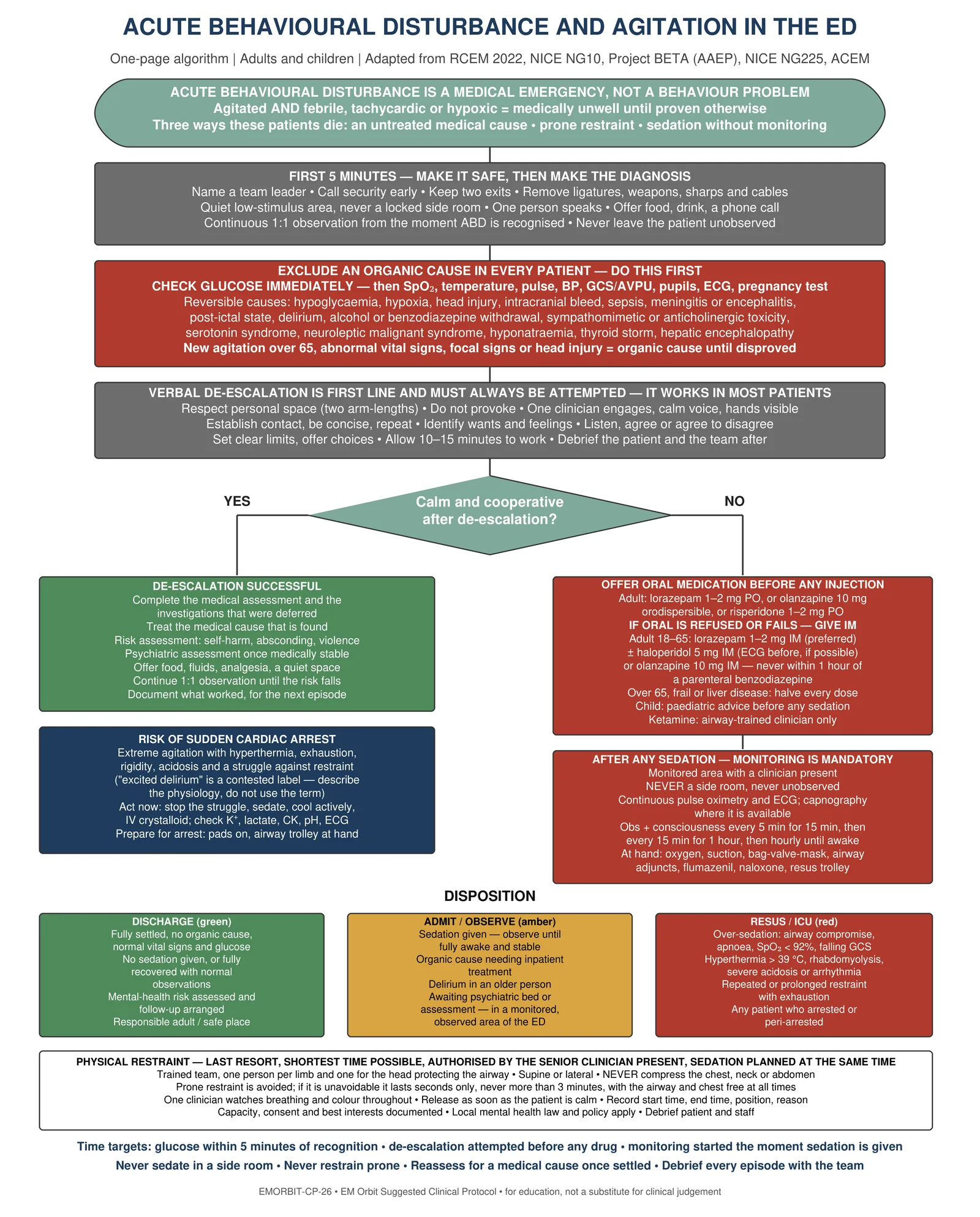
The one-page algorithm is shown at the top of this page.
6Team roles
6.1Triage and ED Nurses Role:
6.1.1 Recognize behavioural disturbance and the early signs of escalation at triage, assign a category that reflects physiological risk rather than behaviour, avoid placing the patient in the general waiting area, and call the ED physician immediately.
6.1.2 Obtain vital signs including temperature and a capillary glucose at the first safe opportunity and record why any observation could not be obtained.
6.1.3 Prepare the environment: quiet low-stimulus area, two exits, removal of ligature and weapon risks, and removal of other patients and visitors from the immediate area.
6.1.4 Begin and maintain continuous one-to-one observation, and record who is performing it.
6.1.5 Prepare and check medication against Table 3, perform the independent second check of paediatric weight-based doses, and record the drug, dose, route and time.
6.1.6 Perform and record the post-sedation observations in Table 4 at the stated intervals, escalate immediately at the stated triggers, and keep the sedated patient in the lateral position in a monitored, observed area.
6.1.7 Provide physical care during recovery: hydration, pressure areas, repositioning, continence care, temperature control and checks for injury.
6.1.8 Complete the restraint record (Attachment 4), report the episode through the incident system, and take part in the team debrief.
6.2Pharmacist:
6.2.1 Verify every dose, route and 24-hour maximum in Table 3 against the local formulary and the product literature, and confirm the availability and the formulary status of droperidol and of ketamine before those options are used.
6.2.2 Ensure that lorazepam (oral and injectable), olanzapine (orodispersible and intramuscular), haloperidol, promethazine, procyclidine, flumazenil and naloxone are stocked in the ED with a weight-based paediatric dose chart.
6.2.3 Review the patient's regular psychotropic medication for interactions, cumulative QT risk, anticholinergic burden and the risk of neuroleptic malignant syndrome or serotonin syndrome, and advise the team.
6.2.4 Support the departmental audit of rapid tranquillisation doses and adverse events.
6.3Psychiatry and Psychiatric Liaison:
6.3.1 Attend the ED promptly when called, assess the patient once they are medically stable, advise on the choice of medication for a patient already under psychiatric care, and advise on the legal process where detention may be required.
6.3.2 Undertake the psychosocial assessment of every patient who has self-harmed before discharge, and agree the safety plan and follow-up.
6.3.3 Accept transfer of care for patients requiring mental health admission, and agree the arrangements for the patient who must wait in the ED.
6.3.4 Contribute to the personalised care plan for patients who attend repeatedly with behavioural disturbance.
6.4Security Staff:
6.4.1 Attend immediately when called, position themselves visibly but without confronting the patient, and follow the direction of the clinician in charge.
6.4.2 Support the clinical team in keeping people safe, in removing weapons and hazards, and in controlling access to the area.
6.4.3 Participate in restraint only under the direction of the clinician in charge, using the approved technique for which they have been trained, and never apply pressure to the neck, chest, abdomen or back.
6.4.4 Complete their part of the restraint record and take part in the debrief.
6.5Paediatrics / Child and Adolescent Mental Health:
6.5.1 Advise before any sedative is given to a child or adolescent, review every child with behavioural disturbance, determine disposition, and address safeguarding.
6.6Geriatric Medicine:
6.6.1 Advise on delirium in older people, on the avoidance of antipsychotics in Parkinson disease and dementia with Lewy bodies, and on the inpatient pathway for the older person with unresolved delirium.
6.7Laboratory and Radiology:
6.7.1 Prioritize the samples and the imaging of a patient with unexplained behavioural disturbance, report critical results verbally, and accommodate the imaging of a sedated or restrained patient safely and without delay.
6.8Ambulance and Pre-hospital Providers:
6.8.1 Pre-alert the ED for any patient with significant behavioural disturbance so that the environment, the team and security can be prepared before arrival.
6.8.2 Hand over: the behaviour observed, what was tried, every drug given with dose, route and time, any restraint applied and its position and duration, the vital signs obtained, and any exposure to a conducted energy device or incapacitant spray.
7The patient's role
7.1 Tell the healthcare team what is wrong, what has helped in the past, and what makes things worse, at any point where the patient feels able to do so.
7.2 Tell the team about medical conditions, regular medicines, recent missed doses, alcohol and drug use, and pregnancy.
7.3 Accept the offer of oral medication where it is made, as an alternative to an injection.
7.4 Family and carers: stay with the patient where this helps, tell the team what usually calms the patient, share any hospital passport or behaviour plan, and remove items that could be used to cause harm.
7.5 After the episode: take part in the debrief, help prepare a plan for any future attendance, and attend the follow-up appointment arranged.
7.6 Follow the discharge advice, including not driving or drinking alcohol for 24 hours after sedation, and return to the ED or call the emergency number if the symptoms return.
8Definitions
8.1Acute Behavioural Disturbance (ABD): an acute state of agitation, aggression or disturbed behaviour, from any cause, that places the patient or others at risk of harm and that prevents safe assessment and treatment. It is a presentation, not a diagnosis, and it is a medical emergency.
8.2Agitation: excessive motor or verbal activity arising from internal distress, ranging from restlessness to violence.
8.3De-escalation: the use of verbal and non-verbal communication, environmental change and the meeting of basic needs to reduce agitation and to avoid restraint and sedation.
8.4Rapid Tranquillisation: the use of medication, usually by the intramuscular route, to calm a severely agitated patient quickly in order to reduce the risk of harm, with the aim of a calm and rousable patient rather than an unconscious one.
8.5Physical (Manual) Restraint: the direct physical holding of a patient by trained staff to prevent harm, for the shortest possible time and with the least force necessary.
8.6Mechanical Restraint: the use of a device to limit a patient's movement; its use is governed by local policy and by national law.
8.7Positional Asphyxia: death or hypoxic injury caused by a body position that prevents adequate ventilation, classically the prone position with weight applied to the back, chest or abdomen. It is a leading cause of death during restraint and is preventable.
8.8Over-sedation: a level of sedation deeper than intended, marked by a sedation score of −2 or lower, airway obstruction, hypoventilation or hypoxia; it is the principal iatrogenic hazard of rapid tranquillisation and is why monitoring is mandatory.
8.9Delirium: an acute, fluctuating disturbance of attention and cognition caused by a medical condition, intoxication or withdrawal; it may be hyperactive, hypoactive or mixed.
8.10"Excited Delirium": a contested term for a state of extreme agitation with hyperthermia, acidosis and a risk of sudden death. It is not a recognised diagnosis and has been withdrawn from use by several medical bodies; clinicians shall describe the physiological state rather than use the label, while recognising that the patient is critically ill.
8.11Sedation Assessment Tool (SAT) / Richmond Agitation-Sedation Scale (RASS): validated scales used to score agitation and sedation before and after treatment.
8.12Capacity: the ability, at the time of a particular decision, to understand the relevant information, retain it, weigh it and communicate a choice.
8.13Best Interests: the basis on which a decision is made for a patient who lacks capacity, using the least restrictive option and taking account of the patient's known wishes, values and beliefs.
8.14RCEM, NICE, AAEP, BETA, ACEM, ACEP, NMS: Royal College of Emergency Medicine; National Institute for Health and Care Excellence; American Association for Emergency Psychiatry; Best practices in Evaluation and Treatment of Agitation; Australasian College for Emergency Medicine; American College of Emergency Physicians; neuroleptic malignant syndrome.
9Attachments
- Attachment 1: One-page algorithm (top of this page)
- Attachment 2: Organic Causes Screen
- Attachment 3: Rapid Tranquillisation — Drug Table by Age Group and Monitoring Requirement
- Attachment 4: Post-Sedation Monitoring Chart and Restraint Documentation Record
11Suggested quality indicators
11.1Organic cause screen documented: (Number of patients with acute behavioural disturbance in whom a capillary glucose, a full set of vital signs including temperature, and SpO₂ are documented during the ED episode / Total number of patients with acute behavioural disturbance) × 100. Target ≥ 95%, with glucose documented in 100%.
11.2Time to glucose measurement: (Number of patients with acute behavioural disturbance in whom a capillary glucose is documented within 5 minutes of the recognition of behavioural disturbance / Total number of such patients in whom a glucose was obtainable) × 100. Target ≥ 80%.
11.3De-escalation attempted and documented before sedation: (Number of patients given medication for behavioural disturbance in whom a de-escalation attempt and the offer of oral medication are documented beforehand / Total number of patients given medication for behavioural disturbance) × 100. Target ≥ 90%. Episodes where immediate physical risk made de-escalation unsafe are counted separately with the reason documented.
11.4Monitoring documented after sedation: (Number of patients given parenteral sedation with a completed post-sedation observation chart at the intervals in Table 4, in a monitored area / Total number of patients given parenteral sedation) × 100. Target 100%.
11.5Restraint duration recorded: (Number of episodes of physical restraint with the start time, end time, position used and authorising clinician documented / Total number of episodes of physical restraint) × 100. Target 100%. The proportion of episodes in which any prone restraint was used, and its duration, shall be reported alongside this indicator with a target of 0%.
11.6Adverse events after sedation (outcome): (Number of patients given sedation for behavioural disturbance who experience oxygen desaturation below 92%, an airway intervention, hypotension, a new arrhythmia, acute dystonia, aspiration, cardiac arrest or unplanned critical care admission / Total number of patients given sedation for behavioural disturbance) × 100. Monitored with a target of ≤ 5%; every event is reviewed individually by the department.
13References
- Royal College of Emergency Medicine. Acute Behavioural Disturbance in Emergency Departments. RCEM Best Practice Guideline. London: RCEM; 2022.
- National Institute for Health and Care Excellence. Violence and aggression: short-term management in mental health, health and community settings. NICE guideline NG10; 2015.
- National Institute for Health and Care Excellence. Self-harm: assessment, management and preventing recurrence. NICE guideline NG225; 2022.
- National Institute for Health and Care Excellence. Delirium: prevention, diagnosis and management in hospital and long-term care. NICE clinical guideline CG103; 2010 (updated 2023).
- Holloman GH, Zeller SL. Overview of Project BETA: Best practices in Evaluation and Treatment of Agitation. West J Emerg Med. 2012;13(1):1–2.
- Nordstrom K, Zun LS, Wilson MP, et al. Medical evaluation and triage of the agitated patient: consensus statement of the American Association for Emergency Psychiatry Project BETA Medical Evaluation Workgroup. West J Emerg Med. 2012;13(1):3–10.
- Stowell KR, Florence P, Harman HJ, Glick RL. Psychiatric evaluation of the agitated patient: consensus statement of the American Association for Emergency Psychiatry Project BETA Psychiatric Evaluation Workgroup. West J Emerg Med. 2012;13(1):11–16.
- Richmond JS, Berlin JS, Fishkind AB, et al. Verbal de-escalation of the agitated patient: consensus statement of the American Association for Emergency Psychiatry Project BETA De-escalation Workgroup. West J Emerg Med. 2012;13(1):17–25.
- Wilson MP, Pepper D, Currier GW, Holloman GH, Feifel D. The psychopharmacology of agitation: consensus statement of the American Association for Emergency Psychiatry Project BETA Psychopharmacology Workgroup. West J Emerg Med. 2012;13(1):26–34.
- Knox DK, Holloman GH. Use and avoidance of seclusion and restraint: consensus statement of the American Association for Emergency Psychiatry Project BETA Seclusion and Restraint Workgroup. West J Emerg Med. 2012;13(1):35–40.
- Australasian College for Emergency Medicine. Guideline on the Management of Patients with Acute Behavioural Disturbance in Emergency Departments. Melbourne: ACEM; 2023.
- Patel MX, Sethi FN, Barnes TRE, et al. Joint BAP NAPICU evidence-based consensus guidelines for the clinical management of acute disturbance: De-escalation and rapid tranquillisation. J Psychopharmacol. 2018;32(6):601–640.
- Isbister GK, Calver LA, Page CB, Stokes B, Bryant JL, Downes MA. Randomized controlled trial of intramuscular droperidol versus midazolam for violence and acute behavioral disturbance: the DORM study. Ann Emerg Med. 2010;56(4):392–401.
- Calver L, Drinkwater V, Gupta R, Page CB, Isbister GK. Droperidol v. haloperidol for sedation of aggressive behaviour in acute mental health: randomised controlled trial. Br J Psychiatry. 2015;206(3):223–228.
- Taylor DM, Yap CYL, Knott JC, Taylor SE, Phillips GA, Karro J, et al. Midazolam-droperidol, droperidol, or olanzapine for acute agitation: a randomized clinical trial. Ann Emerg Med. 2017;69(3):318–326.
- American College of Emergency Physicians. ACEP Task Force Report on Hyperactive Delirium with Severe Agitation in Emergency Settings. Irving, TX: ACEP; 2021.
- Vilke GM, DeBard ML, Chan TC, et al. Excited Delirium Syndrome (ExDS): defining based on a review of the literature. J Emerg Med. 2012;43(5):897–905.
- National Institute for Health and Care Excellence. Violent and aggressive behaviours in people with mental health problems. NICE quality standard QS154; 2017.
- United Arab Emirates. Federal Law No. 10 of 2019 concerning Mental Health.
A2Attachment 2: Organic Causes Screen
To be completed and documented in every patient presenting with agitation or disturbed behaviour, whatever the apparent cause and whatever the psychiatric history. Agitation is not attributed to a psychiatric cause until this screen is complete.
| Cause | Clues at the bedside | Immediate ED action |
|---|---|---|
| Hypoglycaemia | Diabetes, insulin or sulfonylurea, alcohol, sweating, glucose < 4 mmol/L | Capillary glucose in every agitated patient; 50 mL of 20% glucose IV (child 2 mL/kg of 10%); recheck at 15 minutes; thiamine first if alcohol misuse or malnutrition |
| Hypoxia / hypercapnia | SpO₂ < 94%, respiratory distress, cyanosis, COPD, opioid use, restlessness rather than anger | High-flow oxygen, arterial or venous blood gas, treat the cause; agitation from hypoxia is not sedated away |
| Head injury / intracranial haemorrhage | Trauma, anticoagulation, scalp haematoma, unequal pupils, vomiting, focal deficit, deteriorating GCS | Cervical spine care, CT head, neurosurgical referral, reverse anticoagulation; sedation only with airway control |
| Sepsis, meningitis or encephalitis | Fever, tachycardia, hypotension, rash, neck stiffness, immunosuppression, indwelling lines | Sepsis Six as per local sepsis guideline (EMORBIT-CP-11); blood cultures then ceftriaxone 2 g IV ± aciclovir 10 mg/kg IV without waiting for imaging |
| Post-ictal state / non-convulsive status | Witnessed seizure, tongue bite, incontinence, gradual clearing, fluctuating consciousness | Do not restrain a post-ictal patient; protect, observe, recheck glucose; urgent EEG and neurology if not clearing within 30–60 minutes |
| Delirium | Age > 65, acute onset over hours to days, fluctuation, inattention, altered sleep, infection, urinary retention, constipation, pain, new drug | Screen with 4AT; find and treat the precipitant; non-drug management first; antipsychotics only at the lowest dose and only when there is risk of harm |
| Alcohol or benzodiazepine withdrawal | Tremor, sweating, tachycardia, hypertension, hallucinations, 6–72 hours after the last drink or dose | Benzodiazepine loading (diazepam or chlordiazepoxide regimen) plus thiamine; antipsychotics alone are not adequate treatment |
| Sympathomimetic toxicity (cocaine, amphetamine, methamphetamine, cathinones, MDMA) | Dilated pupils, sweating, hypertension, tachycardia, hyperthermia, agitation out of proportion | Benzodiazepines are the first-line drug; active cooling, IV crystalloid, check creatine kinase, potassium and lactate; avoid physical struggle |
| Anticholinergic toxicity | Dry flushed skin, dilated pupils, urinary retention, absent bowel sounds, confusion with visual hallucinations | Benzodiazepines, supportive care, ECG for QRS widening; discuss physostigmine with toxicology where available |
| Serotonin syndrome | Serotonergic drugs, clonus (lower limb greater than upper), hyperreflexia, tremor, hyperthermia, diarrhoea | Stop the serotonergic drugs, benzodiazepines, active cooling, IV fluids; discuss cyproheptadine and critical care in severe cases |
| Neuroleptic malignant syndrome | Antipsychotic exposure, lead-pipe rigidity, hyperthermia, raised creatine kinase, autonomic instability | Stop all antipsychotics, active cooling, IV fluids, benzodiazepines, critical care referral; do NOT give further antipsychotic for the agitation |
| Hyponatraemia and other electrolyte disorders | Psychogenic polydipsia, diuretics, MDMA, endurance exercise, vomiting; sodium < 125 mmol/L | Venous gas with sodium at first access; 3% sodium chloride 150 mL over 20 minutes if seizing or severely symptomatic; correct no faster than 8–10 mmol/L in 24 hours |
| Thyroid storm | Fever, tachyarrhythmia, goitre, tremor, recent illness or iodine load, previous thyroid disease | Beta-blockade, thionamide, iodine and steroid as per endocrinology; treat as a critical care presentation |
| Hepatic encephalopathy | Chronic liver disease, jaundice, asterixis, gastrointestinal bleeding, constipation, sepsis | Find the precipitant, lactulose, treat infection and bleeding; sedatives are avoided or reduced because they precipitate coma |
| Hypothermia, hyperthermia and environmental causes | Core temperature < 35 °C or > 38.5 °C, heat exposure, exhaustion, prolonged struggle | Measure a core temperature in every severely agitated patient; active rewarming or active cooling; a temperature above 39 °C in a struggling patient is a resuscitation emergency |
A patient who is agitated and febrile, tachycardic, hypoxic or hypoglycaemic is medically unwell until proven otherwise. Agitation shall never be attributed to a psychiatric or behavioural cause until this screen is complete and documented.
Minimum data set in every patient: capillary glucose, SpO₂, respiratory rate, pulse, blood pressure, core temperature, AVPU or GCS, pupils, capillary refill, and a 12-lead ECG.
Red flags for an organic cause: age over 65 with new agitation; no previous psychiatric history; abnormal vital signs; fever; hypoxia; focal neurological signs; head injury; visual hallucinations; disorientation to time or place; fluctuating consciousness; and failure to improve as expected.
Where an observation cannot be obtained because of the patient's behaviour, the attempt and the reason shall be recorded and the observation obtained as soon as the patient is calm or sedated.
A3Attachment 3: Rapid Tranquillisation — Drug Table by Age Group and Monitoring Requirement
Oral medication shall be offered before any injection. The aim is a calm, rousable patient (Sedation Assessment Tool 0 to −1), not an unconscious one. Every dose, route and maximum shall be verified by Clinical Pharmacy against the local formulary before use.
| Agent and route | Adult 18–65 years | Older (> 65) or frail | Child and adolescent | Key cautions |
|---|---|---|---|---|
| Lorazepam, oral | 1–2 mg; may repeat after 45–60 minutes; maximum 4 mg in 24 hours | 0.5–1 mg; maximum 2 mg in 24 hours | 0.05–0.1 mg/kg (maximum 2 mg), on paediatric advice | First choice where the cause is unknown, the patient is intoxicated with a stimulant, is antipsychotic-naive, or has a prolonged QT. Respiratory depression: have flumazenil available but do not use it routinely. |
| Lorazepam, intramuscular | 1–2 mg; may repeat after 30–45 minutes; maximum 4 mg in 24 hours | 0.5–1 mg | 0.05–0.1 mg/kg (maximum 2 mg), on paediatric advice | Dilute with an equal volume of water for injection or 0.9% sodium chloride before injection. Additive respiratory depression with alcohol, opioids and other sedatives. |
| Olanzapine, orodispersible oral | 10 mg; a further 5–10 mg may be given after 2 hours; maximum 20 mg in 24 hours | 2.5–5 mg | 2.5–5 mg (age ≥ 12 years) on specialist advice | Useful where the patient will accept an oral drug. Less acute dystonia than haloperidol. Postural hypotension. |
| Olanzapine, intramuscular | 10 mg; maximum 3 injections and 20 mg in 24 hours | 2.5–5 mg | Not recommended without psychiatric or paediatric advice | Shall NOT be given within 1 hour of a parenteral benzodiazepine (risk of cardiorespiratory depression, hypotension and death). Avoid in significant alcohol intoxication. |
| Haloperidol, intramuscular | 5 mg; may repeat after 30–60 minutes; maximum 12 mg in 24 hours | 0.5–2 mg | 0.025–0.05 mg/kg (maximum 5 mg) on specialist advice | ECG before the dose wherever the patient allows it; avoid if QTc > 500 ms, known long QT, electrolyte disturbance or significant cardiac disease. Contraindicated in Parkinson disease and dementia with Lewy bodies. Have procyclidine 5–10 mg IM available for acute dystonia. |
| Promethazine, intramuscular | 25–50 mg; maximum 100 mg in 24 hours | 25 mg | 0.5 mg/kg (maximum 25 mg) on specialist advice | Commonly combined with haloperidol (NICE NG10). No respiratory depression, but onset may take up to 2 hours. Useful where benzodiazepine tolerance is likely. Painful injection; do not give intravenously. |
| Droperidol, intramuscular | 10 mg; may repeat once after 15 minutes | 5 mg | 0.1–0.2 mg/kg (maximum 10 mg) on specialist advice | Rapid onset and a strong Australasian evidence base (DORM, DORM II). ECG monitoring where practicable. Use where stocked. |
| Midazolam, intramuscular | 5–10 mg | 2.5 mg | 0.1–0.15 mg/kg (maximum 10 mg) on specialist advice | Fastest onset but the greatest risk of respiratory depression and airway obstruction of any option here. Use only in a monitored resuscitation area with an airway-trained clinician present. |
| Ketamine, intramuscular or intravenous | 4 mg/kg IM, or 1–2 mg/kg IV, titrated | Not recommended | Specialist decision only | Reserved for extreme, life-threatening behavioural disturbance where other agents have failed or cannot be given safely. Requires an airway-trained clinician, full monitoring and a plan for intubation; emergence phenomena, hypersalivation, laryngospasm and transient hypertension. WHETHER KETAMINE IS ADOPTED AT ALL IS A TASK FORCE DECISION and it shall not be used until that decision, the governance and the training are in place. |
Every dose in this table shall be verified by Clinical Pharmacy against the local formulary and the product literature before use. Doses are starting doses for a drug-naive patient of average weight; the patient's regular antipsychotic and benzodiazepine, and any dose given before arrival, count towards the 24-hour maximum. Do not combine two intramuscular antipsychotics, and do not exceed the British National Formulary maximum without a documented senior decision, an ECG and continuous monitoring.
| Level | Presentation | Response |
|---|---|---|
| Mild (SAT +1) | Anxious, restless, pacing, raised voice, demanding; no threat made | Verbal de-escalation, environment, basic needs (food, drink, analgesia, a phone call, information about waiting time); oral medication offered if the patient asks for it |
| Moderate (SAT +2) | Loud, intrusive, threatening gestures or language, banging doors, will not settle to conversation | Verbal de-escalation by a named clinician, security present but not confronting, oral medication offered, senior ED physician informed, area cleared |
| Severe (SAT +3) | Violent to people or property, sustained physical aggression, cannot be interrupted verbally | Rapid tranquillisation (oral offered first, parenteral if refused or ineffective), planned restraint by a trained team only for as long as it takes to give the drug, full monitoring |
| Life-threatening | Extreme agitation with hyperthermia, exhaustion, rigidity, profuse sweating, incoherent shouting, insensitivity to pain, continued struggle against restraint | Resuscitation room, senior ED physician leads, immediate sedation, active cooling, IV crystalloid, continuous monitoring, prepare for cardiac arrest; anaesthesia and critical care alerted |
| Sedated (SAT 0 to −3) | 0 = awake and calm; −1 = drowsy but rousable to voice; −2 = responds to physical stimulation only; −3 = no response | A score of −2 or lower after sedation is over-sedation until proven otherwise: check airway, SpO₂, respiratory rate, capnography and blood pressure immediately and call for senior help |
The Sedation Assessment Tool (Calver and Isbister) or the Richmond Agitation-Sedation Scale may be used; the department shall adopt one tool and use it consistently. The score shall be recorded before sedation and at every post-sedation observation.
| Time after the dose | What is recorded | Notes |
|---|---|---|
| Continuously from the moment the drug is given | Pulse oximetry; ECG; waveform capnography where available | The patient shall be in a monitored area with a clinician present. A side room, a corridor, a locked room or an unobserved cubicle is never acceptable. |
| Every 5 minutes for the first 15 minutes | Respiratory rate, SpO₂, pulse, blood pressure, temperature, level of consciousness (AVPU or GCS) and sedation score | This is the period of greatest risk of airway obstruction and respiratory depression, particularly after intramuscular midazolam or where alcohol or opioids are on board. |
| Every 15 minutes for the next hour | The same parameters, plus posture and airway position | Position the patient in the lateral (recovery) position wherever possible; never leave a sedated patient supine and unattended, and never prone. |
| Hourly until the patient is awake, orientated and ambulant | The same parameters, plus hydration, pressure areas and urine output | Observations continue at least hourly for a minimum of 4 hours after the last dose, and until the sedation score has returned to 0 or +1. |
| Immediately, at any time | Escalate to the senior ED physician for: SpO₂ < 92%, respiratory rate < 10/min, sedation score −2 or lower, systolic blood pressure < 90 mmHg, temperature > 38.5 °C, new arrhythmia or any airway noise | Treat as an airway emergency: oxygen, airway manoeuvres and adjuncts, bag-valve-mask ventilation, and resuscitation team call. Reversal agents are used only for a confirmed drug effect and on senior decision. |
Equipment that shall be immediately available before any parenteral sedation is given: oxygen and delivery devices, suction, oropharyngeal and nasopharyngeal airways, a bag-valve-mask, a monitor with pulse oximetry, ECG and non-invasive blood pressure, capnography where available, a resuscitation trolley with a defibrillator, intravenous access equipment and fluids, flumazenil and naloxone, and procyclidine for acute dystonia.
Doses in Table 3 are starting doses for a drug-naive patient of average weight. The patient's regular medication and any dose given before arrival count towards the 24-hour maximum.
Intramuscular olanzapine shall not be given within 1 hour of a parenteral benzodiazepine.
An ECG shall be obtained before an intramuscular antipsychotic wherever the patient permits it; antipsychotics are avoided where QTc exceeds 500 ms, and in Parkinson disease and dementia with Lewy bodies.
Procyclidine 5–10 mg IM shall be immediately available for acute dystonia after any antipsychotic.
Flumazenil and naloxone shall be immediately available but are used only for a confirmed drug effect and on a senior decision; flumazenil may precipitate seizures in a benzodiazepine-dependent patient.
Ketamine is included for completeness only. Whether it is adopted for behavioural disturbance in Emergency Departments is a local decision, and it shall not be used until that decision, the governance, the training and the monitoring standard are in place.
A4Attachment 4: Post-Sedation Monitoring Chart and Restraint Documentation Record
Part A is completed for every patient who receives sedation for behavioural disturbance. Part B is completed for every episode of physical or mechanical restraint. Both are filed in the patient record and a copy of Part B accompanies the incident report.
Part A — Post-sedation observation chart. Record at every observation: time, respiratory rate, SpO₂ (with the oxygen delivered), waveform capnography value where available, pulse, blood pressure, temperature, AVPU or GCS, sedation score, posture, and the initials of the observer. Intervals: every 5 minutes for the first 15 minutes, every 15 minutes for the next hour, then hourly for at least 4 hours after the last dose and until the patient is awake, orientated and ambulant.
| ✓ | Item |
|---|---|
| ☐ | Verbal de-escalation attempted and documented; oral medication offered and refused or ineffective. |
| ☐ | Capillary glucose, vital signs including temperature, and SpO₂ obtained or the attempt documented. |
| ☐ | Organic causes considered (Attachment 2); reversible causes treated. |
| ☐ | Allergies, regular psychotropic medication, previous dystonic reaction, pregnancy and any dose given before arrival checked and recorded. |
| ☐ | ECG obtained and QTc reviewed where an antipsychotic is planned and the patient permits it. |
| ☐ | Drug, dose and route chosen from Table 3 for the patient's age group, and the 24-hour running total checked. |
| ☐ | The patient is in a monitored area with a clinician present — not a side room, corridor or unobserved space. |
| ☐ | Equipment present and checked: oxygen, suction, airway adjuncts, bag-valve-mask, monitor with pulse oximetry, ECG and blood pressure, capnography where available, resuscitation trolley and defibrillator, IV access and fluids, flumazenil, naloxone, procyclidine. |
| ☐ | A named clinician is responsible for the airway and for the observations; the senior ED physician is aware. |
| Field | Entry |
|---|---|
| Patient identifiers, date | |
| Time behavioural disturbance recognised | |
| Behaviour that made restraint necessary | |
| De-escalation and other alternatives attempted, and their outcome | |
| Clinician who authorised the restraint (name, grade) | |
| Team members involved and their roles (including the person responsible for the head and airway) | |
| Position used (supine / lateral / prone) | |
| If prone was used: the reason, the exact duration, and the time the patient was turned | |
| Restraint start time / end time / total duration | |
| Mechanical restraint used (type, sites, review times, release time) | |
| Medication given during the episode (drug, dose, route, time, given by) | |
| Monitoring commenced (time) and observation chart attached | |
| Complications during restraint (airway, breathing, colour, vomiting, injury, collapse) | |
| Physical examination for injury after release (findings) | |
| Capacity assessment and legal basis for the intervention | |
| Patient debrief: time, by whom, patient's account, plan for future attendances | |
| Team debrief: time, attendees, learning points, staff welfare actions | |
| Incident report reference number | |
| Signature of the clinician in charge / date / time |
Prone restraint is avoided. Any use of the prone position shall be recorded with its exact duration and reviewed by the department, whatever its length.
Restraint shall be stopped immediately for airway noise, difficulty in breathing, cyanosis, vomiting, a fall in consciousness, or a sudden change from struggling to quiet or limp.
A sedated or restrained patient shall never be left unobserved, and shall never be nursed prone.
Every episode of restraint and of parenteral rapid tranquillisation shall be reported through the local incident reporting system and reviewed at the departmental governance meeting.