Management of Anaphylaxis in the Emergency Department
EMORBIT-CP-01 · Chapter 1 · Resuscitation and Critical Care
Open in the appFree, works on your phone and offline, with every tool alongside.
Evidence base: RCUK 2021; ASCIA 2023; WAO 2020; JTFPP 2020
1Purpose
1.1 Provide a standardized, evidence-based framework for the immediate recognition, treatment, observation, and safe discharge of patients of all ages presenting to the Emergency Department (ED) with anaphylaxis, with the goal of preventing death and biphasic recurrence.
1.2 Ensure that intramuscular (IM) adrenaline is administered without delay as the first-line treatment, and that antihistamines and corticosteroids are never used in its place.
1.3 Ensure consistency of practice among all healthcare providers (HCP), including triage nurses, ED physicians, pharmacists, and critical care teams, and alignment with the Resuscitation Council UK (RCUK), Royal College of Emergency Medicine (RCEM), American College of Emergency Physicians (ACEP), and Australasian College for Emergency Medicine (ACEM) / ASCIA standards.
1.4 Define minimum observation periods, discharge criteria, and follow-up to reduce the risk of unrecognized biphasic reactions and recurrent anaphylaxis.
2Who this protocol applies to
2.1 All patients of any age (adult, paediatric, pregnant) presenting to, or developing within, the ED with suspected or confirmed anaphylaxis, defined as a sudden-onset, rapidly progressing, life-threatening Airway and/or Breathing and/or Circulation problem, usually but not always associated with skin or mucosal changes, following exposure to a known or probable trigger.
2.2 Patients treated with adrenaline in the pre-hospital setting (ambulance, school, home auto-injector) for suspected anaphylaxis, even if symptoms have resolved on arrival.
2.3 In-hospital anaphylaxis occurring in the ED during administration of medications, intravenous contrast, or blood products.
2.4 Anaphylaxis presenting as cardiac arrest.
3Not covered by this protocol
3.1 Isolated cutaneous allergic reactions (urticaria, pruritus, flushing) or isolated angioedema without Airway, Breathing, or Circulation compromise. These are managed as non-anaphylactic allergic reactions; however, such patients shall be monitored for progression and this guideline applied immediately if A/B/C features develop.
3.2 Angioedema caused by angiotensin-converting enzyme (ACE) inhibitors or hereditary angioedema (bradykinin-mediated), which do not respond to adrenaline and are managed per the relevant airway/angioedema pathway.
3.3 Acute asthma exacerbation without a recognized allergen exposure and without other features of anaphylaxis (managed per the ED Acute Asthma guideline).
3.4 Chronic management of allergic disease, allergen immunotherapy, and outpatient allergy testing (referred to Allergy/Immunology services).
4Protocol
4.1History and Assessment:
4.1.1Triage and Recognition:
4.1.1.1 Any patient with a suspected acute allergic reaction with Airway, Breathing, or Circulation (A/B/C) involvement shall be triaged to the highest acuity category (Category 1 / immediate) and taken directly to the resuscitation area.
4.1.1.2 An ED physician shall attend within 5 minutes of triage recognition. The triage nurse shall not wait for physician review before initiating oxygen, monitoring, and preparation of IM adrenaline.
4.1.1.3 Anaphylaxis is likely when all three of the following criteria are met: (a) sudden onset and rapid progression of symptoms; (b) life-threatening Airway and/or Breathing and/or Circulation problems; (c) skin and/or mucosal changes (flushing, urticaria, angioedema). Skin changes alone, without A/B/C problems, do not signify anaphylaxis. Skin or mucosal changes may be subtle or absent in up to 20% of reactions.
4.1.1.4 Exposure to a known or probable allergen supports the diagnosis but is not required; idiopathic anaphylaxis exists.
4.1.1.5Life-threatening features:
- Airway: swelling of the tongue, lips, or pharynx; hoarse voice; stridor; difficulty swallowing; sense of throat closing.
- Breathing: increased work of breathing, wheeze, persistent cough, respiratory rate > 25 breaths/min (adult), SpO₂ < 94%, cyanosis, confusion caused by hypoxia, respiratory arrest.
- Circulation: pale, clammy, dizziness, tachycardia, hypotension (adult systolic blood pressure < 90 mmHg or > 30% fall from baseline; children: less than the 5th centile for age or > 30% fall), reduced consciousness, incontinence, cardiac arrest.
- Gastrointestinal (particularly with non-food allergens): severe abdominal pain, repeated vomiting, or incontinence may indicate systemic involvement.
4.1.1.6 If in doubt, treat as anaphylaxis. The risk of a single dose of IM adrenaline in a patient who does not have anaphylaxis is very low; the risk of withholding it is death.
4.1.2History (obtained in parallel with treatment, never delaying adrenaline):
4.1.2.1 Time of exposure and time of symptom onset; the route (ingestion, injection, sting, topical, inhalation) and the suspected trigger (food, drug, insect venom, latex, contrast, blood product, exercise, idiopathic).
4.1.2.2 Speed of progression, treatments already given (including adrenaline auto-injector use, time and dose), and response.
4.1.2.3 Previous allergic reactions or anaphylaxis, known allergies, presence of an adrenaline auto-injector, and allergy clinic follow-up.
4.1.2.4 Comorbidities that increase severity: asthma (especially poorly controlled), cardiovascular disease, mastocytosis, chronic obstructive pulmonary disease.
4.1.2.5 Medications that worsen anaphylaxis or complicate treatment: beta-blockers, ACE inhibitors, and cofactors such as exercise, alcohol, non-steroidal anti-inflammatory drugs (NSAIDs), acute infection, and emotional stress.
4.1.2.6 AMPLE history (Allergies, Medications, Past history, Last meal, Events).
4.1.3Examination:
4.1.3.1 Perform a structured ABCDE assessment with continuous reassessment; document vital signs (heart rate, blood pressure, respiratory rate, SpO₂, temperature, level of consciousness) on arrival and every 5 minutes until stable.
4.1.3.2 Airway: look for angioedema of the lips, tongue, and uvula; listen for stridor or voice change. Breathing: assess work of breathing, wheeze, chest expansion, and SpO₂. Circulation: capillary refill time, pulse quality, skin colour and temperature, blood pressure (with age-appropriate thresholds in children).
4.1.3.3 Skin: generalized or localized urticaria, erythema, flushing, or angioedema. Examine for a sting site or contact reaction.
4.1.3.4 Disability: level of consciousness (AVPU/GCS); hypotension or hypoxia may present as agitation, confusion, or collapse.
4.1.4Differential Diagnosis:
4.1.4.1 Life-threatening: acute severe asthma, septic shock, cardiogenic shock, hypovolaemic shock, foreign body airway obstruction, upper airway infection (epiglottitis), ACE-inhibitor or hereditary angioedema, tension pneumothorax.
4.1.4.2 Non-life-threatening: vasovagal syncope, panic attack/hyperventilation, scombroid fish poisoning, red-man syndrome (vancomycin), carcinoid, systemic mastocytosis, isolated urticaria.
4.1.4.3 Sudden collapse with skin changes after exposure to a known allergen shall be treated as anaphylaxis until proven otherwise.
4.1.5Special Populations:
4.1.5.1 Children: hypotension is a late sign; tachycardia, pallor, drowsiness, and floppiness may be the only circulatory signs. Use age-based adrenaline dosing (Table 1) and weight-based fluids (10 mL/kg). Consider non-accidental exposure and safeguarding where appropriate.
4.1.5.2 Pregnancy: management is identical, including IM adrenaline doses. Position the patient in the left lateral position or with manual left uterine displacement beyond 20 weeks to avoid aortocaval compression. Notify Obstetrics early; fetal monitoring once the mother is stable.
4.1.5.3 Elderly and patients with cardiovascular disease: IM adrenaline remains the first-line treatment; there is no absolute contraindication to adrenaline in anaphylaxis. Monitor with continuous ECG. Anaphylaxis itself can precipitate myocardial ischaemia and arrhythmias.
4.1.5.4 Patients on beta-blockers: may be refractory to adrenaline; consider glucagon (section 4.3.6).
4.1.5.5 Peri-procedural / in-hospital anaphylaxis (drugs, contrast, blood products): stop the infusion immediately, keep the IV line, treat per this guideline, retain the product/giving set for investigation, and complete an incident report and transfusion reaction workup where applicable.
4.2Investigations:
4.2.1 No investigation shall delay the administration of IM adrenaline. Anaphylaxis is a clinical diagnosis.
4.2.2Mast cell tryptase (serum, plain/clotted tube):
4.2.2.1 Sample 1: as soon as feasible after emergency treatment has started (do not delay resuscitation).
4.2.2.2 Sample 2: at 1–2 hours from the onset of symptoms (no later than 4 hours).
4.2.2.3 Sample 3: at 24 hours or in convalescence (may be taken in the allergy clinic) to establish the baseline.
4.2.2.4 Record the exact time of each sample and the time of symptom onset on the request. Tryptase is most useful for drug, venom, and peri-operative anaphylaxis; a normal tryptase does not exclude anaphylaxis (particularly food-induced).
4.2.3 12-lead electrocardiogram (ECG) in all adults and in any patient with chest pain, palpitations, hypotension, or after adrenaline administration (adrenaline and anaphylaxis can both cause ischaemia or arrhythmia).
4.2.4 Venous or arterial blood gas with lactate in patients with hypotension, hypoxia, or altered consciousness; blood glucose in all children and any patient with altered consciousness.
4.2.5 Full blood count, renal profile, and electrolytes in patients requiring admission or fluid resuscitation; troponin if ECG changes or chest pain.
4.2.6 Chest X-ray only where an alternative or coexisting diagnosis is suspected (e.g., pneumothorax, aspiration, pulmonary oedema).
4.2.7 Specific IgE or skin testing is not an ED investigation and is arranged by the Allergy/Immunology service.
4.3Plan of Care:
4.3.1Immediate Actions (first 5 minutes):
4.3.1.1 Call for help (senior ED physician and resuscitation team); move the patient to the resuscitation area; assign a team leader and a scribe to record times.
4.3.1.2 Remove or stop the trigger if possible: stop any infusing drug, contrast, or blood product (keep IV access), remove a bee stinger by scraping. Do not induce vomiting after food ingestion.
4.3.1.3 Position: lie the patient flat with legs raised if there is a circulation problem; sit up if there is a breathing problem with no hypotension; left lateral in pregnancy or if vomiting/unconscious. Patients must not stand or walk suddenly; sudden upright posture has been associated with cardiac arrest.
4.3.1.4 Administer IM adrenaline immediately (section 4.3.2). This shall not be delayed for IV access, monitoring, or investigations.
4.3.1.5 High-flow oxygen via non-rebreather mask (15 L/min) initially; titrate to SpO₂ 94–98% once stable.
4.3.1.6 Attach continuous monitoring: ECG, pulse oximetry, and non-invasive blood pressure (every 5 minutes initially).
4.3.1.7 Obtain IV access (two large-bore cannulae in adults with circulatory compromise); intraosseous access if IV access fails within two attempts in a shocked patient.
4.3.2Adrenaline (Epinephrine) — First-Line Treatment:
4.3.2.1 IM adrenaline 1 mg/mL (1:1000) injected into the anterolateral aspect of the middle third of the thigh is the first-line treatment for anaphylaxis and shall be given to all patients meeting the criteria in section 4.1.1.
4.3.2.2Dose: as per Table 1 (age-based). Adults and children over 12 years: 500 micrograms (0.5 mL).
Table 1: Intramuscular adrenaline dose by age (adrenaline 1 mg/mL, 1:1000; anterolateral mid-thigh; repeat after 5 minutes if no improvement) Age group Dose Volume of 1 mg/mL Auto-injector Adult and child > 12 years 500 micrograms 0.5 mL 300 mcg (500 mcg if available) Child 6–12 years 300 micrograms 0.3 mL 300 mcg Child 6 months – 6 years 150 micrograms 0.15 mL 150 mcg Infant < 6 months 100–150 micrograms 0.1–0.15 mL 150 mcg (specialist advice) A 1 mL syringe shall be used for paediatric doses. Small children (< 12 years) who are small for age may receive 300 micrograms at clinician discretion. Adrenaline 1 mg/mL ampoules must be used for IM dosing; 0.1 mg/mL (1:10,000) is for cardiac arrest only.
4.3.2.3 Repeat the IM dose after 5 minutes if there is no improvement in Airway, Breathing, or Circulation features. Further doses may be given at 5-minute intervals under physician direction while preparing for an adrenaline infusion.
4.3.2.4 Patients presenting with their own auto-injector already used may still require further IM doses; the auto-injector dose counts as the first dose if given within the preceding 5 minutes.
4.3.2.5 IV bolus adrenaline shall not be used for anaphylaxis outside cardiac arrest, except by physicians experienced in its use (critical care/anaesthesia) with continuous invasive monitoring, because of the risk of severe hypertension, arrhythmia, and myocardial ischaemia.
4.3.2.6 Subcutaneous and inhaled adrenaline are not substitutes for the IM route.
4.3.2.7 The time of every adrenaline dose shall be documented in the medical record and on the resuscitation record.
4.3.3Adjunctive Treatment (given simultaneously, never instead of adrenaline):
4.3.3.1Intravenous fluids: for hypotension, shock, or poor response to the first adrenaline dose, give a rapid crystalloid bolus (balanced crystalloid or 0.9% sodium chloride) of 500–1000 mL in adults and 10 mL/kg in children, repeated according to response. Large volumes (3–5 L) may be required because of capillary leak. Colloids are not recommended; stop any colloid that may be the trigger.
4.3.3.2Bronchospasm: nebulised salbutamol 5 mg (2.5 mg in children under 5 years) driven by oxygen, repeated as required; consider ipratropium 500 micrograms (250 micrograms in children under 12 years). Persistent bronchospasm is managed as per the ED Acute Asthma guideline (including IV magnesium sulphate) and indicates refractory anaphylaxis.
4.3.3.3Upper airway oedema / stridor: nebulised adrenaline 5 mg (5 mL of 1 mg/mL) in adults and 0.5 mL/kg of 1 mg/mL (maximum 5 mL) in children, in addition to IM adrenaline, while preparing for advanced airway management. Call anaesthesia/critical care early; the most experienced operator shall manage the airway with a surgical airway plan in place.
4.3.3.4Oxygen: highest concentration available initially; titrate to SpO₂ 94–98% when stable.
4.3.4Refractory Anaphylaxis (no improvement in A/B/C features despite two appropriate doses of IM adrenaline):
4.3.4.1 Declare refractory anaphylaxis, call the senior ED physician and critical care/anaesthesia team immediately, and prepare for advanced airway management.
4.3.4.2 Continue IM adrenaline every 5 minutes until an adrenaline infusion is established.
4.3.4.3Low-dose IV adrenaline infusion (Attachment 4): prepare 1 mg adrenaline in 100 mL 0.9% sodium chloride (10 micrograms/mL). Start at 0.5–1.0 mL/kg/hour and titrate to clinical response (targeting adult systolic blood pressure > 90 mmHg / mean arterial pressure ≥ 65 mmHg and resolution of A/B features). Administer through a dedicated IV line (preferably a large peripheral vein or central line) using a syringe or infusion pump, with continuous ECG and blood pressure monitoring (invasive arterial monitoring where available). Never administer the infusion by gravity or through a line carrying other drugs.
4.3.4.4 Give further rapid IV crystalloid boluses (adult 500–1000 mL; child 10 mL/kg) guided by blood pressure, perfusion, and point-of-care ultrasound if available.
4.3.4.5 If hypotension persists despite adrenaline infusion and adequate fluid, add a second vasopressor (noradrenaline, vasopressin, or metaraminol) under critical care direction; consider the vasopressor infusion guidance in EMORBIT-CP-11 (Sepsis and Septic Shock) for infusion practice.
4.3.4.6 Patients on beta-blockers with refractory hypotension or bronchospasm: glucagon 1–5 mg IV over 5 minutes in adults (AAAAI/ACAAI) (20–30 micrograms/kg, maximum 1 mg, in children), repeated or followed by an infusion of 5–15 micrograms/minute; anticipate vomiting and protect the airway.
4.3.4.7 Consider extracorporeal life support (ECLS/ECMO) referral in refractory shock where available.
4.3.4.8 All patients with refractory anaphylaxis shall be admitted to the Intensive Care Unit (ICU) or High Dependency Unit (HDU).
4.3.5Cardiac Arrest due to Anaphylaxis:
4.3.5.1 Start cardiopulmonary resuscitation (CPR) immediately and follow the standard Advanced Life Support (ALS) / Paediatric Life Support (PLS) algorithm, including IV/IO adrenaline 1 mg (10 micrograms/kg in children) every 3–5 minutes.
4.3.5.2 Give large volumes of IV crystalloid rapidly (adult 1–2 L bolus; child 20 mL/kg) because of profound vasodilatation and capillary leak.
4.3.5.3 Prolonged resuscitation is appropriate; anaphylaxis is a reversible cause in a patient who is often young with a normal heart. Consider mechanical CPR and extracorporeal CPR (ECPR) where available.
4.3.5.4 Secure the airway early; airway oedema may make intubation difficult, so plan for a surgical airway.
4.3.6Second-Line Agents:
4.3.6.1Antihistamines: are not part of the initial emergency treatment and shall not be given before adrenaline. After stabilization, an oral non-sedating H1 antihistamine (e.g., cetirizine 10 mg in adults; 2.5–5 mg in children 2–6 years; 5–10 mg in children 6–12 years) may be given to treat persistent skin symptoms. Sedating antihistamines (chlorphenamine, diphenhydramine) are avoided where possible because sedation can mask deterioration; IV chlorphenamine 10 mg (adult) may be used only when the oral route is not possible.
4.3.6.2Corticosteroids: are not recommended routinely for the emergency treatment of anaphylaxis and do not prevent biphasic reactions. Hydrocortisone 200 mg IV (adult; 4 mg/kg in children, maximum 200 mg) may be considered for refractory anaphylaxis, ongoing bronchospasm, or in patients with concurrent asthma, after initial resuscitation.
4.3.6.3Glucagon: for patients on beta-blockers with refractory anaphylaxis (section 4.3.4).
4.3.7Monitoring and Reassessment:
4.3.7.1 Continuous ECG, SpO₂, and non-invasive blood pressure every 5 minutes until stable, then every 15 minutes for 1 hour, then hourly for the observation period.
4.3.7.2 Reassess ABCDE after every intervention and at least every 15 minutes during the first hour; document the response to each adrenaline dose.
4.3.7.3 Adrenaline adverse effects (tremor, tachycardia, palpitations, anxiety, headache) are expected and transient; chest pain, arrhythmia, or severe hypertension require ECG and physician review.
4.3.7.4 Watch specifically for biphasic reactions (recurrence of symptoms without re-exposure, typically within 1–12 hours, occasionally up to 72 hours); risk is higher after severe reactions, delayed adrenaline, or more than one adrenaline dose.
4.3.8Disposition and Observation (Attachment 3):
4.3.8.1Admission to ICU/HDU:
- Refractory anaphylaxis or any patient requiring an adrenaline infusion.
- Airway intervention (intubation or surgical airway) or persistent stridor/severe bronchospasm.
- Cardiac arrest, persistent hypotension, or ischaemic ECG changes.
4.3.8.2Minimum 12 hours of observation:
- Severe reaction requiring more than two doses of adrenaline, or presentation with severe respiratory compromise or severe asthma.
- Possibility of continued absorption of the allergen (e.g., slow-release medication, large oral ingestion).
- Previous history of biphasic reaction, or presentation late at night, or where the patient may be unable to respond to deterioration or has limited access to emergency care.
4.3.8.3Minimum 6 hours of observation after resolution of symptoms:
- Two doses of IM adrenaline were required.
- Previous biphasic reaction.
4.3.8.4Minimum 2 hours of observation after resolution of symptoms (all criteria required):
- Good response (within 5–10 minutes) to a single dose of adrenaline given within 30 minutes of the onset of the reaction.
- Complete resolution of symptoms and normal vital signs.
- Patient already has an adrenaline auto-injector and has been trained to use it.
- Adequate supervision by a responsible adult after discharge.
4.3.8.5 Children who required adrenaline shall be reviewed by the paediatric team before discharge, and observation shall be in an area with paediatric nursing.
4.3.8.6 Patients discharged directly from the ED shall be discharged by, or after discussion with, an ED specialist/consultant.
4.3.9Discharge and Follow-up:
4.3.9.1 Prescribe two adrenaline auto-injectors (appropriate dose: 150 micrograms for 7.5–25 kg; 300 micrograms for > 25 kg; 500 micrograms may be considered for adults > 60 kg where available) and provide hands-on training with a trainer device before discharge. The patient/carer shall demonstrate correct use.
4.3.9.2 Provide a written anaphylaxis action plan (ASCIA or equivalent local template) stating the trigger, the signs of anaphylaxis, when and how to use the auto-injector, and to call an ambulance after every use.
4.3.9.3 Explain the risk of a biphasic reaction and instruct the patient to return immediately if symptoms recur within 72 hours; advise against driving for 24 hours and against being alone on the first night.
4.3.9.4 Document the suspected trigger and the reaction in the allergy section of the electronic health record (allergy alert and allergy band), and in the discharge letter to the primary care physician.
4.3.9.5 Refer all patients to the Allergy/Immunology clinic (urgent referral for drug, venom, and idiopathic anaphylaxis); arrange the third tryptase sample.
4.3.9.6 Consider a supply of a non-sedating antihistamine for residual urticaria; a short course of oral corticosteroid is not routinely required.
4.3.9.7 Advise avoidance of the identified trigger and, for venom allergy, discuss venom immunotherapy at the clinic.
4.3.10Documentation and Reporting:
4.3.10.1 Document: time of onset, time of triage, time of physician review, suspected trigger, A/B/C features present, time and dose of each adrenaline administration, fluids, other drugs, times of tryptase samples, response, observation duration, discharge criteria met, auto-injector prescription and training, and referral.
4.3.10.2 All drug-, contrast-, or blood-product-induced anaphylaxis occurring in the hospital shall be reported through the local incident reporting system and the pharmacovigilance/adverse drug reaction reporting pathway; transfusion reactions shall additionally follow the local transfusion reaction policy.
4.3.10.3 Anaphylaxis presentations shall be captured for the departmental audit (section 11).
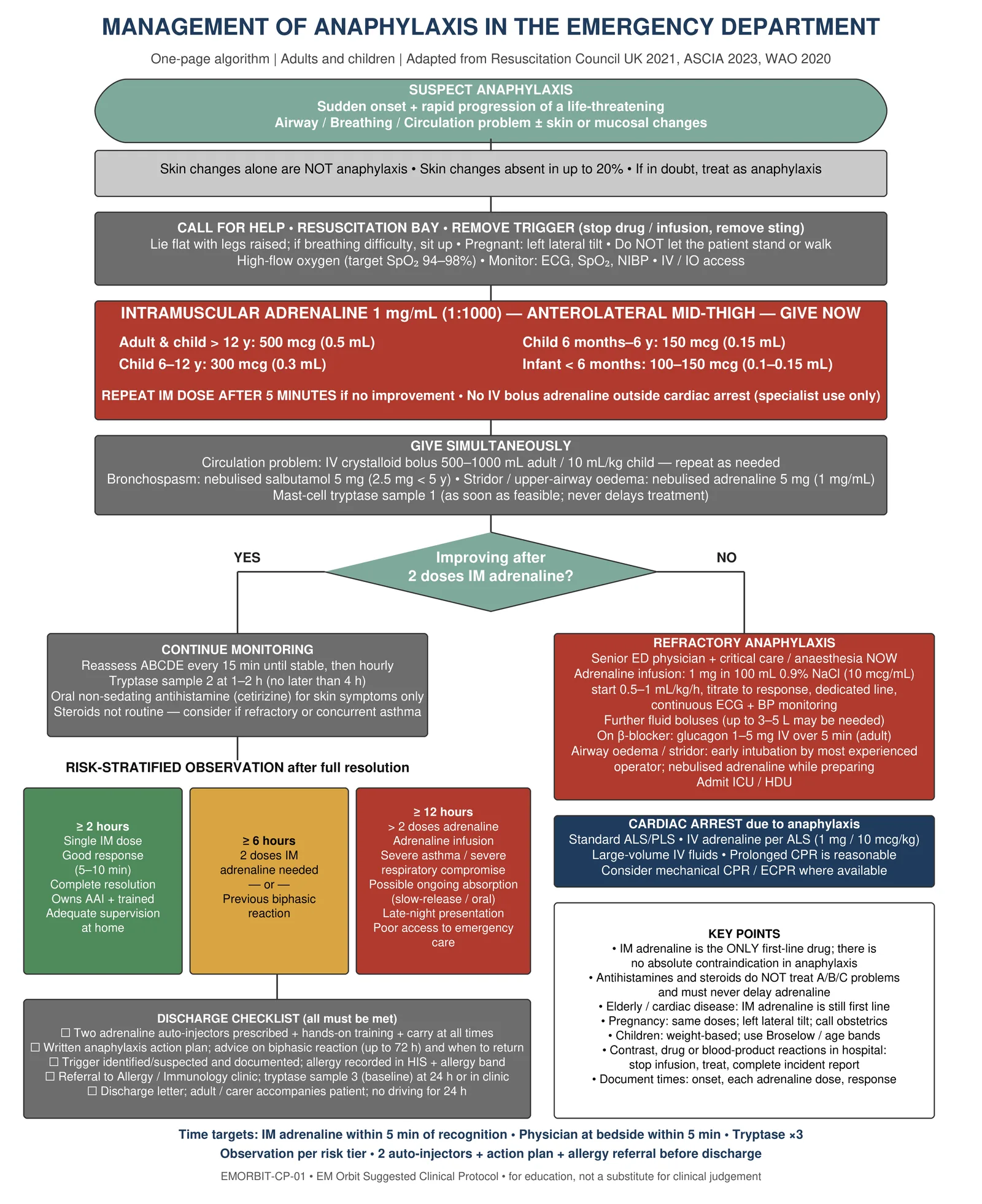
5Algorithm
The one-page algorithm is shown at the top of this page.
6Team roles
6.1Triage and ED Nurses Role:
6.1.1 Recognize suspected anaphylaxis at triage, assign the highest acuity category, move the patient to the resuscitation area, and notify the ED physician immediately.
6.1.2 Initiate oxygen, monitoring, and positioning, and prepare IM adrenaline (1 mg/mL) with the age-appropriate dose ready for immediate administration on physician order or per approved nursing standing order for anaphylaxis.
6.1.3 Record the time of each adrenaline dose, vital signs every 5 minutes until stable, and the response to treatment; draw tryptase samples at the specified times.
6.1.4 Provide auto-injector training with a trainer device and confirm patient/carer competence before discharge; provide the written action plan.
6.1.5 Contribute to the interdisciplinary plan of care and patient and family education.
6.2Pharmacist:
6.2.1 Ensure adrenaline 1 mg/mL ampoules, pre-labelled paediatric dose guidance, and adrenaline infusion preparation instructions are available in all resuscitation trolleys and the ED medication room.
6.2.2 Verify adrenaline infusion prescriptions and prepare or supervise preparation of the 10 micrograms/mL infusion.
6.2.3 Dispense two adrenaline auto-injectors at discharge and reinforce training; report adverse drug reactions to the pharmacovigilance system.
6.2.4 Review the medication list for beta-blockers, ACE inhibitors, and NSAIDs and advise the treating physician.
6.3Critical Care / Anaesthesia:
6.3.1 Attend immediately when called for refractory anaphylaxis, airway oedema, or cardiac arrest; lead advanced airway management and vasopressor infusion; accept patients to ICU/HDU per section 4.3.8.
6.4Paediatrician:
6.4.1 Review all children treated with adrenaline before discharge and arrange paediatric allergy follow-up.
6.5Allergy / Immunology Service:
6.5.1 Receive referrals, complete trigger identification (specific IgE, skin testing, challenge), arrange the baseline tryptase, review the action plan, and consider venom immunotherapy.
6.6Laboratory Staff:
6.6.1 Process serum tryptase samples with the recorded sampling times; report results to the treating team and the allergy clinic.
6.7Ambulance / Pre-hospital Providers:
6.7.1 Pre-alert the ED for any patient given adrenaline; hand over the time of exposure, time of each adrenaline dose, and response using the structured (ATMIST/SBAR) format.
6.8Infection Control / Quality:
6.8.1 Support incident review of in-hospital drug or transfusion anaphylaxis and the departmental anaphylaxis audit.
7The patient's role
7.1 Inform healthcare providers of all known allergies, previous reactions, and current medications, including beta-blockers.
7.2 Report new or recurrent symptoms immediately during observation, and after discharge return to the ED or call the emergency number if symptoms recur.
7.3 Carry two adrenaline auto-injectors at all times, learn how to use them, replace them before expiry, and use the auto-injector at the first sign of anaphylaxis before calling for help.
7.4 Follow the written anaphylaxis action plan, avoid the identified trigger, wear medical alert identification where appropriate, and attend the allergy clinic appointment.
7.5 Inform family, school, or workplace of the allergy and the location of the auto-injectors.
8Definitions
8.1Anaphylaxis: a serious systemic hypersensitivity reaction that is usually rapid in onset and may cause death; characterized by potentially life-threatening compromise of the airway, breathing, and/or circulation, and may occur without typical skin features or circulatory shock (WAO 2020; RCUK 2021).
8.2Refractory Anaphylaxis: anaphylaxis in which Airway, Breathing, or Circulation problems persist despite two appropriate doses of intramuscular adrenaline.
8.3Biphasic Reaction: recurrence of anaphylaxis symptoms after initial resolution without further exposure to the trigger, usually within 1–12 hours and rarely up to 72 hours.
8.4Adrenaline Auto-Injector (AAI): a single-use device delivering a fixed intramuscular dose of adrenaline (150, 300, or 500 micrograms) for self-administration.
8.5Mast Cell Tryptase: a serum marker of mast cell degranulation that supports the retrospective diagnosis of anaphylaxis when timed samples show a rise and return to baseline.
8.6Anaphylaxis Action Plan: a written, individualized document describing the signs of anaphylaxis and the emergency steps to be taken by the patient or carer.
8.7ABCDE: Airway, Breathing, Circulation, Disability, Exposure.
8.8ALS / PLS: Advanced Life Support / Paediatric Life Support.
8.9ICU / HDU: Intensive Care Unit / High Dependency Unit.
8.10RCUK, RCEM, ACEP, ACEM, ASCIA, WAO: Resuscitation Council UK; Royal College of Emergency Medicine; American College of Emergency Physicians; Australasian College for Emergency Medicine; Australasian Society of Clinical Immunology and Allergy; World Allergy Organization.
9Attachments
- Attachment 1: One-page algorithm (top of this page)
- Attachment 2: Adrenaline Dosing and Preparations Quick Reference
- Attachment 3: Risk-Stratified Observation and Discharge Checklist
- Attachment 4: Refractory Anaphylaxis — Adrenaline Infusion Preparation and Titration
11Suggested quality indicators
11.1Time to first IM adrenaline ≤ 5 minutes from recognition: (Number of anaphylaxis patients receiving IM adrenaline within 5 minutes of ED recognition (triage or in-department onset) / Total number of anaphylaxis patients treated in the ED) × 100. Target ≥ 90%.
11.2IM adrenaline given as first-line drug: (Number of anaphylaxis patients in whom adrenaline was administered before any antihistamine or corticosteroid / Total number of anaphylaxis patients) × 100. Target 100%.
11.3Serum tryptase sampling: (Number of anaphylaxis patients with at least two timed tryptase samples documented / Total number of anaphylaxis patients) × 100. Target ≥ 80%.
11.4Observation period compliance: (Number of patients observed for at least the duration required by their risk tier (2, 6, or 12 hours) / Total number of discharged anaphylaxis patients) × 100. Target ≥ 90%.
11.5Safe discharge bundle: (Number of discharged patients with two auto-injectors prescribed, documented training, written action plan, and allergy clinic referral / Total number discharged) × 100. Target ≥ 90%.
11.6Unplanned return within 72 hours: (Number of anaphylaxis patients re-attending within 72 hours with recurrent symptoms / Total number discharged) × 100. Monitored as an outcome indicator.
13References
- Resuscitation Council UK. Emergency treatment of anaphylaxis: Guidelines for healthcare providers. London: RCUK; 2021 (updated 2023).
- Lott C, Truhlář A, Alfonzo A, et al. European Resuscitation Council Guidelines 2021: Cardiac arrest in special circumstances. Resuscitation. 2021;161:152–219.
- Cardona V, Ansotegui IJ, Ebisawa M, et al. World Allergy Organization Anaphylaxis Guidance 2020. World Allergy Organ J. 2020;13(10):100472.
- Australasian Society of Clinical Immunology and Allergy (ASCIA). Guidelines: Acute Management of Anaphylaxis. Sydney: ASCIA; 2023.
- Shaker MS, Wallace DV, Golden DBK, et al. Anaphylaxis — a 2020 practice parameter update, systematic review, and GRADE analysis. J Allergy Clin Immunol. 2020;145(4):1082–1123.
- Campbell RL, Li JTC, Nicklas RA, Sadosty AT. Emergency department diagnosis and treatment of anaphylaxis: a practice parameter. Ann Allergy Asthma Immunol. 2014;113(6):599–608.
- Dodd A, Hughes A, Sargant N, Whyte AF, Soar J, Turner PJ. Evidence update for the treatment of anaphylaxis. Resuscitation. 2021;163:86–96.
- National Institute for Health and Care Excellence. Anaphylaxis: assessment and referral after emergency treatment. NICE Clinical Guideline CG134; 2011 (updated 2020).
- Royal College of Emergency Medicine. Anaphylaxis: RCEM Clinical Audit / Quality Improvement Programme standards. London: RCEM.
- Muraro A, Worm M, Alviani C, et al. EAACI guidelines: Anaphylaxis (2021 update). Allergy. 2022;77(2):357–377.
A2Attachment 2: Adrenaline Dosing and Preparations Quick Reference
| Age group | Dose | Volume of 1 mg/mL | Auto-injector |
|---|---|---|---|
| Adult and child > 12 years | 500 micrograms | 0.5 mL | 300 mcg (500 mcg if available) |
| Child 6–12 years | 300 micrograms | 0.3 mL | 300 mcg |
| Child 6 months – 6 years | 150 micrograms | 0.15 mL | 150 mcg |
| Infant < 6 months | 100–150 micrograms | 0.1–0.15 mL | 150 mcg (specialist advice) |
A 1 mL syringe shall be used for paediatric doses. Small children (< 12 years) who are small for age may receive 300 micrograms at clinician discretion. Adrenaline 1 mg/mL ampoules must be used for IM dosing; 0.1 mg/mL (1:10,000) is for cardiac arrest only.
| Route / indication | Adult | Child |
|---|---|---|
| Nebulised — stridor / upper airway oedema | 5 mg (5 mL of 1 mg/mL) with oxygen; repeat as needed | 0.5 mL/kg of 1 mg/mL (maximum 5 mL) |
| IV infusion — refractory anaphylaxis | 1 mg in 100 mL 0.9% NaCl (10 mcg/mL); start 0.5–1 mL/kg/h; titrate | Same preparation; start 0.5–1 mL/kg/h; titrate; critical care supervision |
| IV bolus — cardiac arrest ONLY | 1 mg (10 mL of 0.1 mg/mL) every 3–5 min per ALS | 10 mcg/kg (0.1 mL/kg of 0.1 mg/mL) every 3–5 min per PLS |
| Auto-injector (self-administration) | 300 mcg (500 mcg if > 60 kg and available) | 150 mcg for 7.5–25 kg; 300 mcg for > 25 kg |
| Drug | Adult | Child |
|---|---|---|
| Crystalloid bolus | 500–1000 mL rapid; repeat to response | 10 mL/kg rapid; repeat to response |
| Salbutamol nebulised | 5 mg, repeat as needed | 2.5 mg (< 5 y) / 5 mg (≥ 5 y) |
| Cetirizine oral (skin symptoms only, after stabilization) | 10 mg | 2.5–5 mg (2–6 y); 5–10 mg (6–12 y) |
| Chlorphenamine IV (only if oral route impossible) | 10 mg | 2.5 mg (6 m–6 y); 5 mg (6–12 y) |
| Hydrocortisone IV (refractory / asthma only) | 200 mg | 4 mg/kg (maximum 200 mg) |
| Glucagon IV (on beta-blocker, refractory) | 1–5 mg over 5 min; may repeat / infuse 5–15 mcg/min | 20–30 mcg/kg (maximum 1 mg) |
A3Attachment 3: Risk-Stratified Observation and Discharge Checklist
| Tier | Criteria |
|---|---|
| ICU / HDU admission | Refractory anaphylaxis; adrenaline infusion; airway intervention; cardiac arrest; persistent hypotension or ischaemic ECG changes. |
| ≥ 12 hours | More than two doses of adrenaline; severe respiratory compromise or severe asthma; possible continued absorption of allergen; previous biphasic reaction; presentation late at night; patient may not be able to respond to deterioration or has poor access to emergency care. |
| ≥ 6 hours | Two doses of IM adrenaline were required; or previous biphasic reaction. |
| ≥ 2 hours | ALL of: good response (5–10 min) to a single dose of adrenaline given within 30 minutes of onset; complete resolution; patient already has and is trained to use an auto-injector; adequate supervision after discharge. |
| ✓ | Item |
|---|---|
| ☐ | Symptoms fully resolved and vital signs normal for the required observation period; ED specialist/consultant aware of discharge. |
| ☐ | Two adrenaline auto-injectors prescribed (correct dose for weight) and dispensed. |
| ☐ | Hands-on auto-injector training with trainer device; patient/carer demonstrated correct technique. |
| ☐ | Written anaphylaxis action plan given and explained (trigger, signs, use AAI first, call the emergency number). |
| ☐ | Biphasic reaction warning given; return advice; no driving for 24 hours; not alone on first night. |
| ☐ | Allergy recorded in electronic health record (allergy alert) and allergy band applied. |
| ☐ | Referral to Allergy/Immunology clinic (urgent for drug, venom, idiopathic); tryptase sample 3 arranged. |
| ☐ | Discharge letter to primary care physician; children reviewed by paediatrics. |
| ☐ | In-hospital drug/contrast/transfusion reaction: incident report and adverse drug reaction report completed. |
A4Attachment 4: Refractory Anaphylaxis — Adrenaline Infusion Preparation and Titration
1Indication: Airway, Breathing, or Circulation problems persisting despite two appropriate doses of IM adrenaline. Continue IM adrenaline every 5 minutes until the infusion is running. Senior ED physician and critical care/anaesthesia must be present or en route.
2Preparation: Adrenaline 1 mg (1 mL of 1 mg/mL) added to 100 mL 0.9% sodium chloride = 10 micrograms/mL. Label clearly: "ADRENALINE 10 mcg/mL — for infusion pump only".
3Starting rate: 0.5–1.0 mL/kg/hour (= 5–10 micrograms/kg/hour; approximately 35–70 mL/hour for a 70 kg adult). Titrate every 5 minutes according to blood pressure, heart rate, work of breathing, and stridor.
4Administration: Dedicated IV line (large peripheral vein or central line); syringe driver or volumetric infusion pump; never by gravity; never through a line used for other drugs or fluid boluses.
5Monitoring: Continuous ECG and pulse oximetry; non-invasive blood pressure at least every 5 minutes (invasive arterial monitoring as soon as feasible); watch for hypertension, tachyarrhythmia, and myocardial ischaemia (12-lead ECG, troponin).
6Additional measures: Repeat crystalloid boluses; glucagon if on beta-blocker; nebulised adrenaline and early intubation for airway oedema; nebulised salbutamol and IV magnesium for bronchospasm; second vasopressor under critical care direction; consider ECLS.
7Disposition: ICU/HDU admission for all patients requiring an infusion. Wean under critical care supervision once symptoms have resolved; observe for a minimum of 12 hours after the infusion stops.
Note: Doses and infusion rates follow Resuscitation Council UK (2021) low-dose adrenaline infusion guidance. Local ICU may use an alternative concentration; the prescribing physician shall state the concentration and rate in micrograms per kilogram per minute on the order.